A Burnt Out Memoir

Yachting Culture #25/1062.

“So Let Me Get This Straight…”

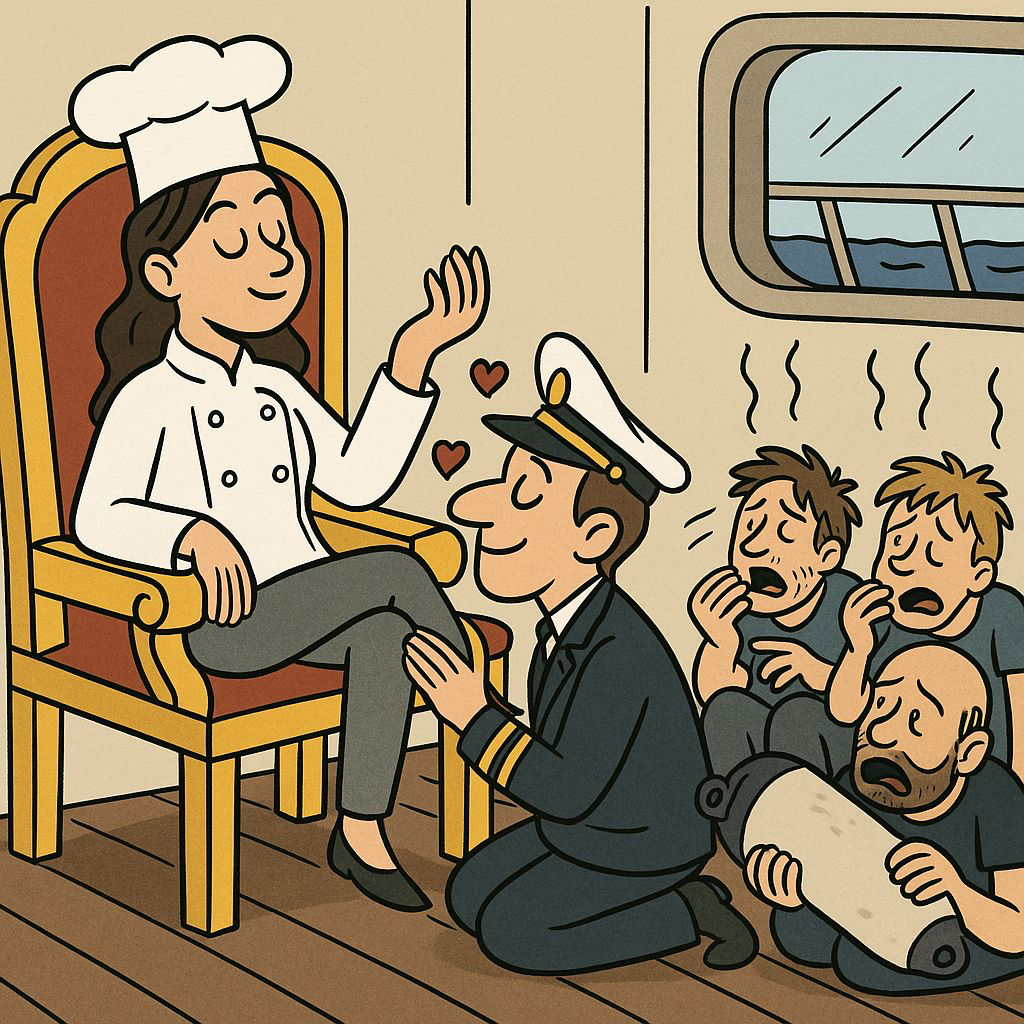
A Burnt-End Memoir in Real Time by Yours Truly Chef Raffie

So let me get this straight…

I just landed in Nice—a land known for rosé, regrets, and rejected provisioning invoices—when my WhatsApp lit up like a fryer fire:

“No money.”

“Guests arriving tomorrow.”

“No groceries.”

“Apartment cooking too?”

“Also we need lunch in 2 hours. Can you do gluten-free sushi? But also vegan. But also caviar.”

I am tired. I am hungry. I am already mildly regretting all my life choices.

How did I go from “chef” to underpaid culinary therapist with a side hustle in miracles?

I haven’t even seen the galley yet and I’m already expected to prep lunch, dinner, and somehow manifest a five-course welcome dinner—with no provisions, no budget, and no time.

Oh, and for the record? The last two chefs apparently escaped into the sunset, burned out, used up, and (if there’s any justice in this world) now running a taco stand in Bali.

When I finally step into the galley, it hits me.

I’m not entering a kitchen.

I’m entering a crime scene.

The place is wrecked.

The onions are half-chopped and crying harder than I am.

There’s a smell that can only be described as culinary PTSD.

There’s no petty cash. No provisioning card. No plan. No clue.

But somehow I’m the one expected to whip out soufflés, sushi rolls, and foie gras foam like I’m auditioning for Hell’s Kitchen: Yacht Edition.

And the cherry on top?

“Can you smile more?”

“Hospitality is the heart of yachting.”

Excuse me—what?

Hospitality? You mean pretending everything’s fine while crafting fine dining from an empty fridge, a wet sponge, and a stewardess asking if I’ve ‘started plating yet’?

And God forbid I ask for one day to prep.

One. Freaking. Day.

A single moment to breathe.

To clean up the galley battlefield.

To locate something that isn’t expired or suspiciously green.

To plan a menu with actual ingredients instead of summoning lunch from the ether like a culinary necromancer.

But no.

Apparently, asking for a prep day is a diva move.

I’m not here to cook—I’m here to perform miracles.

So here I stand:

Eye twitching.

Hands trembling.

Holding a can of energy drink in one hand and an empty packet of vegan cheese in the other.

And quietly asking myself:

“Do I cry now or wait until service?”

💡 

The Moment of Clarity

I didn’t scream.

I didn’t throw a ramekin.

I didn’t set the galley on fire and fake my own death (…tempting though).

Instead, I took a deep breath, wrote this story in my head, and realized:

  • A day to prep isn’t diva behavior. It’s basic fing logistics*.
  • Communication isn’t a luxury. It’s the difference between Michelin stars and meltdown scars.
  • And most importantly: I’m a chef, not a one-man cruise ship food court.

🙌 Final Thoughts for My Fellow Galley Gladiators

You are not crazy.

You are not failing.

You are not ungrateful.

The industry is just drunk on its own delusions and expecting us to clean up the mess without even handing us a mop.

So if you’re feeling the pressure…

If you’re holding back the scream…

If someone just handed you a lemon and asked for a tasting menu—

I see you. You’re not alone.

Now go pour yourself a glass of wine. Or a triple espresso.

Or whatever keeps you from throwing the immersion blender at someone.

Because if Jesus could feed 5,000 with five loaves and two fish…

You can politely tell them you need a fing provisioning day.*

Have a wonderful, productive, and stress-free weekend.

(And if not, at least document it—there’s a book in this somewhere.)

Season‘s End

Yachting Culture #25/1057.

Season’s End: A Message from the Galley

By Chef Raffie

I’m Tired. I’m Exhausted. I’m Still Here.

To every crew member, chef, stew, deckhand, and soul barely holding on—

Right now, I’m standing somewhere between faith and fatigue.

My body aches. My heart is heavy. My future feels uncertain.

But I still have God. I still have hope.

And I’m finally saying this out loud:

I am not okay. And that’s okay.

This industry has a way of breaking you down quietly.

You give everything—your sleep, your health, your sanity—

All for someone else’s luxury holiday, or that perfect Instagram plate.

And when you’re hurting, the response is always the same:

“Push through.”

“Tough it out.”

“Take a shot and keep going.”

I’ve done that. For years.

But now I know better:

There is no medal for dying with your clogs on.

To every chef hiding pain behind a smile,

To every stew faking energy in the laundry room,

To every deckhand swallowing exhaustion just to avoid being replaced—

You are not weak. You are human.

🛳️ To captains, owners, brokers:

If you’re going to call us “family,” then protect us like one.

That means real support—therapy, time off, grace—not just bonuses.

🙏 To everyone in this industry:

If you’re breaking, speak.

If you’re tired, rest.

If you’re drowning, ask for help.

Before it’s too late.

I’m choosing healing. Choosing honesty.

Choosing not to become another silent statistic.

And if you’re reading this?

You can, too.

God, have mercy on those who serve.

And may we all remember:

We are worthy of being served, too.

The season is almost over. Hold on.

—Chef Raffie

#YachtingMentalHealth #HospitalityBurnout #ChefLife #CrewCare #ItsOkayToNotBeOkay #FaithOverFatigue #AskForHelp #NotAnotherStatistic #HealingIsCourage

Sustainability on Superyachts

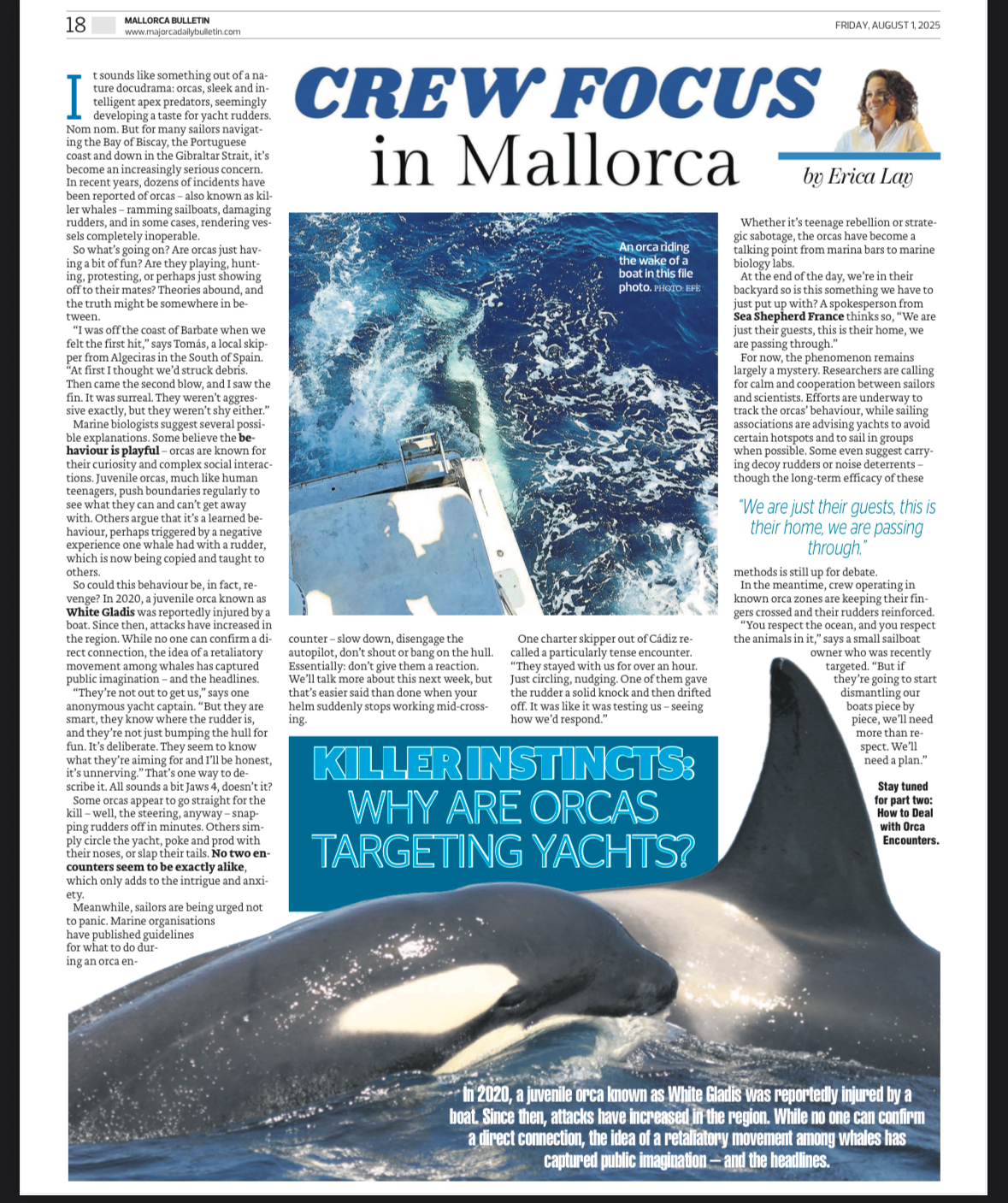
With Courtesy of Erica Lay & The Mallorca Bulletin. #25/1056.

Erica Lay owner of EL CREW International Yacht Crew Agency http://www.elcrewco.com/ erica@elcrewco.com

Sustainability on Superyachts: Implementing Green Practices

The yachting industry, long synonymous with luxury and indulgence, is increasingly embracing sustainability as a core value. As environmental awareness rises, yacht owners, builders, and operators are taking meaningful steps to reduce their ecological footprint. From cutting waste and adopting eco-friendly technologies to promoting responsible cruising, the superyacht sector is making real strides toward a greener future.

Waste Reduction

One of the primary pillars of superyacht sustainability is effective waste management. Yacht crews are now expected to minimise waste at every stage and ensure proper disposal both at sea and ashore.

1. Recycling Programs

Most modern superyachts now operate comprehensive recycling systems onboard. Separate bins for plastics, glass, paper, and metals help crews sort waste efficiently, ensuring it is handled appropriately upon reaching port. Marinas across the Balearics, especially in Mallorca, are well equipped with bins for proper disposal.

2. Waste Compactors

Larger yachts often install waste compactors to reduce the volume of onboard rubbish. This not only makes storage more manageable but also decreases the frequency of offloading waste. Smaller yachts, where space remains a premium, are less likely to feature these systems.

3. Composting

Some yachts are now equipped with composting units to process food waste and other biodegradable materials, reducing landfill contributions and providing a more sustainable alternative for organic refuse.

4. Reusable and Biodegradable Products

A growing number of crews are switching to reusable water bottles, shopping bags, and storage containers. Alongside this shift is the adoption of biodegradable cleaning products and toiletries, helping reduce the release of harmful chemicals into the marine environment.

Eco-Friendly Technologies

Technology is playing a critical role in pushing the superyacht industry toward a lower-impact future. Many new builds—and refits—are incorporating systems that reduce energy use and emissions.

1. Hybrid Propulsion Systems

Hybrid systems that combine diesel engines with electric motors are becoming more common. These systems offer quieter, cleaner cruising, especially in environmentally sensitive areas, and dramatically reduce overall fuel use.

2. Solar Panels

Solar panels are being fitted to supplement power for auxiliary systems like lighting and electronics. While not yet powerful enough to run the whole vessel, they offer a clean energy boost and reduce reliance on fossil fuels.

3. LED Lighting

LED systems consume less energy and last longer than traditional incandescent bulbs. Most superyachts are now outfitted with LED lighting throughout, reducing both energy demand and maintenance.

4. Advanced Water Treatment Systems

Modern superyachts often include systems to purify and reuse water. These technologies treat greywater and blackwater onboard, allowing for safe discharge or reuse and reducing the need to draw from natural sources.

Responsible Cruising

Sustainability extends beyond the yacht itself to how and where it is used. Owners and crews are adopting cruising practices that minimise their environmental impact.

1. Eco-Friendly Destinations

Charter itineraries now increasingly favour locations that prioritise environmental protection. Visiting marine reserves and supporting local eco-projects can directly benefit fragile ecosystems.

2. Slow Cruising

Reducing cruising speed cuts fuel consumption and carbon emissions. It also lessens underwater noise pollution and limits disturbance to marine life—a win-win for planet and performance.

3. Anchoring with Care

Dropping anchor can cause irreparable damage to the seabed. Crews are now trained to use mooring buoys where available or anchor only in sandy areas to avoid harming sensitive environments like seagrass meadows. Around Mallorca, awareness of Posidonia seagrass is vital—violations can lead to significant fines, so knowing local laws is essential.

4. Marine Wildlife Protection

Yachts are implementing procedures to avoid disturbing marine wildlife. These include observing legal distance zones from marine mammals, reducing engine noise, and respecting wildlife protection laws in different regions.

A Greener Future for Yachting

The superyacht sector is taking significant and commendable steps toward sustainability. With smarter waste strategies, advanced green technologies, and more conscious cruising habits, the industry is evolving to meet today’s environmental challenges.

These initiatives not only help protect the world’s oceans and coastlines but also redefine what luxury means at sea. The future of yachting is no longer just about elegance—it’s about responsibility, innovation, and preservation.

CREW FOCUS: Galley Gossip

With Courtesy of Erica Lay & The Mallorca Bulletin. #25/1047.

Erica Lay owner of EL CREW International Yacht Crew Agency http://www.elcrewco.com/ erica@elcrewco.com

Galley Gossip: The Secrets Yacht Chefs Won’t Tell You

By Erica Lay

Step into the galley of a superyacht and you’ll find a culinary world far removed from the white-jacketed serenity of a Michelin-starred kitchen. Yes, the food is just as good—sometimes better—but the pressure? That’s turned up to eleven. Behind the pass, amid the clatter of knives and the hum of induction hobs, yacht chefs are quietly working miracles, often with one hand on a pan and the other gripping the counter to stay upright in rolling seas.

No Menu, No Mercy

What makes the life of a yacht chef so different? For starters, there’s rarely a fixed menu.

“You’re cooking blind half the time,” says one chef who’s worked aboard both private and charter yachts for over a decade. “You get a brief that says ‘light, fresh, Mediterranean’ and then someone asks for lobster mac and cheese at 2am.”

Guest whims are only part of the chaos. Add cramped quarters, long hours, and provisioning roulette (good luck sourcing sashimi-grade tuna in a Croatian village on a Sunday night), and it’s a wonder chefs don’t go full Gordon Ramsay every other hour.

Improvisation Nation

“You learn to improvise pretty quickly,” says another chef, who once had to recreate a wedding cake using only coconut flour, passionfruit jam, and sheer panic. “You also learn not to flinch when a guest tells you they’re now gluten-free, dairy-free, sugar-free and ‘don’t really eat vegetables’ halfway through a crossing.”

Cooking underway? Think of The Great British Bake Off, if the tent were strapped to a rollercoaster.

“Try plating beef Wellington in a Force 7,” says Jack, a former restaurant chef turned yachtie. “I swear my sous-chef once held a soufflé steady with his forehead.”

Provisioning Woes

Meticulous provisioning plans often unravel once guests step on board with “new” dietary preferences.

“I had a charter once where the preference sheet stated: ‘strict vegan’—and they demanded steak every night,” sighs another.

Food trends on board are as fickle as the wind. Plant-based is in. Sushi’s always in. Fancy hydration? That’s the new obsession.

“I spend more on coconut water and aloe juice than on wine some weeks,” says Emily, a sous-chef on a 70m charter yacht. “And don’t get me started on alkaline water and personalised electrolyte sachets,” adds Harriet, their chief stew.

Crew Cuisine: Mutiny or Masterpiece

Crew food is either a point of pride or a recipe for rebellion.

“You can’t serve crew spaghetti three nights in a row unless you want a walkout,” laughs one chef. “The crew are just as important—maybe more—than the guests. No crew? No boat. No charter. No tip.”

The Brutal Brilliance

Despite the madness, most yacht chefs wouldn’t trade it for anything. The creativity, the challenge, the travel, and the satisfaction of impressing guests who usually dine at Nobu—it’s addictive.

“When it goes right, there’s nothing like it,” says Isabela, a seasoned charter chef. “But make no mistake. This isn’t some dreamy barefoot cooking gig. It’s brutal. And it’s brilliant.”

Chefs and stews build close bonds under pressure. Shared midnight snacks and galley therapy sessions are part of the job.

“I once cried because my avocado delivery had all gone off and I had to make breakfast for a Californian yoga group,” one chef admits. “The chief stew brought me tequila. That’s real solidarity.”

Tales from the Galley

And then there are the stories. The billionaire who demanded a ‘full English’ breakfast on a vegan yacht. The A-lister who wanted every meal shaped like a heart—including soup. The lobster ordered “fresh from the tender” in the Med, where lobsters don’t exactly roam free.

But the golden rule? Discretion.

“You’ll never hear a real chef naming names,” says Jack. “We work in the shadows. Delicious, demanding, and always just out of sight.”

So next time you hear about a billionaire stepping aboard and casually requesting a 12-course tasting menu with no gluten, sugar, or onions—remember: somewhere below deck, a sleep-deprived genius is crafting culinary magic with two burners, a blunt knife, and a fridge full of wilting rocket.

That Michelin-worthy meal? It came with a side of burns, bruises, and an emotional breakdown over microgreens.

Things Yacht Crew Wish Guests Knew

With Courtesy of Erica Lay & The Mallorca Bulletin. #25/1043.

Erica Lay owner of EL CREW International Yacht Crew Agency http://www.elcrewco.com/ erica@elcrewco.com

Things Yacht Crew Wish Guests Knew

By Erica Lay

We love our guests. We really do. Without them, we’d just be a bunch of uniformed adults floating around with no one to iron napkins for. But every now and then, there are moments that make even the most seasoned crew member want to dive straight off the stern and swim for shore.

So, in the spirit of gentle education (and saving future charters from passive-aggressively folded towel animals on the aft deck), here are a few things yacht crew secretly, and sometimes desperately, wish guests knew:

“The yacht doesn’t run on fairy dust.”

Yes, it’s magic. You wake up and your bed is made, your laundry is done, and a fresh fruit platter has appeared by the jacuzzi. But behind every seamless moment is a team of over-caffeinated, under-slept humans making it happen.

“We love creating the illusion of effortless luxury,” says a chief stew. “But it’s not effortless. We’ve just mastered the art of looking calm while sprinting between decks with a lint roller and a label maker.”

“3am is not a reasonable time to ring the service bell for a different pillow.”

We’re all for great sleep. But if your pillow is the wrong density, please let us know during daylight hours.

“One guest rang the bell at 2:47am to say his pillow was too ‘flat’,” reports one stewardess. “I took it away, plumped it, put a fresh pillowcase on it in the laundry room, and told him it was a brand new one. He slept like a baby.”

“Don’t treat the crew like invisible butlers.”

We know how to be discreet. But that doesn’t mean we’re robots.

“I had a guest talk about me like I wasn’t standing there,” says a deckhand. “‘The tall lad can fetch it.’ Mate, I have a name. And a black belt in passive-aggressive silver polishing.”

“No, you cannot take the jet ski out after 10 Negronis.”

This should go without saying, but here we are.

“I’ve had guests beg to go wakeboarding at midnight after an entire bottle of tequila,” says one bosun. “It’s a hard no. If you’re not sober enough to find your flip-flops, you’re not going anywhere near the water.”

“Tip like you mean it.”

“When you spend €300,000 on a charter and leave €500 for 12 crew members, we will notice,” says one chef. “We won’t say anything, but your latte art might be of something obscene in the morning.”

“Please just read the itinerary.”

It took weeks to plan that perfectly balanced route you fully signed off on. So when you decide over breakfast that you’d rather pop to Corsica… it’s a challenge.

“It’s like planning a wedding and then being told the bride fancies a ski trip instead,” says a purser.

“We see (and hear) everything.”

Yachts aren’t soundproof. We hear the fights. We hear the reunions. We hear the karaoke.

“We once had a guest sing My Heart Will Go On to his reflection for forty-five minutes in the main salon,” says a deckhand. “In the nude.”

“Shoes. Off. Please.”

There’s a reason we ask. Teak is precious.

“We just spent the whole winter in the yard laying a new deck. It cost more than your Louboutins.”

“If you like something, say so.”

You enjoyed the lunch? Loved the wine pairing? Tell us! It means the world.

“One guest thanked me for remembering she liked mint in her lemonade,” says a junior stew. “I nearly cried.”

“We’re here to make your trip amazing—not to be your emotional support humans.”

We’ll absolutely go the extra mile. But please don’t unpack your midlife crisis onto the bosun.

“One guy told me his entire life story, then asked if I thought he should divorce his wife,” says a stew. “I was just there to collect his socks.”

So, dear guests: we love your energy, your taste in rosé, and your quirky requests (mostly). Just remember that behind every freshly baked croissant and perfectly shaken martini is a crew member who’s working hard to make your dreams come true—without losing their sanity in the process.

Be kind. Be respectful. And for the love of Neptune, don’t ask for sushi at 4am… unless you want your next meal garnished with thinly sliced resentment.

Yachts & Young Ones

With Courtesy of Erica Lay & The Mallorca Bulletin. #25/1041.


Erica Lay owner of EL CREW International Yacht Crew Agency http://www.elcrewco.com/ erica@elcrewco.com

Yachts & Young Ones: Is Mallorca Really Family-Friendly for Superyacht Guests?

By Erica Lay

There’s no shortage of sun-kissed glamour when it comes to Mallorca, but how does it fare when your charter guests are swapping champagne flutes for sippy cups? In other words: is Mallorca actually family-friendly when the guests come with toddlers, teenagers, or both?

Surprisingly (and to the relief of many a stew and deckhand), the answer is a resounding yes.

Running a successful family charter isn’t just about hauling out the inflatable flamingo and hoping for the best. It’s a team effort involving careful itinerary planning, clever toy storage, and a crew that can pivot from silver service to babysitting mode faster than you can say “where’s the kiddy sunscreen?”

“We always breathe a little sigh of relief when we see families on the preference sheet,” says Zoe, a chief stewardess with over a decade of charter experience. “It means there’s less pressure on the party front and more focus on fun. But it also means you need to be switched on 24/7. Kids don’t care if you’ve had three hours’ sleep.”

Mallorca’s calm, shallow bays and sheltered anchorages are perfect for family cruising. Places like Port de Pollença, Cala d’Or, and Sant Elm offer safe swimming spots, gentle beach landings, and easy access to shore.

“We always anchor off Es Trenc at least once during the week,” says Jake, a first mate on a 40m charter yacht. “The water’s shallow, there’s loads of space for water toys, and it’s one of the few beaches where kids can run wild without worrying about beach clubs or jet skis.”

Water toys, of course, are key. Stand-up paddleboards, inflatable slides, jellyfish nets, and even floating trampolines can turn a good day into a brilliant one. And for older kids? Think Seabobs, e-foils, and towables that guarantee a nap later (for everyone involved – except the crew, obvs).

“We did a treasure hunt once using the tender and a laminated pirate map,” recalls Lily, a stewardess who regularly runs theme days for junior guests. “They were absolutely beside themselves with excitement. And yes, we made the captain wear an eye patch.”

On the food front, chefs often work overtime to keep everyone happy.

“I’ve learned to make dinosaur-shaped pancakes, cater to three different allergies at once, and still get the beef Wellington out for the adults on time,” says James, a charter chef based out of Palma. “The key is having fun with it. If the kids are happy, the parents are relaxed, and that makes for a great charter.”

Back on land, Mallorca delivers in spades. Many of the top beach clubs now offer kids’ menus and shaded play areas. Meanwhile, excursions to places like waterparks, Palma Aquarium, or a ride on the vintage wooden train to Sóller are firm favourites for crew planning shore days.

And let’s not forget the grown-ups: while the kids are building sandcastles or spotting turtles, there’s always a chilled glass of verdejo on standby.

One big asset? Nannies.

Some yachts have dedicated childcare staff, while others work with onshore agencies like Mallorca Nannies or Angels Nursing & Babysitting Agency, who provide vetted professionals for onboard or onshore support.

“Having an experienced nanny onboard for the week changes everything,” says Zoe. “It means parents can enjoy their holiday without feeling guilty, and we can make sure everyone’s getting the attention they need.”

Of course, every family is different. Some come with strict routines and bedtime alarms, while others are wonderfully chaotic. The best crews, says Lily, learn to roll with it.

“You can plan your heart out, but toddlers will always surprise you. You just have to smile and adapt. And never, ever run out of baby wipes.”

So is Mallorca family-friendly for superyacht charters?

Absolutely. With the right mindset, a stash of snacks, and a crew who aren’t afraid to wear pirate costumes, it might just be the ultimate destination for young families afloat.

Because while it might not be the holiday the parents had pre-kids, it can still be the holiday they didn’t realise they needed.

Mallorca’s Best Anchorages for Solitude Seekers

With Courtesy of Erica Lay & The Mallorca Bulletin. #25/1029.

Erica Lay owner of EL CREW International Yacht Crew Agency http://www.elcrewco.com/ erica@elcrewco.com

Not every yachtie is out to chase the glitter of beach clubs and floating gin palaces. While Portals in peak season turns into a social catwalk, there’s another kind of luxury that’s harder to find but far more rewarding: solitude.

If your ideal overnight means more stars, fewer engines, and maybe even a goat bell or two in the distance—Mallorca delivers.

But before you drop anchor with reckless abandon, a word of caution: check local laws and posidonia zones. Anchoring on this protected seagrass is illegal and ecologically destructive. Use tools like the Donia app or the Balearic Government maps to make sure you’re anchoring responsibly. Now, let’s talk anchorages.

Cala Murta – Formentor Peninsula (North)

A pine-fringed hideaway where silence reigns. Best for small yachts with reliable gear, anchoring on sand and weed in 6–10m. No bars, no jetskis—just glacier-clear water and the occasional donkey.

Cala s’Almunia – Southeast Coast

Rocky ledges, no beach, and no services—but oh, the beauty. Anchor early in 5m over sand, and enjoy turquoise pools sheltered from most winds. A dawn swim here is unforgettable.

Cala Deià – West Coast Charm

It gets some swell, but in calm weather it’s stunning. Anchor in 8m over rock/sand patches and head ashore to Ca’s Patro March (yes, The Night Manager spot). Book ahead or risk the walk of shame.

Cala en Tugores – Southern Tip

Remote and wild. Anchor in 4m on sand if the weather’s calm. No people, no amenities—just you, the crew, and sunsets worthy of scripture.

Cala Figuera (North)

Not the fishing village—this one’s the cliff-hugged beauty in the north. Exposed but breathtaking in settled weather. Limited space, so time it right.

Honourable Mentions:

• Cala Varques – Nudists, swell, and serenity

• Cala Castell – For drama and that Crusoe vibe

• Illetas – Surprisingly clear water and close to Palma; ideal for a weekday lunch dip

A Final Word:

These places remain special because they’re pristine. Respect the rules, protect the posidonia, and leave no trace. If you’re looking to disconnect, reflect, or just get a decent night’s sleep away from someone else’s party playlist—Mallorca has a spot for you.

#MallorcaAnchorages #EcoYachting #YachtLife #Balearics #HiddenGems #TheFlyingFish

The Chief Stew Chronicles

The Chief Stew Chronicles: Tales from the Espresso-Fueled Twilight Zone by Luis Rafael Hurtado. #25/1018.

Once upon a time—because every nightmare deserves a fairy tale intro—I found myself trapped aboard a floating asylum disguised as a yacht. And at the helm of chaos, ruling the roost with a steely blow-dried grip and a latte in hand, was our beloved Chief Stewardess: a walking, talking cautionary tale in yacht whites.

Now, don’t get me wrong—on paper, she was a “great stew.” Five-star service, polished cutlery, candles lit with military precision. But behind the scenes? Oh darling, she made a root canal look like a spa day.

This woman did not speak—she narrated her entire stream of consciousness aloud, like an audiobook nobody asked for. She had conversations with herself, with the vacuum, with the spoon drawer, and occasionally, she even included us lowly crew mortals—though she’d interrupt us before we could respond. Asking a question, then cutting me off halfway through my answer? Iconic.

Fueled by six shots of espresso and unresolved childhood trauma, she zipped around the boat micromanaging like it was an Olympic sport. If dinner was scheduled for 8pm, she’d be in my galley at 6:43pm, sweating bullets over a napkin fold, while I’m elbow-deep in mise en place.

“Do you need help?”

No. I need space. And maybe divine intervention.

Forget chilling—she had no off switch. She’d wake up from a nap she somehow had time for (unlike the rest of us) and immediately jump back into talking about dinner service seven hours away. Meanwhile, I’m still trying to get through breakfast without burning the eggs or my will to live.

But the pièce de résistance? The after-hours “team bonding” events. You know, the ones she orchestrated like a cruise director on meth. She’d gather the crew, pour the rosé, and proceed to get delightfully smashed while drama unfolded faster than a Real Housewives reunion.

Nothing says relaxation like watching your Chief Stew weep over her third vodka soda and accuse the deckhand of stealing her soul.

And let’s not forget her poor Second Stew, who followed her around like a baby duck imprinting on a hair-straightened hurricane. You could see the life force slowly drain from that girl’s eyes by Day 3.

The Captain? Oh, he was fully aware. He even joked—half-serious, half-desperate—that life would be better if we were all male crew. (Same energy as “Men’s Mental Health Month,” but with less emotional intelligence.)

Look, it wasn’t just that she was annoying. It was that she made what could’ve been a straightforward, professional, and even enjoyable job feel like psychological warfare. Working alongside her didn’t feel like teamwork—it felt like surviving a hostage situation with high-thread-count sheets.


Compassionate Coda

In her defense—and yes, there’s always a dark little asterisk to these stories—she was a survivor of something far bigger than this industry. Years of alcoholism and drug addiction had rewired her emotional landscape, replacing calm with control and connection with chaos. Stability didn’t come easy to her; she compensated with over-functioning and manic leadership, probably afraid that if she let go for even one second, everything would collapse—including herself.

So I see her. Behind the mascara, behind the monologue, behind the micromanaging—there was a wounded woman doing her best not to drown in her own unfinished healing.

But Lord help us all…

she made sure we all got a taste of the whirlpool.

Navigating Superyacht Technology

With Courtesy of Erica Lay & The Mallorca Bulletin. #25/1017.


Erica Lay owner of EL CREW International Yacht Crew Agency http://www.elcrewco.com/ erica@elcrewco.com

Navigating Superyacht Technology: A Guide for Wannabe Tech-Savvy Crew

Superyacht technology can sometimes feel like a maze of buzzwords and high-tech jargon, but understanding the basics is crucial for anyone working in or curious about the industry. In this article, we’re cutting through the noise to offer a straightforward introduction to essential superyacht technology. From navigation systems to communication tools, we’ll break down the fundamentals to help you get a clear picture of how these systems work together to ensure smooth operations, safety, and guest satisfaction—whether you’re a junior crew member, a new yachtie, or simply someone eager to learn. Let’s dive in!


Advanced Navigation Systems

Electronic Chart Display and Information System (ECDIS)

ECDIS is a state-of-the-art navigation system that has become a staple on modern superyachts. It replaces traditional paper charts with digital versions, providing real-time data and integration with other navigational aids. ECDIS enhances route planning, monitoring, and decision-making, ensuring safe and efficient navigation. Tech-savvy deck crew should be proficient in using ECDIS, as it is critical for accurate and dynamic voyage planning. It forms part of the OOW 3000gt syllabus for deck officers.

Integrated Bridge Systems (IBS)

IBSs combine multiple navigational and control systems into a single, cohesive interface. This integration includes radar, autopilot, engine controls, and communication systems. IBS streamlines operations, reduces the workload on the bridge, and enhances situational awareness. Simply put, IBS optimises navigation and operational efficiency.

Dynamic Positioning Systems (DPS)

DPS is something usually only found on the very large yachts, and it allows them to maintain a fixed position automatically by using thrusters and propellers. This technology is invaluable in situations where anchoring is not feasible or when precision is required, such as during diving operations or in congested ports. DPS is a big thing on commercial vessels, like the big tankers and cruise ships you see in the bay of Palma.


Communication Tools

VSAT (Very Small Aperture Terminal)

VSAT technology provides high-speed satellite internet access, essential for maintaining communication with the shore and other vessels. It supports various applications, from VoIP and video conferencing to real-time data transfer. On very large yachts you’ll find a dedicated crew member called an ETO (Electro Technical Officer) responsible for this, and on smaller yachts it’s the headache of the engineers. VSAT systems are super important to ensure continuous and reliable connectivity, which is vital for both operational purposes and guest services. Especially when the boss is watching their favourite sports team playing…

Advanced VHF and UHF Radios

Modern VHF and UHF radios offer enhanced features such as GPS integration, digital selective calling (DSC), and encryption for secure communications. These radios are critical for safe navigation, emergency responses, and daily operations. All crew members should be skilled in using these advanced communication tools to maintain clear and effective communication across the vessel and during emergency situations. The RYA VHF course is regarded as a cornerstone of maritime safety and communication training.

Crew Communication Apps

Many yachts now use WhatsApp groups to keep everyone in the loop, it’s a discrete and convenient tool to share updates, schedules, or non-urgent info. However, traditional radios remain the backbone of immediate communication on board. They are indispensable during critical operations such as manoeuvres, safety procedures, and of course, for guest requests. Some yachts are also adopting other crew management platforms and apps which integrate scheduling, task management and real-time updates – basically a one-stop shop to help the vessel crew operate smoothly.


Smart Solutions for Efficiency and Guest Satisfaction

Internet of Things (IoT)

IoT technology connects various devices and systems on board, enabling real-time monitoring and control. From HVAC systems and lighting to security cameras and maintenance alerts, IoT enhances operational efficiency and proactive maintenance. Crew members should understand IoT applications to optimise energy usage, improve safety, and enhance the overall guest experience.

Entertainment Systems

State-of-the-art entertainment systems, such as 4K televisions, immersive audio systems, and smart integration, elevate the guest experience. Systems like Crestron and Control4 offer centralised control of entertainment, lighting, and climate.

Environmental Control Systems

Advanced environmental control systems monitor and regulate indoor air quality, temperature, and humidity. These systems ensure optimal comfort for guests and reduce the yacht’s environmental impact. Understanding the operation and maintenance of these systems is crucial for crew members, as it directly affects guest satisfaction and sustainability efforts.


Enhancing Safety and Security

Automated Safety Systems

These include fire detection and suppression, bilge monitoring, and alarm systems, and are integral to modern superyachts. These systems provide early warnings and automatic responses to potential hazards, enhancing overall safety. Crew members should be proficient in monitoring and understand how to respond to these systems to ensure the vessel’s safety and compliance with safety regulations.

Cybersecurity Measures

As superyachts become increasingly connected, cybersecurity is a growing concern. Protecting the vessel’s digital infrastructure from cyber threats is essential. This includes securing communication networks, navigation systems, and guest data. Crew members must be knowledgeable about cybersecurity best practices and protocols to safeguard against cyberattacks. On mega yachts, in addition to the ETO role you may hear about ITOs – Information Technology Officers, who are dedicated to the yacht’s computer systems and servers.


So there you have it, a brief intro to some of the many techy bits and pieces we have on board superyachts!


MY Shemara: A Classic Yacht’s Journey Through History

With Courtesy of Erica Lay & The Mallorca Bulletin. #25/1010.


Erica Lay owner of EL CREW International Yacht Crew Agency http://www.elcrewco.com/ erica@elcrewco.com

Yachting Culture – Classics Reborn

Following on with my crush on the classics, there’s a true gem currently residing in our very own STP boatyard here in Palma. Another yacht with a rich and storied history that spans over eight decades. Built in 1938 by the renowned John I. Thornycroft & Company, the 65m motor yacht Shemara has undergone significant transformations—from her early days as a luxury vessel to her wartime service in the Royal Navy, and ultimately her revival as a modern-day icon of classic yacht design.


A Legendary Beginning

The story of MY Shemara begins with English industrialist Bernard Docker, who commissioned the yacht from Thornycroft’s Southampton yard. Delivered in 1938, Shemara was built to reflect Docker’s refined taste and social stature. With a length of 64.09 metres (210.3 feet) and a beam of 9.19 metres (30.2 feet), Shemara was an imposing presence on the water.

Her sleek design blended luxury and practicality, boasting lavish interiors and state-of-the-art amenities for the era. In her early years, Shemara was a symbol of elegance and sophistication, frequently hosting extravagant parties under Docker’s patronage. But her glamorous existence was soon to be interrupted by the outbreak of World War II.


Service in the Royal Navy

In 1939, as global tensions mounted, the Royal Navy requisitioned Shemara for military service. Converted into a training vessel, she played a crucial role in anti-submarine warfare exercises. Notably, she was involved in a tragic exercise that resulted in the loss of the submarine HMS Untamed and all her crew.

Shemara remained in naval service until 1946. After the war, she was returned to Bernard Docker, resuming her role as a private luxury yacht. Despite wartime interruptions, her legacy as a symbol of wealth and grandeur remained intact. Once again, Shemara became the setting for high-society gatherings, hosting distinguished guests such as King Farouk of Egypt.


A New Era and the Decline

By 1965, Docker’s personal finances had begun to unravel, and Shemara was listed for sale at £600,000. She was ultimately purchased by property developer Harry Hyams for less than half that figure. Hyams used her for Mediterranean cruises, continuing her tradition of luxury afloat. However, over time, Shemara fell into disuse.

By the 1980s, she was mostly laid up in Lowestoft, England, marking a low point in her once-glorious existence. Shemara had become a forgotten relic—her former grandeur slowly fading under the weight of neglect.


The Resurgence: Refitting for the Future

Everything changed in 2010, when entrepreneur Sir Charles Dunstone recognised the yacht’s historical value and untapped potential. With a vision to restore her to former glory, Dunstone founded Shemara Refit LLP to oversee a meticulous restoration.

The refit, completed in 2014, was nothing short of transformational. Her machinery was entirely replaced with a state-of-the-art Rolls-Royce diesel-electric system, including five generators and a bow thruster for improved efficiency and manoeuvrability.

Crucially, the refit was not just about technology—it was about preservation. Her original steel and teak construction was retained, and many of her historic design features were carefully restored. The result? A yacht that balances vintage charm with cutting-edge performance.


The Legacy Continues

Today, MY Shemara is the perfect blend of classic and contemporary. Her interiors fuse vintage opulence with modern sophistication. With accommodations for 12 guests and a crew of 16, she is now available for charter, offering an experience steeped in history and wrapped in luxury.

More than 80 years since her launch, Shemara remains a towering example of classic yacht design. Her journey—from private splendour to wartime service, decline, and full renaissance—reflects a legacy of resilience and reinvention.

Under the careful stewardship of Sir Charles Dunstone, Shemara continues to turn heads. She is a reminder that true craftsmanship never ages—and that some yachts don’t just survive the years, they define them.

As she sails into the future, MY Shemara isn’t just a yacht.

She’s a living story. A floating museum. A tribute to timeless elegance.