FREELANCE Chefs VS. LONGEVITY

Yachting Culture .25/1068. By Chef Tom Voigt.

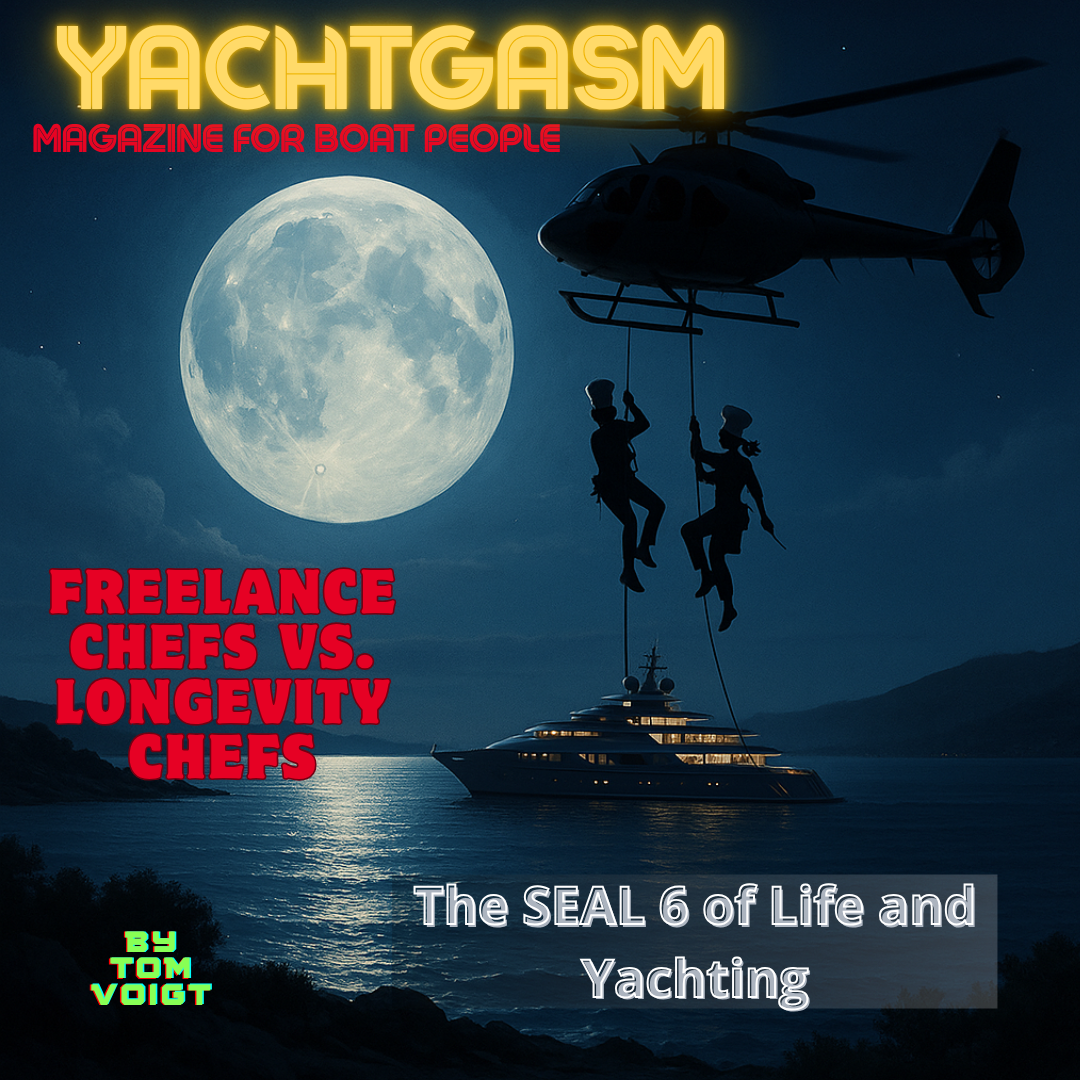
FREELANCE Chefs VS. LONGEVITY Chefs – The SEAL 6 of Life and Yachting

Brothers and Sisters Beyond the Comfort Zone
During high season, we’re the heroes of the galley. The industry relies on us. But we’re not always treated like real top chefs.
– For Chef Tiago Balsini – R.I.P.
By Chef Tom Voigt

If I could rewind the clock 15 years, I might’ve stayed on board.
A permanent chef. Fleet Chef de Cuisine, good package, steady paycheck, same boss, same preferences and room to be creative with my sous vide stick collection, with a real BBQ, nitrogen tank, the whole wonders of this universe. 

But I wouldn’t have known my daughter.
I wouldn’t have those memories of her crying every March as I packed my bags.
Charter season. Galley madness. The battlefield.

Like so many of my brothers and sisters, I made a different call.
We left the safe jobs and walked straight into the fire.
We became freelance chefs.
Mercenaries.
Fixers.
Part Bourdain, part Bottura, part Ana Roš – with a dash of MI6 and James Bond.

When a boat goes sideways, sure, the alarm goes out.
To agencies. WhatsApp groups. Everyone scrambles.
And suddenly it’s a feeding frenzy.
Everyone who’s ever cooked for Grandma sends in a CV and photos of their Sunday roast.

But then someone makes the real call.
They don’t want just anyone.
They want someone who’s seen chaos, cleaned it up, and left it better.
They want us.
The quiet ones who come in when others walk out – and somehow pull off miracles overnight.

We show up with zero onboarding, zero sleep, and half a suitcase of knives and hope.
No welcome. No handover. Often not even a bed.
Just broken pans. Blunt knives. A fridge at +12°C.
A galley that smells like neglect and deep fryer trauma.

We smile, we unpack, we work.
Not because we owe anyone anything.
But because that’s who we are.
That’s what we do.

My freelance brothers and sisters are not Plan B.
We’re the strike team when things go wrong.
We show up when the permanent chef needs to fly home because the girlfriend’s/boyfriends leaving,
or grandma passed,
or the sketchy architect in Fiji took off with the deposit for his new beach house.

We’re there when stress takes over.
When alcohol, burnout, or life itself messes with the food.
When nobody remembers how to plate a damn steak.

We hop on planes, buses, ferries – donkeys if we have to – just to fix the mess.
We don’t ask questions.
We get the job done.
And then we’re gone.

Our résumés are long.
Too long for HR.
Too scattered for recruiters.
Too real for this industry’s fake stability complex.

But every line tells a story.
Of holding things together when others ran.
Of cleaning up disasters, not causing them.
Of showing up, again and again.

And still – we get labeled:
“Unstable. Uncommitted. Risky.”

Truth is, we’re the stable ones.
We’re the calm in the storm.
We don’t need warm-ups.
We fix, we cook, we carry the load.
And when it’s done – we roll out, clean and quiet, invoice in hand.

To our permanent brothers and sisters – we see you.
You keep systems running.
You train, organize, manage.
You know exactly how the boss wants his watermelon sliced.

You’re the reason yachts don’t implode weekly.
But when they do –
it’s us you call.

We live off improvisation.
Off turning half a zucchini, three limes, and a jar of tahini into an eight-person lunch with plating worthy of a lifestyle shoot.

We don’t get insurance.
We don’t get loyalty perks.
We barely get sleep.

But we keep what matters:
Pride.
Skill.
Love for the work.

We are many.
Men. Women. Old dogs. Young firecrackers.
Chefs with kids, dogs, bills, and a home we miss but rarely see.
We didn’t fail. We just chose freedom.
We’re not flaky. We’re sharp.
Not disposable. We’re essential.

Sometimes we dream of landing a permanent post.
A real contract.
A fridge that holds a steady 41°F, not Caribbean 54.
A team that doesn’t leave mid-charter.

But until then – and maybe forever – we keep moving.
Sleeping light.
Watching for distress flares.

And at the end of a long day – after 17 hours on our feet, 2 hours of broken sleep, and zero applause –
we lie down in a stranger’s bunk, using a towel as a pillow, and think:
“That was close. But we nailed it.”

For you.
For us.
For the madness we call this industry.
For what really matters.

For Tiago.
For my brothers and sisters.
For the ones who cook with an empty fridge, a dying battery, and a full soul.
The Superyacht Engineer

Yachting Culture #25/1059.

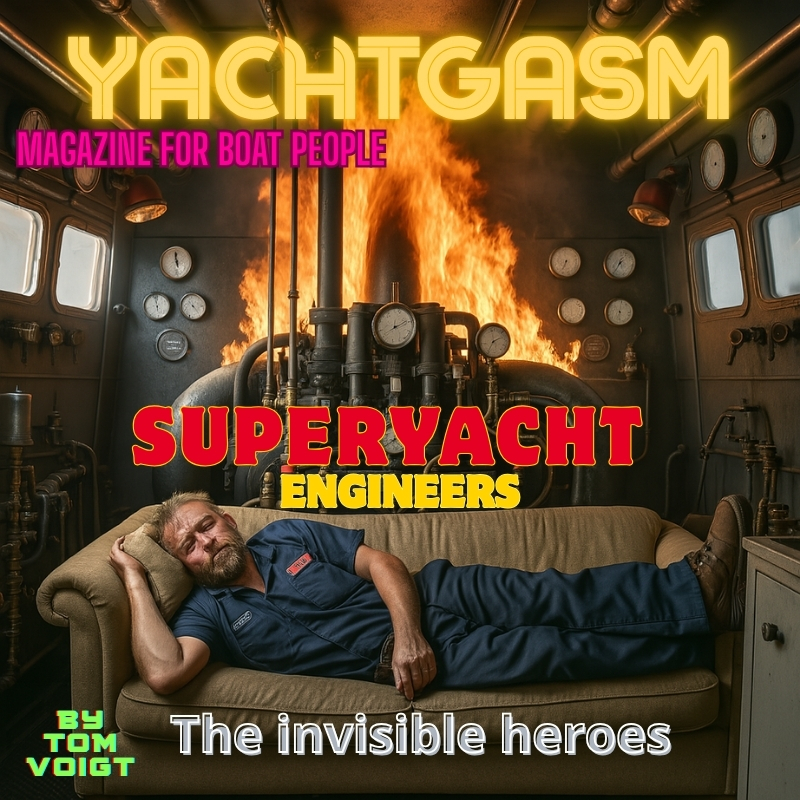
Superyacht Engineer – ain´t ghost in the bilge, but god of the boat

by Chef Tom Voigt

Some guests on a luxury yacht will always say to the chef:
“Ah, here she/he is – the most important person on the boat.”

Oh, right. The guests on a superyacht see the chef as the absolute pinnacle of their luxurious existence. Because clearly, in a world of multi-million-dollar floating palaces, surrounded by 360-degree ocean views, heli decks, jet skis, mirrored ceilings and seven crew per toothbrush…
It’s the guy (or girl) doing the foie gras reduction that’s holding the ship together.

Because obviously, without the chef, they’d starve.
In a floating fridge with ten kinds of caviar and a freezer packed like Fort Knox.

True words.
But wait a minute.

Let’s talk about the guy no one talks about.

Somewhere below deck, past the polite smiles and perfumed cabins, there’s a man.
You won’t see him at the welcome drinks.
He’s not on the beach.
He’s not part of the white-polo-and-Ray-Ban department.

No tan. No shine.
Just oil under the nails and the face of someone who’s crawled inside a fuel filter because no one else would.

They call him the engineer.
Most rookies call him “the weird guy downstairs.”
To the rest, he’s just the one who makes sure this floating palace doesn’t turn into a floating blackout.

Some say he sleeps too much.
Some say he’s basically a ghost, living like a banished mechanic in the bowels of the yacht.
And some green deckhand is always making jokes about “the guy on the sofa.”

Yeah. That guy.
The one who hasn’t slept in three days because the shore power shorted in Naples and the battery charger caught fire.
The one who’s replaced a raw water impeller mid-storm while the captain was on TikTok.
The one who knows the sound of every pump – and when they’re lying.

The truth is:
He’s invisible until something breaks.
And then he’s suddenly the most important person on board.
More important than the chef.
More important than the captain.
More important than whoever brought the champagne.

You think this yacht runs on sunshine and Instagram likes?
Try skipping a day without him.

No engineer = no toilets.
No engineer = no aircon.
No engineer = no cold rosé in Porto Cervo.
No engineer = you stuck at anchor, staring at a dead dashboard while the guests ask why the jacuzzi’s cold.

And yes – sometimes he naps.
Because he works 20 hours a day.
Because he hasn’t had a proper shower in a week.
Because he just climbed inside a generator exhaust duct to fix something that should’ve been replaced 5 years ago.

The sofa he sleeps on?
It’s not a bed.
It’s a battlefield.
And it smells like diesel, despair, and quiet competence.

You want to know how I know all this?

Because in my 15+ years of yachting, working with over 98% of the engineers on board was not just functional – it was the best part of it.
Real friendship. Real respect.
Still is.
Still proud of every engine room laugh, emergency repair, and deadpan joke at 4am.

Because if there’s one crew member who really keeps it all going,
one who doesn’t just look like a legend but actually is one…

…it’s that strange, invisible man downstairs.
The engineer.

#Yachtgasm #TheManBelow #DieselOverDrama #SuperyachtEngineer #GhostOfTheEngineRoom #NoEngineerNoYacht #YachtRealityUnfiltered

Hub – Cooking Makes You Happy and Smart!

Cooking Makes You Happy and Smart! Cooking is more than just preparing food by Chef Tom Voigt. #25/0038.

January 30, 2025 · 2 min read


Cooking Makes You Happy and Smart!

Cooking is more than just preparing food—it’s a skill that sharpens the mind, fosters creativity, and strengthens social bonds. Those who cook must concentrate, experiment, and understand the delicate interplay of temperatures and cooking times. This is why experts suggest that cooking enhances intelligence and cognitive abilities.

But cooking isn’t just about being smart—it nurtures empathy too. Preparing meals means caring for others, prioritizing well-being, and embracing social responsibility. Cooking fosters sensitivity and strengthens human connections.

Cooking Classes & Nutritional Science in Schools

Imagine a world where cooking and nutrition were standard subjects in every school. As students peel, chop, slice, and wash pots, they develop valuable coordination skills while engaging in a meaningful, hands-on task. Cooking is inherently unisex—everyone benefits, and it could help dismantle outdated gender roles that once kept men and women out of the kitchen.

A structured approach to food education could also transform modern society’s relationship with food. In a world plagued by fast food culture, rising obesity, and heart disease, nutritional science in schools could be a game-changer. Some subjects could be reduced to make space for this essential life skill—because eating well is a fundamental pillar of health and longevity.

Cooking Brings People Together

From ancient times, humans have gathered around food to bond, celebrate, and share experiences. Breaking bread is a universal symbol of unity, a reminder that eating together fosters brotherhood and connection.

Cooking also brings balance to life. It enhances technical, medical, scientific, and artistic skills by training patience, precision, and creativity. It’s no surprise that many successful individuals take pleasure in cooking at home. Standing at the stove, they can disconnect from work pressures and engage their senses in a mindful activity.

Cooking, when done with joy rather than stress, can become a meditative ritual—a Zen moment in daily life. It’s an art that nourishes not just the body but the mind and soul.

So let’s rethink our priorities. Let’s embrace cooking as an essential skill, an education that leads to a healthier, happier, and smarter society.

Hub – FROM GALLEY TO GRANNY

FROM GALLEY TO GRANNY – What will be after yachting by Chef Tom Voigt. #24/0205.

December 1, 2024 · 2 min read


FROM GALLEY TO GRANNY – What Comes After Yachting?

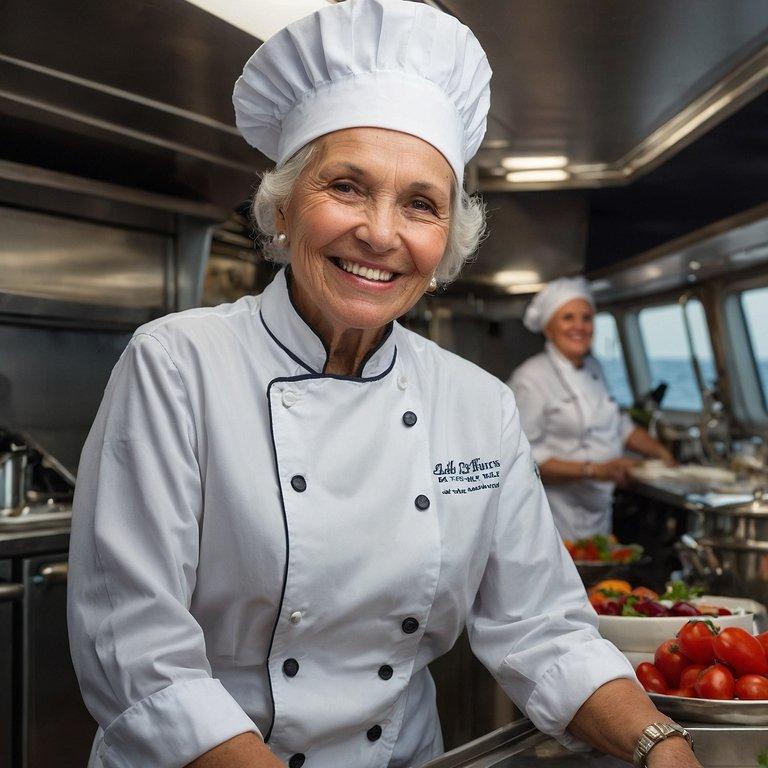
St. Tropez, July 30, 2024 – After four decades navigating the high seas and catering to the whims of the super-rich, seasoned yacht chef Claire Dubois is contemplating hanging up her apron and retiring her paring knife.

At 78, Claire finds the physical toll of the job increasingly demanding. “I’ve flambéed more lobster than I can count, but my knees and back are starting to give up the ghost,” she jokes with a sardonic smile.

Claire’s illustrious career, marked by exotic locales and impeccable dishes, is coming to an end. The relentless pace has her contemplating a life ashore, but not without some peculiar habits. “I’ll miss strutting down the passerelle, so I’m having one installed in my house back home,” she says with a smirk. “Because why should the exit from my living room be any less grand?”

Retirement isn’t exactly smooth sailing. Without a formal pension plan, Claire faces an uncertain future. “Retirement for yacht crew is like Bigfoot,” she deadpans. “Everyone talks about it, but no one’s actually seen it.”

Claire plans to keep her radio by her side, even in the afterlife. “I might be six feet under, but I’ll still be tuning into maritime chatter,” she jokes. At home, she’ll stick to her old habits: labeling every box and item, sleeping with a safety evacuation plan taped to the wall above her bed, and keeping a life vest in her wardrobe. “Old habits die hard,” she says with a shrug.

Even in retirement, Claire’s quirks will persist. She’ll buy large quantities of groceries as if she’s feeding a crew, and she’ll call her husband “Captain” in their domestic haven. If her tumble dryer breaks, you can bet she’ll shout for an “Engineer,” expecting an immediate fix.

As Claire’s final voyage draws near, she remains humorously fatalistic. “Life after yachting might be different, but I’ve survived worse. Maybe I’ll finally get to write my tell-all book: ‘Boiling Point: Memoirs of a Yacht Chef.’”

Hub – Chief Stew and Head Chef – An Almost Symbiotic Relationship

Chief Stew and Head Chef – An Almost Symbiotic Relationship – The Game Changer on Luxury Yachts by Tom Voigt. #24/0155.

October 17, 2024 · 2 min read


www.cheftomvoigt.com

Chief Stew and Head Chef – an Almost Symbiotic Relationship – The Game Changer on Luxury Yachts

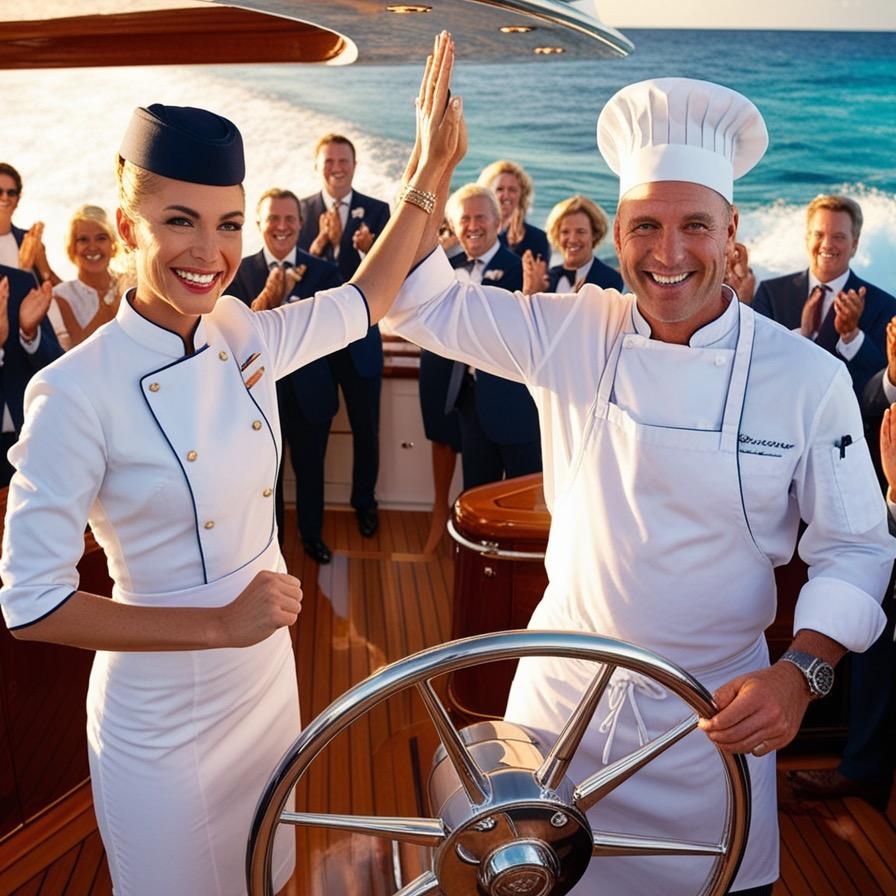
The Chief Stewardess ensures that every detail of guest service is meticulously attended to, from creating personalized experiences to managing the service staff. The Head Chef, on the other hand, is responsible for crafting exquisite meals that not only satisfy but also impress guests. When these two roles work seamlessly together, they create a fluid and enjoyable atmosphere where service and cuisine are perfectly aligned with the guests’ expectations and desires.

Absolutely, the synergy between a Chief Stewardess and a Head Chef on a luxury yacht is crucial for delivering an exceptional guest experience. Much like the collaboration between Lennon and McCartney, a well-harmonized team in these roles can elevate the entire hospitality experience to new heights.

This kind of harmony is a game-changer because it ensures that the service is not just efficient but also personalized and attentive, and the dining experience is not just about food but about creating memorable moments. Just as Lennon and McCartney’s partnership produced iconic music, a well-matched Chief Stewardess and Head Chef can produce unforgettable experiences for their guests.

When these two work in perfect harmony, it’s like magic. They make sure every meal is a hit, every service is seamless, and every moment on board is unforgettable. After all, it’s not just the yacht that’s luxurious—it’s the team that makes it legendary!

For the crew, this partnership fosters a supportive and cohesive team dynamic. The Chief Stewardess and Head Chef set the tone for professionalism and camaraderie, ensuring that everyone works together efficiently and with a shared sense of purpose. This positive atmosphere not only enhances the crew’s job satisfaction but also directly translates into better service for the guests, creating a win-win situation for everyone on board.

Many yachts that struggle with this aspect should ask themselves: How can I attract the best Chief Stewardess and Head Chef to my team? It’s not just about reviewing top-notch résumés; it’s about finding that perfect vibe and professional synergy that truly makes a difference.

The key to a legendary luxury hospitality experience lies in this dynamic duo. When the Chief Stewardess and Head Chef click, their collaboration creates a seamless, high-end atmosphere where every detail is handled with finesse and every meal is a standout event. But if there are conflicts or misalignments between them, guests will notice immediately. Suddenly, what should have been a memorable dining experience can turn into a bland disappointment, like a flavorless piece of bread.