The Anglosphere Pipeline

by Chef Tom Voigt. #26/0023.

The Anglosphere Pipeline
How Hiring Culture Shapes the Modern Superyacht Crew (1990–2026)

A factual review of fleet growth, labour structure and nationality dynamics in the modern yacht industry
The international superyacht industry has undergone a profound structural transformation over the past three decades. What was still a comparatively niche sector in the early 1990s has evolved into a globalised, highly professionalised industry employing tens of thousands of crew members across several thousand vessels.
With growth came complexity. With complexity came filtering mechanisms. And with filtering mechanisms came recurring debates about nationality, language and access to opportunity.
This report does not seek to accuse or dramatise. It seeks to clarify what can be factually supported, what can reasonably be inferred, and what remains anecdotal.


  1. Fleet Expansion and Structural Change (1990–2026)
    The scale of the industry today is fundamentally different from that of the 1990s. According to technical industry data referenced by RINAUTIC, the global superyacht fleet reached approximately 5,092 vessels by the end of 2019, representing more than a sixfold increase compared with the mid-1980s baseline. This expansion reflects long-term growth rather than a short-lived bubble.
    Post-pandemic momentum accelerated this trend further. BOAT International reported that the global superyacht order book reached historic highs in 2023, marking one of the strongest new-build cycles in the industry’s history. Although the order book has since stabilised, it remains elevated compared with pre-2020 levels.
    With fleet expansion comes increased crew demand. Industry sources such as SuperyachtNews, citing estimates from The Superyacht Agency, suggest that the number of active superyacht crew globally lies in the range of 60,000 to 70,000 individuals, although precise figures remain difficult to establish due to rotation, relief crew and short-term contracts. It is important to emphasise that no centralised global census of yacht crew exists.
    The absence of comprehensive statistical transparency is a structural characteristic of the industry and must be considered when analysing nationality representation.

  1. What We Actually Know About Crew Nationalities
    There is no official longitudinal dataset documenting nationality composition of superyacht crew from 1990 to 2026. However, certain surveys provide insight into recurring patterns.
    ISWAN – The Welfare of Superyacht Crew (2018)
    The International Seafarers’ Welfare and Assistance Network (ISWAN) conducted a substantial survey of superyacht crew in 2018. Among the most represented nationalities within the respondent sample were British, American, South African, Australian and New Zealander crew members.
    It is crucial to clarify that this survey does not represent the entire global workforce, nor does it claim to. However, it does indicate a visible and recurring presence of crew from English-speaking countries and South Africa within the active yacht community.
    ISWAN – YachtCrewHelp Annual Review (2022)
    In ISWAN’s 2022 YachtCrewHelp report, which analyses usage of its confidential helpline service, 27.2% of identified nationalities among service users were British, while just over 10% were South African. Crew from at least 42 nationalities accessed the service.
    Again, this is not a workforce census. It measures helpline engagement rather than total employment distribution. Nevertheless, it confirms that British and South African crew are highly visible and engaged within the yacht ecosystem.
    Industry Estimates Concerning South African Crew
    Several industry publications, including reporting referenced by Marine Industry News in connection with Superyacht Cape Town, have cited estimates suggesting that South African nationals may account for up to 30% of the global superyacht crew workforce. These figures are described as estimates rather than verified statistical totals, and should be treated accordingly. They reflect recurring industry perception rather than audited demographic data.

  1. Language as Structural Advantage
    English has become the operational language aboard most internationally active superyachts. This development is not ideological but practical. Charter operations, multinational guest groups, regulatory documentation and global mobility all favour English as the default working language.
    In practical terms, this reality creates an advantage for native or near-native English speakers during recruitment processes. Communication reliability under pressure is a legitimate operational concern for captains and management companies. When shortlisting candidates, recruiters frequently prioritise linguistic certainty.
    This structural factor does not require explicit discrimination to generate unequal outcomes. It operates as a functional filter.

  1. Visa Access and Passport Mobility
    Another documented mechanism influencing recruitment decisions is passport strength and visa flexibility. Interviews and analyses referenced in maritime academic work, including studies published via Theseus (Finnish maritime academic repository), highlight that owner preferences, visa requirements and ease of international travel can influence nationality selection.
    Crew members holding passports that allow smoother access to the United States, Schengen Area or Caribbean regions may be perceived as administratively less complex hires. In a fast-moving charter environment, operational efficiency frequently outweighs philosophical neutrality.
    This dynamic again reflects structural pragmatism rather than overt bias. However, its outcome can resemble nationality preference.

  1. Recruitment Agencies and Shortlisting Practices
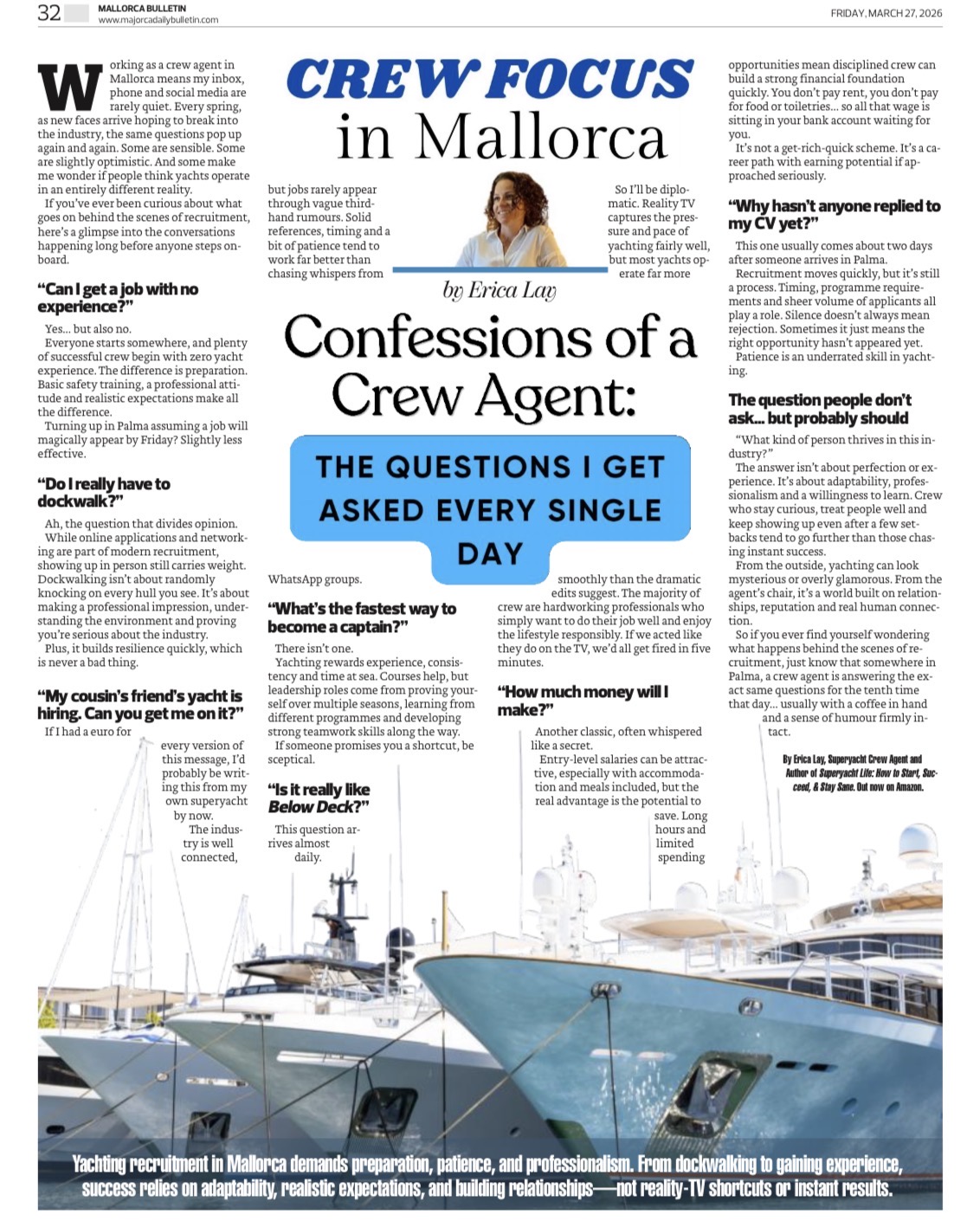
    Modern superyacht recruitment is heavily agency-driven. Compared to the 1990s, when dock-walking and direct captain hiring were more common, today’s system relies on databases, CV filtering and curated shortlists.
    Industry platforms such as YPI CREW, cited via coverage in Yachting Pages, have openly acknowledged that qualified crew may occasionally be overlooked due to nationality-based preferences expressed by owners or management. The terminology used within the industry often refers to “owner preference,” “cultural fit,” or “communication standards.”
    These phrases are not inherently discriminatory. However, they can function as soft filters in candidate selection.
    The process is rarely malicious. It is often risk-averse.
    Captains and heads of department tend to hire from networks they trust. Once a national cluster establishes itself within a role segment, referrals frequently circulate within that same network. This network replication effect is observable across multiple nationalities, not exclusively among South Africans, Britons or Australians.

  1. The French Riviera Paradox
    A frequently raised question concerns the apparent underrepresentation of French yacht chefs in yachts based in Antibes, Nice or Monaco.
    Geographic location does not automatically determine crew nationality. Many yachts home-ported in Southern France are flagged elsewhere, owned by non-French principals and operated under English-speaking command structures. Job advertisements for Antibes-based roles frequently list fluent English as mandatory, with French described as beneficial but not essential.
    This does not demonstrate systematic exclusion of French professionals. However, it illustrates that local culinary heritage does not necessarily translate into hiring dominance.
    The Riviera is geographically French. Operationally, it is international.

  1. Then and Now: 1990 Compared to 2026
    In the 1990s, the industry was smaller, less standardised and less database-driven. Hiring often occurred through direct reputation, maritime background or personal introduction. Crews were smaller, and formalised recruitment agencies were less dominant.
    By 2026, the sector operates with:
  • significantly larger vessels and crews
  • increased charter turnover
  • greater owner influence in hiring decisions
  • formal recruitment databases and digital shortlisting
  • globalised career mobility
    Professionalisation has improved efficiency, safety and service standards. At the same time, it has institutionalised filtering systems that were previously informal.
    Efficiency and homogeneity often travel together.

  1. Is There Evidence of Systematic Nationality Discrimination?
    There is no comprehensive dataset proving that a single nationality dominates or controls the industry. However, there is documented acknowledgement that nationality can influence hiring decisions in certain contexts, as reflected in recruiter commentary and survey findings.
    The distinction is important.
    Systemic mechanisms such as language dominance, visa convenience and network replication can produce patterns without requiring coordinated exclusion.
    The industry’s international identity remains genuine. Yet international does not necessarily mean proportionally representative.

Conclusion
Between 1990 and 2026, the superyacht industry expanded dramatically in fleet size, crew demand and operational complexity. Surveys from ISWAN demonstrate a recurring visibility of British, South African and other English-speaking nationalities within crew populations, while industry commentary acknowledges that nationality can influence hiring outcomes in certain circumstances.
Structural factors—language, passports, owner preferences and agency-driven recruitment—collectively shape workforce composition. These mechanisms are practical, sometimes commercially justified, and rarely malicious. Nevertheless, they create observable patterns.
The industry prides itself on being global.
It is indeed global in geography.
Whether it is equally global in opportunity remains a question shaped less by intent and more by structure.
And in a sector built on precision, structure tends to matter.

The Great Floating Illusion of Modern Yachting


By Chef Raffie. #26/0022.

The Great Floating Illusion of Modern Yachting

A small observation from the galley window

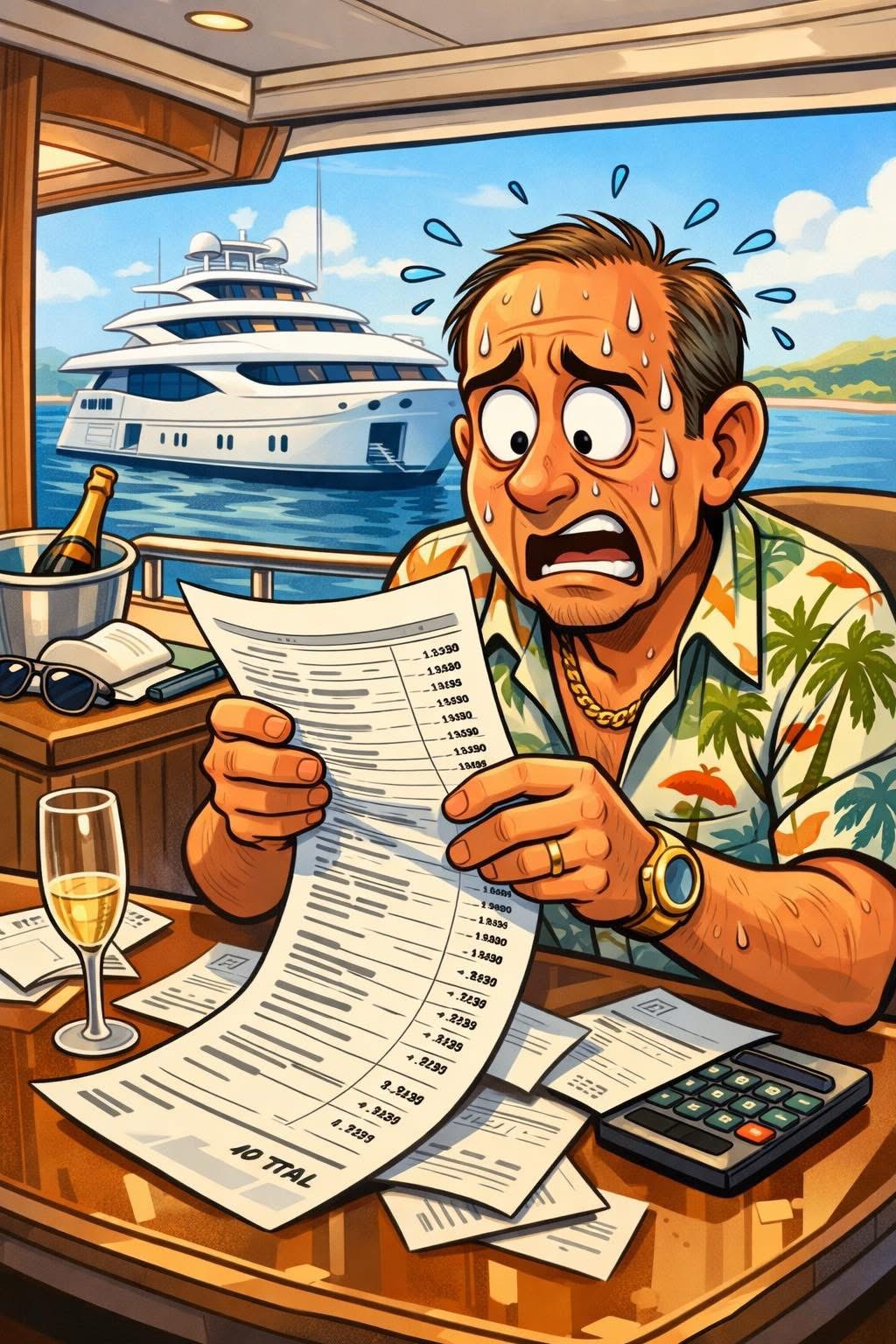
Somewhere along the way, yachting stopped being about the sea… and became about the marina parking lot and a virtual lifestyle.

You can see it clearly in Florida.

A parade of floating palaces arrives every season. Glossy hulls. Drone footage. Champagne on the bow. A broker whispering sweet financial poetry into the ear of a freshly minted yacht owner who just sold three tech companies and believes Poseidon personally approved the purchase.

“Sir… this vessel is an investment in lifestyle.”

Translation:
Congratulations, you just bought a very expensive hole in the ocean that eats money faster than a morbidly obese human at an all-you-can-eat buffet.

But the real comedy begins after the papers are signed.

Because no one told the owner the small print:

The yacht costs money.
Running the yacht costs more money.
Running it properly costs real money.

And suddenly the budget meeting begins.

Strangely, there is always money for:

  • A new Seabob
  • Underwater lights visible from space
  • A teak deck polished by monks from the Himalayas
  • Twelve cases of rosé for Instagram

But when it comes to the crew?

Silence!

Deck shoes?
“Do you really need those?”

Crew food budget?
“Does the owner has to feed the crew”

Safety gear?
“Isn’t the ocean already safe?”

Medical insurance?
“Well… try not to get injured.”

Meanwhile the yacht broker — the same man who sold the dream — is already three marinas away selling another “once-in-a-lifetime opportunity” to someone else.

A modern version of a snake oil salesman, except the wagon is now a 40-meter fiberglass miracle financed over fifteen years.

And let’s talk about these boats for a moment.

Because some of them…

My friends…

Some of them are built with the structural integrity of an IKEA wardrobe closet .

Aluminum, plywood, fiberglass, and optimism.

Yet somehow the price tag suggests it was handcrafted by Renaissance shipbuilders blessed by Neptune himself.

But the greatest masterpiece of the modern yacht industry is not the boat.

It’s the illusion of responsibility.

Owners are never involved.

Never.

They exist in a mysterious cloud of plausible deniability.

Crew problems?
“Management handles that.”

Budget cuts?
“Talk to the captain.”

Safety concerns?
“Send an email.”

Yet somehow instructions travel across the Atlantic at the speed of light when the topic is:

“Reduce crew costs.”

Amazing phenomenon.

NASA should study it.

And the loyalty question?

Ah yes, “Loyalty “

The industry once ran on reputation.

Now it runs on WhatsApp availability.

Two years of service.
Storms. Deliveries. Owner trips. Sleepless charters.

But then…

The captain’s golf buddy needs a job.

And suddenly you discover loyalty in yachting now has the shelf life of supermarket sushi.

Gone.

Replaced before the coffee gets cold.

Meanwhile in the marina the show continues.

Owners posing on the bow.
Influencers filming sunsets and glorious displays of buffets elaborated with premade store bought ingredients.
Brokers telling stories about “the lifestyle.”

Below deck the crew quietly calculates if the owner can afford fuel for the next crossing and the real food budget?

Sometimes the answer is no.

Which raises the most uncomfortable question in modern yachting:

Not who owns the yacht.

But

Who can actually afford it.

Because buying a yacht is easy.

Running one with integrity?

That’s where the fantasy sinks faster than a jet ski with a hole in it or a green stew after her 90 days trial period.

But don’t worry.

The photos will look fantastic on Instagram.

And in today’s yachting world…

That seems to be what really matters. 🚤💰

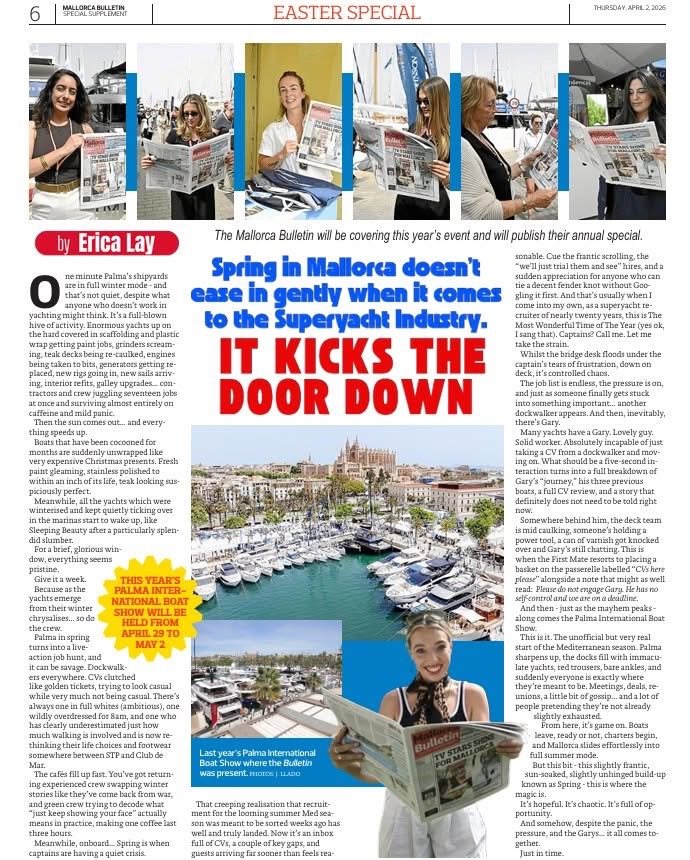
Superyacht Guests: 2006 vs 2026- A Tale of Two Eras

With Courtesy of Erica Lay & The Mallorca Bulletin. #26/0020. Erica Lay is owner of EL CREW International Yacht Crew Agency http://www.elcrewco.com/ erica@elcrewco.com.

By Erica Lay, owner of EL CREW CO Superyacht Recruitment agency and author of Superyacht Life: How to Start, Succeed, & Stay Sane – available now on Amazon.

If you ever want to feel the passage of time, don’t look at old photos or your first Facebook status. Look at how superyacht guests behaved in 2006 versus how they act now. It’s like comparing two different species.

The 2006 charter guest arrived armed with a chunky digital camera, a pair of linen trousers, and the belief that the height of sophistication was a DVD box set and a jetski. Lovely people. Simple times.

The 2026 guest turns up with a drone, three personalised nutrition plans, a wearable bio-tracker, an expectations spreadsheet, and a burning desire to have a “transformative week at sea”.

Let’s take a trip down memory lane… or in yacht terms, let’s compare the old-school teak era to the new-age tech era.

Arrival Day

2006: Guests stepped aboard smiling, excited, and gloriously low-maintenance compared to today. They handed over their shoes, asked where the cabins were, and wanted to know when lunch was. No demands, no complications, just relieved to be on holiday.

2026: Today’s guests board holding a phone with their wellness schedule, their diet plan, their streaming preferences, and three Pinterest mood boards. Before they even reach the aft deck sofa, someone’s already asking:
“Is the Wi-Fi strong enough for Zoom?”
“Can my fitness tracker connect to the gym equipment?”
“Do you have oat milk that’s been carbon-offset?”
The crew smile and say yes. They always say yes.

Entertainment

2006: Entertainment was blissfully simple. Crew put out a stack of DVDs, a few board games and jigsaws, and maybe a karaoke machine that mysteriously only worked after the third glass of wine. The biggest tech concern was whether the TV remote had batteries.

2026: Now it’s full Dolby cinema rooms, 4K projectors, and guests arguing over which streaming platform has the show they want. And there’s always one who wants access to something that hasn’t even been released yet.
“Can we stream the new season?”
“It comes out next month.”
“Yes, but can we?”

Toys and Tenders

2006: The toy list was jetskis, a banana boat that tried to kill people, a kayak that nobody used, and a tube that needed air every 15 minutes. Guests thought they were adventurous. Crew thought they were brave.

2026: The toy locker now looks like NASA designed it. You’ve got e-foils, underwater scooters, drones, electric surfboards, silent tenders, solar paddleboards, submersibles, and a whole IKEA warehouse’s worth of inflatables. Guests want action. Preferably filmed. Preferably in slow motion.

Photography

2006: A guest would ask a deckhand to “take a nice photo of us” with a bright blue Kodak camera. Then they’d ask again because someone blinked.

2026: Today’s guests bring drones, multi-lens phones, waterproof rigs, stabilisers, and editing apps. They want cinematic holiday reels and underwater content that makes them look like they’re narrating a David Attenborough special. Some yachts now carry full content-creator kits because… of course they do.

Wellness

2006: “Wellness” meant a yoga mat stored under a bunk and a smoothie if the chef felt generous. The only ice bath was the drinks cooler.

2026: Now guests ask for cold plunge setups, breathwork sessions at sunrise, IV vitamin infusions, sound baths, hormone-balanced menus, meditation pods, and circadian lighting. The crew are learning half the routines on the fly. A modern charter isn’t just a holiday – it’s a wellness retreat with jetskis.

Food and Diets

2006: Requests were… manageable. “No onions, they make me windy.” “I don’t eat pork.” “My wife doesn’t like mushrooms.” That was it.

2026: Guests now arrive with diet PDFs. Plural. Keto-except-Saturdays, gluten-free-but-we-still-eat-cake, pescatarian-but-will-eat-wagyu, dairy-free-but-we-love-burrata. And everything must be organic, local, sustainable, ethically sourced, and preferably touched by moonlight. Chefs earn sainthood every season.

Excursions

2006: A beach picnic, a snorkel stop, or a short walk was plenty. Most guests treated a charter as an excuse to sit still, drink rosé, and read a book with one eye closed.

2026: Guests now want coastal hikes, cave tours, cliff jumping, treasure hunts, freediving lessons, underwater drone scouting, paddle yoga, eco-tours, and drone-filmed landings. By day three the crew have burned more calories than the gym equipment.

Expectations

2006: Sun. Sea. Food. Sleep. Bliss.

2026: Modern guests want personalised, curated, meaningful, eco-friendly, wellness-aligned, cinematic, bio-tracked, content-ready experiences curated with clinical precision. And they also still want the jetskis.

So, what changed?

Everything – and nothing. Guests may be more demanding, plugged-in, wellness-obsessed and experience-hungry, but they still want the same core experience they did 20 years ago: to feel special, relaxed, and looked after at sea.

The difference is that in 2026, “being looked after” involves more technology, more planning, more dietary decoding, more content creation, and more systems than anyone in 2006could’ve imagined.

But that’s yachting. It evolves. The sea stays the same – the guests? Not so much…

In search of a Michelin Monkey

By Chef Raffie. #25/1122.

The original post;

Hello,

On behalf of 28M Benetti I’m looking for qualified and hands on CHEF, who will rein in galley and will be able to provide exceptional meals, preferably Mediterranean cuisine.
Age- 50yo max,
Salary-4500$
Location-Cyprus.
All certificates in hand.
No visa restrictions for EU.
Send your CV and intro my way:
interior8877@gmail.com

My reply to a facebook post;

Good afternoon,

Thank you so much for the opportunity to apply for this prestigious position — cooking Mediterranean cuisine at the level of a Greek deity while simultaneously running the galley like Gordon Ramsay’s long-lost, calmer twin.

I must say, the €4,500 monthly salary offer for a “qualified, hands-on Rockstar Chef” in Europe is truly visionary. It takes real creativity to request Michelin-level execution, international certifications, EU-friendly paperwork, emotional stability (presumably), and the patience of a yoga instructor — all while offering a wage typically seen in… steward departments or perhaps very motivated monkeys in the wild.

As the old saying goes:
If you pay peanuts, don’t be surprised when the galley gets overrun by enthusiastic primates whipping up banana purée.

I truly appreciate ads like this — they remind me why good chefs suddenly “find Jesus” and become land-based, or mysteriously vanish to the Caribbean after reading preference sheets.

Wishing you the very best in your search for a unicorn who cooks like Alain Ducasse, costs like a deckhand, and apparently does not age past 50. What a world.

Warm regards,
Chef Raffie
But tragically over 50 in experience, taste level, and dignity.

Boss of the Bubbles: A Day in the Life of a Chief Stewardess

With Courtesy of Erica Lay & The Mallorca Bulletin. #25/1121.

Erica Lay is owner of EL CREW International Yacht Crew Agency http://www.elcrewco.com/ erica@elcrewco.com.

By Erica Lay

06:00 – Wakey Wakey (Espresso Optional, But Advised)

Wake up before the alarm, thanks to the noise of someone clinking around the pantry and the realisation I never responded to the guest’s 11:47pm request for bespoke peppermint foot soak. Chief Stew brain never sleeps. Pop a Nespresso and mentally start the to-do list.

06:45 – Briefing Blitz

Quick huddle with the interior team. Today we’re doing light brunch on the sundeck, a beach picnic, afternoon tea (American guest is ‘really into scones right now’), and a surprise birthday dinner with a Gatsby theme. Sure. Easy. I hand out task lists like Oprah hands out cars and power-smile through the blank stares.

07:30 – Inventory Chaos

Inventory check: we have 14 types of champagne but only two matching flutes. Where are the others? Third Stew looks red faced and shifty. Hmm. Send her out to look for a replacement set, and my will to live. Note to self: order more candle refills, lavender pillow spray, and diplomacy.

09:00 – Styling with Rage

Start flower arranging. Someone requested “just a simple centrepiece.” I’ve now dismantled three bouquets and turned the pantry into a floristry crime scene. There is floral foam on the ceiling. I do not know how. Meanwhile, I’m radioing the deck team to ask them to please not blast the pressure washer next to my tablescape.

10:00 – Brunch & Blagging

Third Stew returns with ikea flutes. Better than nothing. Still no sign of my will to live. Guests up. Brunch is served with smiles, small talk, and casual lies about where the honey came from. (No, it’s not harvested by monks on a mountain, but it sounded better than “Carrefour aisle five.”)

13:00 – Beach Picnic Mayhem

The beach set-up is looking Pinterest-perfect until a gust of wind yeets the linen napkins into the sea. One stew is chasing them down the beach like a madwoman while I try to locate the guests’ artisanal olive tapenade. Chef forgot it. Chef blames me. I smile sweetly and plot revenge.

14:00 – Laundry. Forever.

Somewhere between the 17 kaftans and the satin party shirts, I briefly forget my own name. Also: who needs this many outfit changes before 3pm?

15:00 – Tea with a Side of Tears

Afternoon tea prep. Second stew overwhips the cream. We’ll call it clotted. Decky radios to inform us the guests are running ten minutes late, then arrives ten minutes early on the tender. Deliver a convincing performance that the lumpy cream is clotted, and a Cornish delicacy, whilst the second stew stealthily hides the wrappers of the emergency supermarket scones as Chef hasn’t had time to whip those up in addition to the brunch, picnic, crew food, and prep for the extravagant themed dinner this eve. Successful blag: guests lap it all up.

16:00 – Costume Drama

The Gatsby dinner set up begins. Junior stew is crying in the crew mess because she shrunk her costume in the drier. I glue a feather to my headband and decide I’m now the entertainment.

19:30 – Dinner & Diplomacy

Serving scallops and smiles while discreetly re-filling wine glasses and defusing an argument over who owns Croatia. Someone knocks over three champagne flutes in quick succession. I don’t react. I simply catch the last one mid-air, place it upright, and continue as if I’m in the final round of Chief Stew Ninja Warrior. One guest applauds. I bow.

21:00 – Dessert Meltdown

Someone wants “just fruit” while the rest want flambéed bananas. Neither of which are on the menu. Chef obviously thrilled. Fire and fruit salad it is. Crew are thrilled however, we get to eat the vanilla bean soufflé with saffron pear compote and a side of chef’s soul. Meanwhile, I’m texting the night stew a full rundown and a warning about the guest who likes to request hot chocolate at 2am and talk about cryptocurrency.

23:00 – Finally, Sort Of

Quick tidy up, reset for breakfast, quick scream in the laundry room. Steal one of the fancy truffles from the guest fridge. Nearly break a leg slipping on a rogue grape. Climb into bunk, mentally rearranging the whole crew rota for tomorrow because the junior just said she “might be coming down with something.”

00:00 – Bedtime Brainstorm

Finally lie down. Remember I forgot to reply to the management company email. Panic. Stare at ceiling. Consider replacing all champagne flutes with mason jars and being done with it. Drift off plotting tomorrow’s tablescape and wondering if I could make napkin rings out of sea urchins and passive aggression.

Diary of a Sous/Crew Chef: The Galley Gladiator Below Deck

With Courtesy of Erica Lay & The Mallorca Bulletin. #25/1120.


Erica Lay is owner of EL CREW International Yacht Crew Agency http://www.elcrewco.com/ erica@elcrewco.com.

By Erica Lay

05:30 – Rise and Brine

Up before the guests, before the sun, and definitely before any sane human should be handling knives. The head chef is already in the galley, whispering lovingly to the hand-dived scallops like they’re old friends. I tiptoe in behind them to prep crew breakfast, hoping the eggs can’t sense my caffeine deficiency.

06:30 – Feeding the Masses (Crew Edition)

Toast. Eggs. Granola. Yogurts. Milks. Crumpets. Croissants. Smoothies. Someone’s trying to go keto, someone else is claiming dairy intolerance (why are they eating a yogurt?), and one deckhand wants “just something beige.” Someone asks for the granola to be “less crunchy”. I tip it into a blender in front of them, whizz, and remove, maintaining eye contact throughout. I do my best. I love them. But also, I hate them.

08:00 – Guest Breakfast Backup

The head chef barks a request for more hollandaise. I plate and polish like I’m auditioning for a Michelin star. A stew whisks the plate away like it’s a relay race. I return to the crew fridge to find someone’s eaten the fruit I chopped for lunch. I label a container “DO NOT EAT” and it disappears in under ten minutes. Then I find a rogue spoon in the fridge and spend 45 seconds having an existential crisis about who is doing this to me. Revenge is a dish best served with laxatives. (Kidding. Probably.)

10:30 – Crew Lunch Prepping

Now we’re deep into miso glaze and couscous debates. I’m trying to keep the galley tidy while making four versions of the same meal to suit every dietary persuasion. One engineer has a nut allergy, the third stew is vegan except on Fridays, and the deck crew eat like they’re all training for a Strongman contest. Find myself whispering to a pan of quinoa like it’s a therapy session. Quinoa tells me I’m doing a great job. Wonder if I’ve had too much caffeine.

12:00 – Guest Lunch Assist

I get drafted in to finish garnishes for the beach picnic. Micro herbs and edible flowers are applied with tweezers while we bounce through a two metre swell. I haven’t sat down since 06:00 and my blood type is now coffee.

13:00 – Crew Lunch Rush

It’s crew lunchtime. I plate up 15 portions and hope for silence. Instead, I get four comments, three complaints, and one marriage proposal (from the bosun, again). I eat my lunch crouched near the dry stores. With my hands. It’s peaceful there.

14:00 – Hiding from Crew

Despite locking myself in the dry store, a decky finds me to ask if I “have time to make something special” for their afternoon tea. Yes, just let me cancel my one chance to pee today and get right on that.

15:30 – Clean Up & Prep Round Three

Wash everything. Scrub everything. Curse the engineer who leaves Nutella-coated knives in the sink. Start prep for crew dinner while humming sea shanties and considering a career in accounting.

17:00 – Surprise Guest Canapé Duty

Head chef needs an extra set of hands to roll 50 sushi pieces for sundowners. Suddenly I’m back on the line, hands flying. I ask for a blowtorch. I get a blowtorch. I wield it like a flamethrower in a Michelin war zone.

18:30 – Crew Dinner Mayhem

I slap down trays of hot food for a crew who are 50% starving and 50% grumpy. A stew asks if I’ve got anything “lighter.” I resist the urge to launch a baked potato at her. Instead, I hand her a lettuce leaf and walk away, pointing at the three different salads on the counter as I head to the walk in fridge for my daily cry.

20:00 – Guest Dessert Support

Back to plating petit fours like a sugared Picasso. Chocolate fingerprints on my whites. A single tear may or may not fall into the creme brûlée.

21:30 – The Final Clean

Wipe. Scrub. Sanitize. Reorganise. Cry again in the walk-in fridge. Eat one of the leftover brownies. Eat two. Hide a third for later. Get caught by the bosun. Share the third with him.

23:00 – Collapse and Reflect

Lights out. My feet are swollen, my back is screaming, and my apron smells like every cheese we have on board. But the crew are fed, the chef is happy, and I didn’t set fire to anything. Reflect upon what was actually a really good day. 

BOO-ats of the Balearics

With Courtesy of Erica Lay & The Mallorca Bulletin. #25/1113. Erica Lay is owner of EL CREW International Yacht Crew Agency http://www.elcrewco.com/ erica@elcrewco.com

Forget haunted houses… Mallorca’s got ghost ships, phantom bells, and sirens who’d rather sink you than sing for you.

Halloween is mostly about dodgy outfits (Oh, you were Wednesday Addams this year? Original…), harassing old people into giving your kids too much candy, and pretending pumpkin spice doesn’t taste like melted plastic mixed with cinnamon. But while landlubbers busily fuss with skeletons in their closets, sailors have been swapping stories of ships crewed by the dead for centuries. The sea has always been a perfect breeding ground for nightmares: it’s dark, mysterious, and its depths hold more monsters and mythical beasts than a Stephen King novel. So let’s look at some of the tales from the deep, including a couple from our very own Mallorca. Yes, she has a few skeletons in her anchor locker too.

The Famous Ones

The Flying Dutchman: Ghost Ship Royalty

We can’t talk spooky ghost ships without dropping the OG. Think of it as the Kardashians of cursed ships. Captain van der Decken swore he’d round the Cape of Good Hope “if it takes me until Doomsday.” Doomsday said: challenge accepted, Captain Sinky McSinkson. Now, his glowing ghost ship drifts around forever like that one charter guest who just won’t go to bed. Even King George V claimed he saw it in 1881. Imagine being haunted by a ship that exists purely because a Dutch bloke wouldn’t admit defeat. Bet he ignored his wife when she asked him to stop and ask directions.

Mary Celeste: The Original “Where’s Everyone Gone?”

Then there’s the Mary Celeste, the gold standard of “mystery at sea.” Found adrift near the Azores in 1872, she had everything on board; cargo, supplies, lunch still on the table, but no crew. Vanished. Poof. Theories? Mutiny, pirates, giant squid, alien abduction, exploding booze barrels. Basically, the ocean’s longest-running episode of CSI: Maritime Edition.

Now we’ve got those out the way, let’s talk about local lore…

Creepy Local Legends: Because Mallorca’s Too Pretty to Be Innocent

Mallorca looks like turquoise-watered paradise, but dig a little deeper and you’ll find some stories that could make even Magalluf look wholesome.

The Ghostly Galleys of Cabrera

Fishermen whisper about phantom warships gliding silently around Cabrera at night, supposedly the spirits of French soldiers left to rot there after the Napoleonic wars (again, probs too proud to ask for directions). Cabrera: great for snorkelling, also great for eternal damnation.

The Bells Beneath Palma Bay

Old Mallorcan grandmothers (the same ones who will hip-check you out of a supermarket queue whilst smiling sweetly) used to say you could hear drowned church bells ringing from beneath the sea on still nights. Realistically, it’s probably one of the marina fuel pumps choking again, but hey – spooky sells.

The Sirens of Sa Dragonera

Because of course we’ve got sirens. Supposedly, they still sing near the Dragonera islet, luring fishermen with their voices. Nowadays, you’re more likely to be lured in by a menu del dia at Port d’Andratx, but the effect is roughly the same: you lose all your money and possibly your dignity. Also: probably just goats.

Let’s move on. Why were sailors always so superstitious?

Maritime Madness: Beliefs That Aged About as Well as Warm Fish

Long before every boat had Starlink and streamed Netflix 24/7, sailors entertained themselves with terror.

St. Elmo’s Fire: Glowing blue flames on masts during storms. Sailors thought it was God’s wrath. Science says static electricity. Either way: pants ruined.

Davy Jones’ Locker: Once a terrifying watery grave. Now shorthand for where your missing flip-flop went.

Bad Luck Names: No sailing on Fridays, no whistling, and if you’re named Jonah… sorry babe, you’re benched.

Are Yachts Haunted Too?

Classic yachts creak and moan more than your uncle on the dancefloor. One chef swore their bilge had a resident ghost: footsteps, slamming doors, tools “moving themselves.” Skeptics say poor insulation. Believers just nope out and head to the bar.

Final Toast to the Ghosts

So during spooky season, when Palma is crawling with children in glow-in-the-dark skeleton onesies and adults dressed as the Ibiza Final Boss, remember: the real ghosts are still out at sea, whining, wailing and wondering why they don’t get any plastic pumpkins full of Haribo.

And if you’re anchored off Dragonera and hear singing? Don’t panic. It’s either sirens… or a yacht owner, three gins deep, murdering “My Heart Will Go On” at karaoke.

Keep it creepy, Mallorca. And remember: if a phantom schooner slides past your stern tonight… don’t wave. Ghosts hate try-hards.

The Gospel According to Jocelin: Patron Saint of Shiny Trash Cans

By Chef Raffie. #25/1104.

Disclaimer: Any resemblance to real yachts, real people, or real disasters is purely coincidental… though if you happen to recognize yourself, congratulations — you’ve officially inspired art.

The Gospel According to Jocelin: Patron Saint of Shiny Trash Cans

Some say she was 32. Others swore she looked 12. Either way, Jocelin Achieves, as she called herself, had mastered the ancient art of faking it until you steal a cutting board.

She claimed to have worked on 80m, 90m yachts — mega-yachts, darling — but couldn’t tell a port side from a pork chop. I asked her once how many liters in a gallon — she blinked twice, allergic to the question. (She’s allergic to everything, by the way. Except designer yoga pants and designer lies.)

Let’s be fair. Jocelin had many talents. Interviewing, for example. She interviewed better than a CIA double agent. She could convince you she invented lemon water. And if you questioned her, she’d just say: “It’s because I’m highly intuitive. And Scorpio.”

Amazon Prime Minister of Provisions

Now provisioning… ah yes… provisioning was her kingdom.

While I was trying to keep provisions realistic — you know, for a two-week boss trip with four kids and a golden doodle — Jocelin shopped as if she were preparing for Armageddon hosted at Burning Man.

“Two beach umbrellas?”

“No Chef, we need SIX. Three for the boat, three for my… I mean… for backup.”

Laundry detergent? Enough to outlive a nuclear war.

Deck shoes? Rotated quarterly like tires on a Ferrari — because nothing says “guest-ready” like new Sperrys every full moon.

Yeti coolers? “Let’s get two, in case one breaks. Or melts. Or floats away in a hurricane.”

And the best part? The extras always had a destination: her house. She said it was “in case we run out, we don’t need to re-provision — just swing by my place, I have a backup pantry.”

You mean… Costco Warehouse North, located at Casa Jocelin.

The Trash Can Heard Around the Dock

Let’s talk about that trash can. A $300 voice-activated robotic trash can that lit up like a spaceship when you approached it. It talked, opened with grace, and probably knew your zodiac sign.

It lasted two months.

Then Jocelin said: “It’s defective. We have to return it.”

The new one arrived. But the old one?

Last seen in Jocelin’s kitchen, housing “organic-only” waste and the dreams of honest yachties everywhere.

Same thing happened with my oak cutting board — three months of seasoning, oiling, bonding with it like it was my firstborn. One day she declared:

“Chef, it’s not visually appealing anymore. The Mrs. wants everything to look new.”

Guess where it went?

Yes. Her house. Next to my frying pan. And my soul.

Christmas Came Early… For Her Entire Family

During the holidays, the crew noticed something strange.

Jocelin was gifting brand new deck shoes to her family. Different sizes. Different colors.

“Wow! So thoughtful!” they said.

Yes, thoughtful indeed — straight from the boat’s Amazon orders, re-gifted with wrapping paper and guilt-free charm.

There were stories of provisioning miracles — snacks disappearing mid-charter only to reappear in her air-conditioned Tupperware closet. And that mystical gallon of almond milk that cost $30 — always one for the boat… and one for home, of course.

Let’s not forget the time she ordered eight brand-new pillows because “the old ones absorbed too many negative emotions.” Naturally, the “used” ones found shelter in her guest bedroom. Sustainability, Jocelin-style.

In Jocelin We Store

She had a lifetime membership at The Container Store. I’m convinced she didn’t just shop there — she was stockpiling for the apocalypse.

We needed one cooler. She bought four.

A new mop? Why not two.

Sunscreen? Gallons.

Tampons? Costco crates.

And always, always… she said:

“Better to have it and not need it, than to need it and not have it.”

Unless it’s honesty. That, apparently, she could live without.

The Jocelin Effect

After a year, we realized something.

The boat always looked sparkling. Everything was new. She was always glowing… because her entire house was fully furnished courtesy of the yacht’s Amazon Prime wish list.

She didn’t just steal stuff.

She manifested it.

She didn’t just over-order.

She achieved it.

And when she left? She called it “graduating.”

We just called it relief.

Final Credits

So next time someone says “fake it till you make it,” just ask:

“You mean like Jocelin — the Patron Saint of Prime Deliveries, Trash Can Thief, and Cutting Board Collector of the Caribbean?”

Because she didn’t just fake it.

She made it sparkle.

And took it home.

Day in the Life: Diary of a Deckhand

With Courtesy of Erica Lay & The Mallorca Bulletin. #25/1103.

Erica Lay is owner of EL CREW International Yacht Crew Agency http://www.elcrewco.com/ erica@elcrewco.com

Introduction – The Other Half of the Story

If you’ve ever wondered what keeps a yacht gleaming from bow to stern, it’s not just the polish — it’s the people behind the polish. Following the viral Day in the Life: Diary of a Stewardess, Erica Lay returns with a deckhand’s perspective: the saltier, wetter, and slightly more existential side of yachting life.

It’s a reminder that beneath every sunset photo and champagne flute lies a daily choreography of labour, humour, and quiet heroism — the unfiltered truth of life at sea.

06:30 – The Calm Before the Rinse

Woken by the dulcet tones of my alarm squawking at me and the subtle aroma of sweaty shirts from the laundry bag I forgot to take to the laundry room last night before passing out. My uniform polo has mysteriously shrunk overnight (again). Not sure whether to blame the stews (risky) or accept the fact that the chef’s food is just too good. Head up to the main deck and grab my bucket, brush, squeegee and dignity. Because today is washdown day. Again.

07:15 – Saltwater and Existential Crises

Start at the bow. Salt everywhere. Did the Mediterranean vomit all over us last night? Blast it all off while trying not to spray my own legs. Fail. The bosun walks past with a nod. That’s as close to affection as I’ll get this week. Make a mad dash down to the crew mess for a shot of coffee and see if I left my will to live down there. Spill it all over my shirt. Chef laughs at me and offers me a cookie. Eagerly accept.

08:00 – The Guest Slippers Are Missing

Stew panic on the radio. Guest slippers: vanished. This is code red. I briefly consider abandoning my post to help search, then remember I have 34 more metres of teak to scrub and a nervous breakdown scheduled for 10:45.

09:30 – The Guest Wants to Paddleboard

Guests are appearing on deck after their breakfast. We break out the toys. Inflate the paddleboard. Deflate the paddleboard because they meant the other paddleboard. Reinflate original paddleboard as no, no, they got confused. Fetch paddle, leash, and look for dignity (again).

10:15 – Tender Tantrums

Take another guest ashore in the tender. Smile like it’s not my third round trip in 30 minutes. Get back just in time to be asked to “make it sparkle” for the fourth time today. Resisting the urge to ask if I should bedazzle it.

12:00 – Lunch (Allegedly)

Shovel down crew curry like I’m training for a competitive eating contest. Almost get to sit down before someone radios in that the jet ski is “making a weird noise.” Could be the guest. Could be the jet ski. Either way, it’s my problem now.

13:00 – Jet Ski Crisis

Spend 20 minutes “diagnosing” a perfectly functional jet ski while the guest takes a nap. Wiggle a hose. Tap something authoritatively. Declare it fixed. They thank me like I’m Poseidon himself. Bosun nods approvingly at my deception.

14:00 – Cookie Reconnaissance

Pop down to the galley under the pretense of collecting napkins. Secure three cookies, a banana, and possibly a new lease on life. Chef raises an eyebrow. I salute him with a biscuit.

15:00 – Polishing War Zone

Back to stainless. Fingerprints as far as the eye can see. It’s like guests specifically grease up before touching handrails. If you’ve never wiped down 50 metres of chrome while contemplating your life choices, have you even been a deckhand?

16:00 – Emergency Power Nap

Sneak into the bosun’s locker. Pretend I’m reorganising line bags. Actually nap on a pile of chamois cloths for 12 glorious minutes. Wake up slightly damp, spiritually rejuvenated.

16:30 – Anchor Drama

Radio squawks: “Boss wants to reposition the yacht for a better view of the sunset.” This requires pulling the anchor up, moving 100 metres, and dropping it again. For the fifth time today. Guest satisfaction: 10/10. Crew patience: aggressively unavailable.

18:00 – Guest Drinks on the Bow

Work with the stews to set up beanbags, hurricane lanterns, cocktail tables and an entire Pinterest board of soft furnishings. Wind picks up. Lanterns blow over. Beanbags roll. Guest arrives and asks to sit on the sun deck instead. Swallow a scream. Relocate everything.

19:00 – Dinner Is Served, But Not to Me

Guests dining al fresco. I’m on standby with the tender. Mosquitoes feast on me while I try not to fall asleep.

22:00 – Turndown for What?

Guests head to bed. I sneak into the laundry room to iron my soul back into shape and fold yet another stack of Egyptian cotton beach towels that no one actually used.

23:00 – Finally Done (Sort Of)

Shower. Fall into bunk. Dream of salt, stainless, and a universe without fender scuffs.

Editor’s Note

This series continues our look at The Real Yacht Life — the side that doesn’t show up on the brochure. From the stew’s invisible service ballet to the deckhand’s sunburned endurance, these are the hands that keep the dream afloat.

Crew Focus: Lauren Bennett

With Courtesy of Erica Lay & The Mallorca Bulletin. #25/1101.

Erica Lay is owner of EL CREW International Yacht Crew Agency http://www.elcrewco.com/ erica@elcrewco.com

This week, Erica Lay — owner of EL CREW CO International Yacht Crew Agency and author of Superyacht Life: How to Start, Succeed, & Stay Sane — talks to Lauren Bennett, a talented young multitasking aspiring chef (who can also jump on deck or help inside) from Gibraltar.

Lauren’s made it through her first season in yachting and, despite a tumultuous start on a doozy of a yacht (and no, Erica absolutely didn’t place her there), she’s now looking for her next challenge. Brave girl.

For more info on any of our featured crew, contact Erica directly at erica@elcrewco.com.

You’re from Gibraltar — what first brought you to Mallorca?

I went to Mallorca with the first yacht I worked on in July 2025. I stayed a little while and applied for another job on another yacht which took me to Sardinia.

Pre-yachting life — paint us a picture.

I was halfway through my A-Levels (Art, History & Spanish) and decided it wasn’t for me. I wanted to start working on superyachts. I love cooking, love travelling and aspire to become a famous top chef, so I thought, why not start now and go for it?

I completed my Super Yacht Silver – STCW course in Gibraltar and applied to several positions. I was very lucky to land my first position in Spain as a chef/stew. Next year, I hope to attend Le Cordon Bleu Culinary School in Paris to further my passion for the culinary arts.

How did you first break into the industry — was it glamorous or a shock to the system?

Most certainly a shock. The first yacht I worked on was not pleasant. I was the only female crew member on board, working as both chef and stew. The hours were long and it was a lot to run my two departments solo.

There was a crew of three — me, a moody captain, and a drunken deckhand. I remember thinking, “Am I doing the right thing here?” I didn’t feel comfortable or safe, and I didn’t have anyone to talk to. Luckily my mum was always there — she kept me sane!

(Editor’s note: If crew ever find themselves in a situation like this, please know you’re not alone. Get somewhere safe and seek help — police, a trusted friend, agent, or another crew member. You can also reach out to Yacht Crew Help for confidential support.)

Proudest or most unforgettable moment onboard?

Proudest was when the owners and guests asked for seconds of my meals.

Unforgettable was when I was abandoned in the middle of Palma after the drunken deckhand left me at a bar. He was almost arrested for being violent and drunk. It was scary — hence why I left the yacht.

What made you continue in the industry after that baptism by fire — stubbornness, love of cooking, or sheer madness?

I didn’t want to be a quitter — I felt that would be failing. But after the bar incident, when I told the captain and he didn’t care, I knew it was best to leave.

What do you love most about galley life?

Seeing people’s faces when they love my food presentation and its rich flavours. Seeing land from the sea — a view you wouldn’t normally see. The best sunsets and sunrises ever. Meeting new people in amazing ports.

And what’s the toughest part (that guests will never know)?

How you must be in three places at once — it’s crazy.

Craziest or funniest guest request?

On the second yacht I worked on, the owner’s child wanted pasta all the time — breakfast, lunch and dinner. He was great, so funny and cute.

Who would you love to host on board?

Not really bothered, so long as they’re nice!

Dream yacht and dream destination — no budget limits.

Monaco. Love that place. Dubai too — I haven’t been yet. Hopefully soon the Caribbean will be possible.

What advice would you give your younger, greener self starting out?

Sleep as much as you can! Talk and communicate with your fellow workers. Don’t take things personally and smile. Life is beautiful — and so is yachting.

Five years from now — where are you?

A famous master chef on the top yachts or running my own Michelin-star restaurant. My dream is Miami for some reason — but that could change.

When you’re off-duty, how do you spend your downtime?

Sleeping — I love my sleep! I also really enjoy cooking for the family, going to the gym to stay active and destress, or travelling with my mum and younger brother. Family is everything.

Editor’s Note

Lauren’s story is a reminder that breaking into yachting isn’t always glamorous — but with resilience, humour, and the right mentors, young crew like her are shaping the industry’s next generation of talent.