Hub – Faith at sea

Faith at sea: Lawrence Stroll’s $200M Superyacht Redefines Luxury and Adventure on the Med. With Courtesy of Erica Lay & The Mallorca Bulletin. #24/0181.

November 8, 2024 · 3 min read


Erica Lay owner of EL CREW International Yacht Crew Agency http://www.elcrewco.com/

erica@elcrewco.com

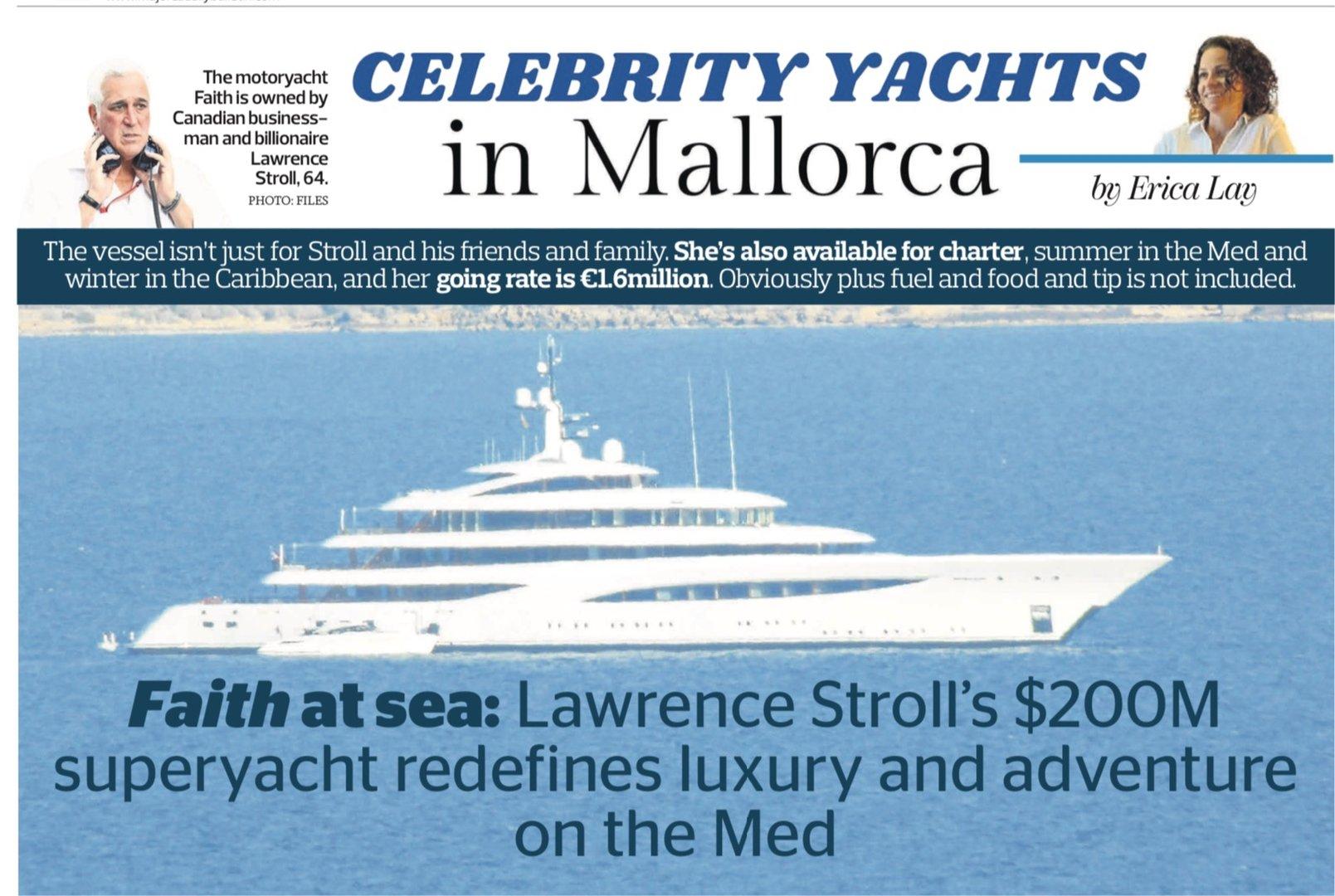
Spotted cruising around Mallorca this summer, the motoryacht Faith is owned by Canadian businessman and billionaire Lawrence Stroll, 64. Stroll, known for his investments in the fashion industry and his role in the automotive sector, particularly as the Executive Chairman of Aston Martin and partowner of the Aston Martin Formula One team, purchased the yacht to complement his luxurious lifestyle.

Stroll, who made billions in the fashion industry thanks to brands like Ralph Lauren, Michael Kors and Tommy Hilfiger has quite the portfolio. He collects vintage Ferraris, one of which he paid a record breaking $27.5million back in 2013. But let’s talk about his boat, the 97m Faith.

Launched by Dutch shipyard Feadship in 2017, Faith is a symbol of sophistication, innovation, and opulence. With her sleek design, state-of-the-art amenities, and impressive performance, Faith stands out as a pretty remarkable superyacht.

Her exterior design, crafted by renowned yacht designer RWD (Redman Whiteley Dixon), exudes elegance and modernity. The sleek lines, harmonious proportions, and expansive outdoor spaces are tailored to provide both aesthetic appeal and functional luxury. Her interior, also designed by RWD, showcases a sophisticated blend of contempory style and timeless luxury. The use of high-quality materials, meticulous craftsmanship, and bespoke furnishings create an ambiance of unparalleled comfort and class.

Faith offers an array of luxurious amenities designed to cater to the discerning tastes of her guests:

1. Accommodation:

Faith can accommodate up to 12 guests in 7 sumptuous staterooms, including a lavish master suite, four VIP suites, and four additional guest cabins. Each stateroom is meticulously designed to offer maximum comfort and privacy.

2. Wellness and Relaxation:

The yacht features a stunning beach club with a spa, sauna, and a fully equipped gym. Guests can enjoy a relaxing massage, unwind in the sauna, or stay active with the latest fitness equipment.

3. Swimming Pool:

One of Faith’s standout features is her 9m swimming pool located on the main deck. The pool, with its transparent floor, allows natural light to filter through to the beach club below, creating a unique and mesmerizing effect.

4. Cinema Room:

The yacht boasts a state-of-the-art cinema room, providing an immersive viewing experience for guests to enjoy the latest movies in ultimate comfort.

5. Dining and Entertainment:

Faith offers multiple dining options, including a formal dining room and several alfresco dining areas. The sundeck features a bar, Jacuzzi, and ample lounging spaces, perfect for entertaining and socializing.

The vessel isn’t just for Stroll and his friends and family. She’s also available for charter, summer in the Med and winter in the Caribbean, and her going rate is €1.6million. Obviously plus fuel and food and tip is not included.

Faith is not just about luxury; she also delivers exceptional performance. Powered by twin MTU engines, she has a top speed of 17 knots and a cruising speed of 15 knots. The yacht’s impressive range of 5,000 nautical miles at a cruising speed of 12 knots allows for extended voyages to some of the world’s most remote and beautiful destinations.

Faith is equipped with state-of-the-art navigation and communication systems, ensuring safety and connectivity at all times. Her advanced stabilization system ensures a smooth and comfortable ride, even in rough seas.

Faith comes kitted out with a variety of tenders and water toys, ensuring endless entertainment for her guests. The yacht features three custom tenders for comfortable and stylish transport to and from shore including a 10m Feadship Limo. Guests can also enjoy an array of water toys, including jet skis, paddleboards, kayaks, seabobs, waterslides, and flyboards. For those seeking adventure, there are options for wakeboarding, waterskiing, and diving.

In line with the growing emphasis on sustainability in the yachting industry, Faith incorporates several eco-friendly features. These include advanced waste management systems, energy-efficient technologies, and environmentally friendly materials. The yacht’s design and operation reflect a commitment to minimizing her environmental footprint while providing the ultimate luxury experience.

Motor Yacht Faith is a masterpiece of design, luxury, and engineering. Her seamless blend of opulence, innovation, and performance makes her a standout in the world of superyachts. Whether exploring remote destinations or enjoying the finest amenities at sea, Faith offers an unforgettable experience for her guests, embodying the pinnacle of yachting excellence.

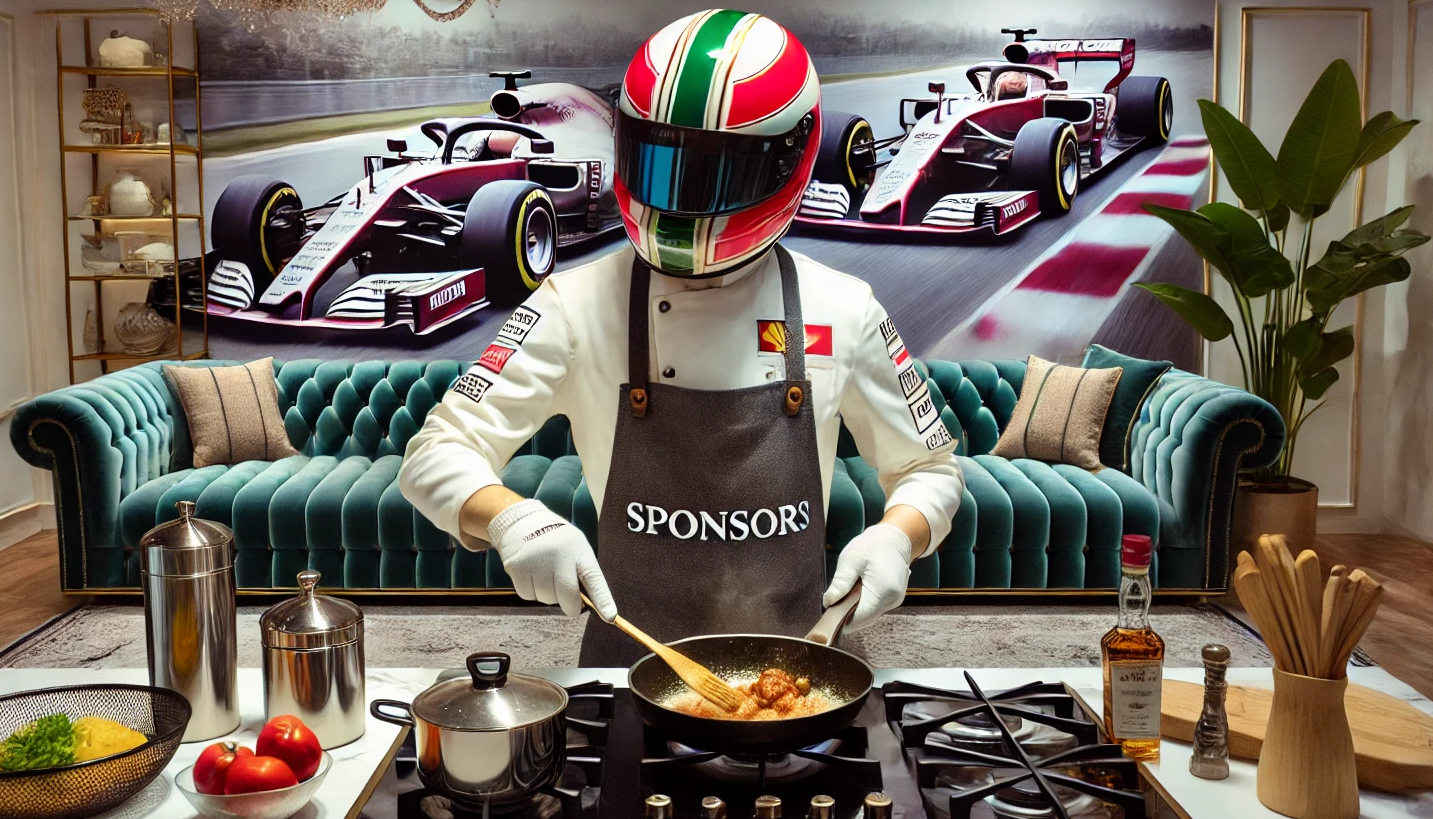
Hub – The Formula One Chef, the $14,000 Couch, and the Kitchen Circus

The Formula One Chef, the $14,000 Couch, and the Kitchen Circus by Luis Rafael Hurtado. #24/0180.

November 8, 2024 · 4 min read


The Formula One Chef, the $14,000 Couch, and the Kitchen Circus

Imagine this: I’m hired as a chef—a culinary magician expected to transform basic ingredients into dishes so breathtaking they’d make grown men weep. They want Michelin-star magic, the kind you’d expect to see in a kitchen outfitted with the latest, sleekest, most high-powered appliances. You know, state-of-the-art equipment, ready for a culinary Grand Prix.

Now, picture my excitement as I step into this “top-notch” kitchen… only to find a scene straight out of a circus of broken dreams. There’s the oven, an ancient relic on life support that seems to have barely survived the Nixon era, wheezing like it’s about to have a nervous breakdown. My heart sinks. I’ve gone from imagining a high-speed Ferrari kitchen to facing a lineup of appliances better suited for a historical reenactment of the 1970s. It’s like sending me to the Monaco Formula One Grand Prix in a 1970 Volkswagen Beetle and expecting a victory lap.

I’m told to “work with what I’ve got,” so I go to turn on the oven. But it doesn’t “turn on” so much as it awakens, sputtering and flickering like a half-dead campfire. It heats up, cools down, and heats up again in random bursts, like it’s trying to communicate in Morse code. Meanwhile, I’m sweating over a soufflé, whispering a silent prayer that it doesn’t collapse from a sudden temperature drop. Apparently, precision is optional when you’re working with an appliance that belongs in a yard sale’s “free” bin.

Next, I move on to the food processor—or as I like to call it, “the temperamental dinosaur.” This thing vibrates, growls, and makes noises that remind me of a jet engine about to fail mid-flight. It has exactly two modes: “slow-motion” and “violent chaos.” When I turn it on, it lurches around the counter like a possessed bull, forcing me to wrestle it with one hand while desperately holding the lid down with the other. I don’t know if I’m blending pesto or performing an exorcism.

And then we have the blender. Calling it a blender feels generous. I turn it on, and instead of blending, it gives the ingredients a gentle swirl, like a lazy day at the pool. I want a silky-smooth puree, but what I get is an art installation of chunky, half-mixed ingredients. Every time, I end up reaching in with a spoon to stir manually, leaning over the counter like I’m about to dive headfirst into a swamp.

But the real pièce de résistance in this house of horrors? The refrigerator. It’s an artifact so old that even “cool” would be an ambitious description. It barely chills to lukewarm, perfect for those days when you want to serve cheese with a side of food poisoning. Opening it feels like opening an Egyptian tomb, and honestly, there’s a good chance it’s haunted too, given the strange noises it makes at 3 AM.

Of course, the irony is that while they wouldn’t dream of upgrading this graveyard of appliances, they had no problem dropping $14,000 on a custom-made couch for the sitting room or purchasing an authentic Picasso at an auction at Christie’s in London. A couch! Plush, imported, stitched in threads of gold—or so I assume, given the price tag. It’s the kind of couch that demands its own spotlight, its own throne. But when I mention the idea of a new oven or a state-of-the-art induction top that will allow me to boil water in 90 seconds? Suddenly, everyone’s horrified. “Oh, no, that’s far too expensive!” they cry, clutching their wallets like I’ve asked them to fund a rocket to Mars or donate a kidney. “Why can’t you work with what you have?” they ask, as if expecting culinary perfection from these relics isn’t akin to expecting a symphony from a kazoo.

This kitchen circus doesn’t just push the boundaries of patience—it’s downright humiliating. Here I am, a chef with years of experience, battling it out with appliances that could double as historical artifacts. It’s exhausting, demoralizing, and borderline absurd. I’m like a Formula One driver forced to race on a tricycle with square wheels, somehow expected to win a trophy.

And every night, I leave that kitchen like a worn-out performer who’s just survived the most chaotic three-ring circus. They’ll eat my perfectly plated meal, completely unaware that I’ve just risked life, limb, and sanity to produce it. I’m pretty sure I burned 2,000 calories just trying to keep that food processor from flying off the counter.

So here’s to the Formula One chef, condemned to cook on outdated relics that belong in a thrift store. Here’s to the blender with the speed of a gentle breeze, to the oven on life support that likes to play hard-to-get, and to the $14,000 couch that sits in pristine silence as I juggle flaming pans like a culinary circus act.

And when the soufflé finally comes out right and they take that first bite, oblivious to the battlefield I’ve just survived, I take my bow. In this kitchen, the only thing high-end is the irony.

Hub – The Fast-Paced Culinary Artist

The Fast- Paced Culinary Artist by Luis Rafael Hurtado. #24/0179.

November 7, 2024 · 2 min read


The ad practically glows with promise: “A vibrant and fast-paced family of four in Palm Beach seeks a culinary artist to transform every meal into a magical moment!” Sounds like a dream job, right? A stable gig cooking for an appreciative audience, showcasing your talents… until you read between the lines.

The employer expects you to offer multiple options for breakfast, lunch, and dinner—presumably because the family can’t decide if they want scrambled eggs or a five-course brunch by 9 a.m. every day. And let’s not overlook the themed meals: Taco Tuesday, “Italian Wednesday.” Yes, you’re expected to produce authentic street tacos on demand, followed by a Michelin-worthy pasta course less than 24 hours later. Who doesn’t want a side of whiplash with their risotto?

Then there’s the sourcing of only the freshest, seasonal ingredients. So add “grocery trip marathon” to your daily duties because your future employers believe that nothing pairs with a fast-paced life like hyper-organic vegetables sourced individually from obscure farmers’ markets. And on days when spontaneity hits—say, they’ve suddenly decided they want Peking duck for lunch—you might be casually asked to board a flight to Chinatown to grab “the perfect hoisin sauce.”

Of course, none of this would work without “a strong understanding of dietary restrictions.” In other words, gluten, dairy, and fun are firmly outlawed, and every dish must be recalculated based on who’s in a quinoa mood. Your salads need to be masterpieces; your soups must rival paintings. You’d think the family would just be happy you managed to make breakfast, lunch, and dinner in under 12 hours, but no, they want each dish “aesthetic,” probably expecting you to plate Tuesday’s toast with a side of edible poetry.

Flexibility? It’s right there on the list. That’s code for “we have no fixed schedule, so neither will you.” Expect calls at all hours, requests to whip up midnight soufflés, and be prepared to travel. Oh, and don’t forget the “competitive salary,” which will never quite feel like enough once you’ve catered the boss’s fourth impromptu dinner party this week.

In the end, you’d think they want a personal chef, but what they’re really after is a magician. They want someone who can conjure up a perfectly plated soufflé at a moment’s notice, while also being a discreet therapist, world-class decorator, and travel companion with the flexibility of a yoga instructor. You could swear they’re looking for a Michelin-starred Mary Poppins with an endless supply of gourmet ingredients in her apron.

But sure, if you’re willing to give up your weekends, holidays, and any semblance of a personal life for the chance to make a Palm Beach family’s dinner “memorable,” then this job’s perfect for you! Just remember to brush up on your themed brunch game and ensure your culinary “portfolio” includes at least one edible sculpture of the Eiffel Tower. After all, in today’s market, you’re not just a chef—you’re the entire restaurant, five days a week, with a smile and a garnish.

Hub – How Nelson the Chief Officer Got the Nickname

How Nelson the Chief Officer Got the Nickname “Mapache” (Raccoon) by Luis Rafael Hurtado. #24/0171.

October 28, 2024 · 3 min read


How Nelson the Chief Officer Got the Nickname “Mapache” (Raccoon)

Disclaimer: Any resemblance to real people or events is purely coincidental. This story is entirely fictional and meant only to entertain.

An old captain friend ropes me into cooking for a crew delivering a boat to Southern California via the Panama Canal, departing from St. Thomas, USVI. Now, this wasn’t your average professional team; this crew had all the sophistication of a drunken frat house reunion, featuring guys who acted more like they’d escaped a sailor-themed fraternity than passed a job interview. And guess who the chief mate was? A guy named Nelson—yes, like the legendary British admiral. But let’s just say the only thing our Nelson had in common with the great naval hero was the name. This guy was a disaster on two legs, and over time, he would become the muse for many of my future tales of woe and wonder.

So here I am, the “wise elder” among the crew, trying to focus on the crossing prep while the rest of them are more interested in getting hammered and chasing spring-break romance than preparing for any sort of responsible journey. Now, if you’re experienced like me, you know not to go on a booze-fueled bender the night before a crossing. This is the time to ensure things are in order, double-check supplies, and make sure the crew isn’t too wrecked to set sail. But try telling that to a bunch of college-age kids on a tropical island filled with, let’s say, ample “distractions.” So instead of lecturing, I pointed out the places not to go.

Naturally, they all flock to the very dive I advised against—a local bar where drunk tourists are tolerated about as well as a hurricane, but where the college girls flock like moths to a flame, hunting for an “exotic island experience.” And, of course, our dear Nelson heads straight for a bombshell dancing alone, clearly hoping he’s found his ticket to paradise. Except, of course, he’s picked the one girl who happens to be dating the local version of Tony Montana. Cue the drama: as Nelson starts his “charismatic” approach, this island kingpin spots him, storms over, and delivers a Mike Tyson–level punch straight to Nelson’s face. By the time they scraped him off the floor and hauled him to the ER, he was barely recognizable and nearly down an eye.

Naturally, the next day’s departure was off, and our captain was not thrilled. Nelson hobbled back around noon, sporting what looked like a Halloween mask, with both eyes blackened to raccoon-level intensity. As a crew, we all felt for him. But I couldn’t help but remind them—had they listened to me about avoiding certain ahem hotspots the night before a crossing, Nelson might’ve been able to see out of both eyes and saved us the drama. But hey, who am I kidding? Drunk college girls and local beefcake bars are kryptonite to sailors.

Two days later, we finally set sail for the Panama Canal. After a much-needed stop for fuel and provisions, the captain laid down the law: nobody, and I mean nobody, was allowed to leave the boat. By this point, Nelson had healed enough to at least grin about it, and the whole raccoon-eye episode had turned into a running joke among the crew. Sailors, if anything, are kings of dark humor, and so Nelson—now sporting an uncanny resemblance to a raccoon—earned his new nickname: Mapache.

Hub – Finding a Job in These “Glorious” Times

Finding a Job in These “Glorious” Times by Luis Rafael Hurtado. #24/0169.

October 27, 2024 · 2 min read


Finding a Job in These “Glorious” Times

Ah, 2024. If the job market were a yacht, we’d all be hanging off the edge in a life raft, clinging to hope that some miracle gig with half-decent conditions will finally show up. This year’s job hunt has turned seasoned yacht professionals into desperate scavengers, scraping the bottom of the barrel for anything that remotely resembles employment. For those of us with experience, skills, and perhaps a few modest aspirations, the pickings are slim—and sometimes, humiliating.

Let’s not ignore the yacht-sized elephant here. The global economy has slammed the yachting industry, leaving a wave of overqualified crew wading through dubious “opportunities” that feel less like career moves and more like endurance tests. Many have taken “just-to-get-by” gigs where their biggest accomplishment is surviving the season. And then there are the poor souls waiting for “something better,” looking for a job that actually reflects their talents. Hope springs eternal, right?

And oh, the lovely atmosphere onboard! We’ve been graced with a spectacular display of professionalism—or the lack thereof. Expect lies about job roles, underwhelming paychecks (if they arrive), and more toxic behaviors than a reality TV marathon. Scam job postings are the cherry on top; some recruiters seem to think “you’re lucky we’re offering anything” is a viable pitch.

The simple fix? Hire better, pay fairer, and maybe—just maybe—we’ll see an end to this absurd cycle. Yes, that may mean parting with a few extra dollars, but consider it insurance against the inevitable “new hire nightmare” scene, starring an underqualified, overconfident replacement who turns your season into a soap opera.

Yet despite the current mess, there are still exceptional crew members—officers and heads of department—eager to jump in and make a real difference. They’ve got the experience, the leadership skills, and the dedication to bring their A-game and transform your program into something truly worthwhile.

So, here’s to hoping yacht owners and recruiters stop looking for shortcuts and start valuing the incredible crew still standing, waiting to work their magic onboard. After all, your vessel’s success could be just a better hiring decision away. Let’s hear your thoughts in the comments—unless you’re already too busy fixing someone else’s mess.

Hub – Culinary Innovation in the Superyacht Industry

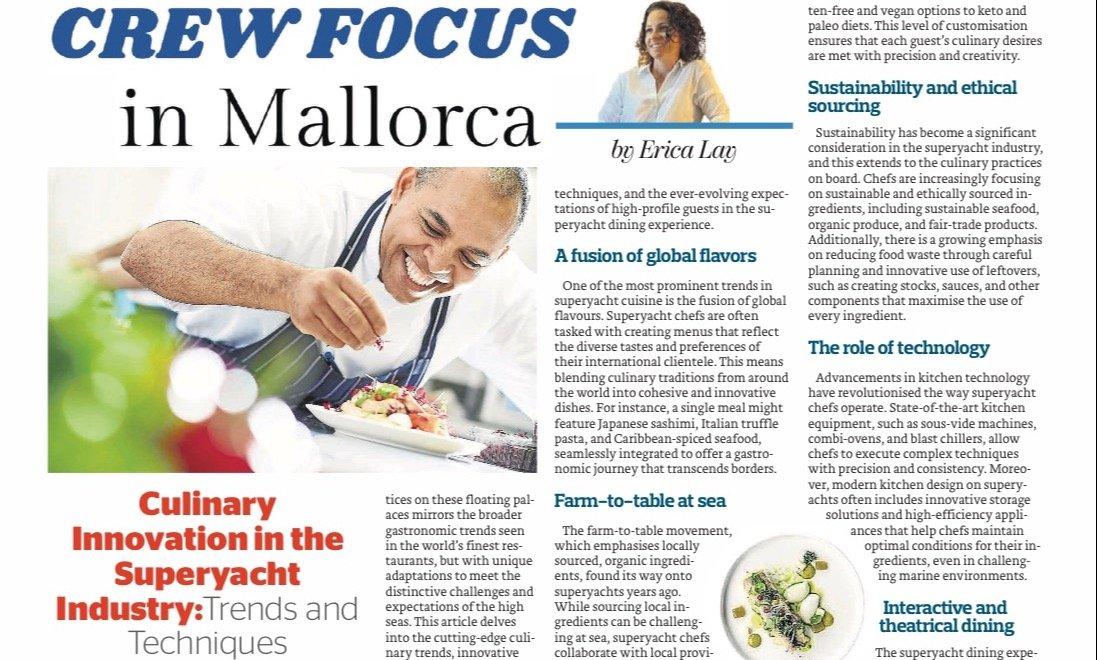
Culinary Innovation in the Superyacht Industry: Trends and Techniques. With Courtesy of Erica Lay & The Mallorca Bulletin. #24/171.

October 25, 2024 · 3 min read


Culinary Innovation in the Superyacht Industry: Trends and Techniques

In the opulent world of superyachts, where luxury knows no bounds, the dining experience stands as a hallmark of extravagance and sophistication. The evolution of culinary practices on these floating palaces mirrors the broader gastronomic trends seen in the world’s finest restaurants, but with unique adaptations to meet the distinctive challenges and expectations of the high seas. This article delves into the cutting-edge culi nary trends, innovative techniques, and the ever evolving expectations of high-profile guests in the superyacht dining experience.

A fusion of global flavors

One of the most prominent trends in superyacht cuisine is the fusion of global flavours. Superyacht chefs are often tasked with creating menus that reflect the diverse tastes and preferences of their international clientele. This means blending culinary traditions from around the world into cohesive and innovative dishes. For instance, a single meal might feature Japanese sashimi, Italian truffle pasta, and Caribbean-spiced seafood, seamlessly integrated to offer a gastronomic journey that transcends borders.

Farm-to-table at sea

The farm-to-table movement, which emphasises locally sourced, organic ingredients, found its way onto superyachts years ago.

While sourcing local ingredients can be challenging at sea, superyacht chefs collaborate with local provisioners and markets at various ports of call to procure the freshest produce, seafood, and meats. This approach not only ensures the highest quality ingredients but also supports local economies and reduces the carbon footprint associated with food transportation. Many chefs love to shop at local markets and get personal recommendations from the people they encounter there and guests love it when their food has a story.

Molecular gastronomy

A trend popularized by renowned chefs like Ferran Adrià and Heston Blumenthal, molecular gastronomy has made significant inroads into superyacht kitchens. This culinary approach involves using scientific techniques to transform ingredients in unexpected ways, creating dishes that are as visually stunning as they are delicious. Techniques such as spherification, gelification, and the use of liquid nitrogen are employed to create avant-garde dishes that delight and surprise high-profile guests.

Personalised dining experiences

High-profile guests on superyachts expect more than just a meal; they expect a personalised dining experience tailored to their individual tastes and dietary preferences. Superyacht chefs must be adept at creating bespoke menus that camter to a variety of dietary needs, from glu ten-free and vegan options to keto and paleo diets. This level of customisation ensures that each guest’s culinary desires are met with precision and creativity.

Sustainability and ethical sourcing

Sustainability has become a significant consideration in the superyacht industry, and this extends to the culinary practices on board. Chefs are increasingly focusing on sustainable and ethically sourced ingredients, including sustainable seafood, organic produce, and fair-trade products. Additionally, there is a growing emphasis on reducing food waste through careful planning and innovative use of leftovers, such as creating stocks, sauces, and other components that maximise the use of every ingredient.

The role of technology

Advancements in kitchen technology have revolutionised the way superyacht chefs operate. State-of-the-art kitchen equipment, such as sous-vide machines, combi-ovens, and blast chillers, allow chefs to execute complex techniques with precision and consistency. Moreo- ver, modern kitchen design on superyachts often includes innovative storage solutions and high-efficiency appliances that help chefs maintain optimal conditions for their ingredients, even in challenging marine environments.

Interactive and theatrical dining

The superyacht dining experience is increasingly incorporating elements of interactivity and theatre. Guests might be invited to participate in the culinary process, whether through cooking classes, wine tastings, or interactive dining experiences where chefs prepare dishes tableside. This trend not only enhances the dining experience but also creates memorable moments that guests can cherish long after their trip has ended.

The superyacht industry represents the pinnacle of luxury, and its culinary practices are no exception. As global culinary trends evolve, superyacht chefs continue to innovate, integrating diverse flavours, sustainable practices, and cutting-edge techniques to meet the discerning tastes of high-profile guests. Whether through the fusion of global cuisines, the use of molecular gastronomy, or the emphasis on personalised and sustainable dining, the superyacht culinary experience remains at the forefront of gastronomic excellence. In this ever-evolving landscape, one thing is certain: dining on a superyacht is an unparalleled experience that epitomises the art of luxury living.

Hub – My Platonic Love Affair with the Onboard Stewardess

My Platonic Love Affair with the Onboard Stewardess by Luis Rafael Hurtado. #24/0164.

October 25, 2024 · 2 min read


My Platonic Love Affair with the Onboard Stewardess

Ah, the stewardess—a true unsung hero of the yachting world. Imagine it: a romantic, almost Shakespearean figure silently, diligently giving everything she’s got to an industry that, just like an ill-fated love affair, eventually casts her aside for someone younger, fresher, and with a bit more… vigor. They say love hurts, but what could be more painful than being a stewardess in yachting?

These ladies start with dreams of glamour, only to find themselves at sea (literally and figuratively) in a lifestyle that’s less “luxury cruise” and more “upscale captivity.” Some stick around, hopeful they might cross paths with someone famous who will swoop in and rescue them from this whirlpool of high expectations and low appreciation. They’ve got visions of champagne-soaked proposals from millionaires or Hollywood heartthrobs, but often it’s the captain or an engineer offering a well-deserved escape—a rare life raft in this luxury prison.

And let’s be honest: nobody really notices the magic they create. Those pristine cabins? Those crisp, wrinkle-free linens? Or the dinner table, set with military precision and symmetry? It’s like they’re an army of invisible hands weaving this illusion of perfection, yet guests (and even the crew) pass through it like ghosts. Nobody asks, “Wow, who arranged these forks with the accuracy of a NASA engineer?” And does anyone even pause to marvel at their shirts, ironed to perfection, hanging in their closets like soldiers ready for parade?

A paycheck, tips, a handful of days off… Is that really enough for someone who essentially builds a home on the open sea? These stews craft an atmosphere, not unlike a luxury hotel meets private confinement, yet without so much as a whispered “thank you.”

Sure, May 31 is the big day for flight attendants, but where’s International Yacht Stewardess Day? In my view, it should be every day. So here’s a toast to the stews: the real MVPs who run the ship and hold up the illusion of yachting glamour with one hand while folding towels into origami masterpieces with the other.

Hub – The Art of Crew Meals

The Art of Crew Meals: How Great Food Boosts Morale by Luis Rafael Hurtado. #24/0163.

October 25, 2024 · 2 min read


The Art of Crew Meals: How Great Food Boosts Morale  

Let’s face it: feeding the crew can either be the highlight of the day or the slow death of morale. Picture this—crew meals that are a sad, tasteless reminder of last night’s leftovers or, worse, meals so heavy they put everyone in a food coma. That’s not exactly setting the stage for a well-oiled team of energetic, happy workers. But fear not! Crew meals don’t have to be boring or bland, and when done right, they can skyrocket morale and productivity.

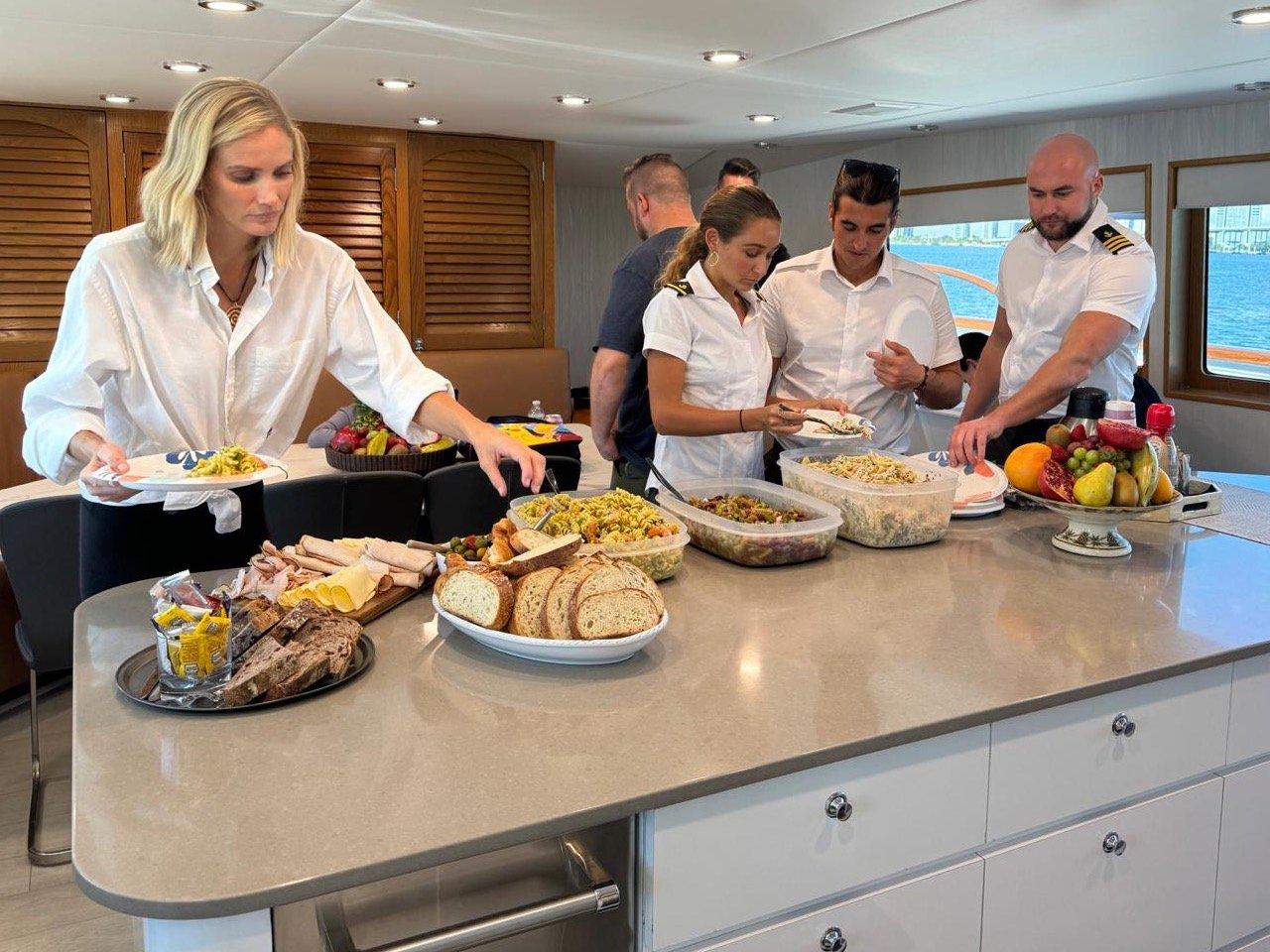
First off, crew meals should be fun—and by fun, I don’t mean throwing mystery meat into a salad and hoping no one notices. I’m talking about making meals an experience, something people look forward to. A little variety, a dash of creativity, and you’ve got yourself an army of happy crew members. Whether it’s themed taco days or simply experimenting with new flavors, putting effort into crew meals shows that you care about the people you work with (and let’s be honest, it keeps them from forming mutinies).

Now, let’s tackle the “healthy, tasty, and simple” trifecta. Think about lunch for a moment—it’s the mid-day anchor that can make or break productivity. Heavy meals that sit in the stomach like a lead balloon? Yeah, those will guarantee the crew dragging through the rest of the day, fighting the urge to nap under a deck. Keep it light but flavorful. Fresh salads, grilled meats, and vibrant veggies can offer taste without the bulk. It’s like saying, “I care about you… but I also care that you can still function after lunch.”

And here’s where the sarcasm kicks in—because we all know that someone will always complain, no matter how great the food is. “But where’s my cheesy fries?” or “Can we have pizza again?” Look, I’m not saying you should deny the crew comfort food entirely. There’s a time and place for indulgence. But less is more, especially at lunch. Giving them a rich lasagna at noon is pretty much the same as saying, “I dare you to stay awake and productive.”

The truth is, good food directly impacts crew morale. When meals are healthy, tasty, and simple, everyone wins. The crew feels appreciated, energy levels stay up, and the workday flows smoothly. Plus, you might avoid a few hangry outbursts, which is always a bonus. The secret? Focus on quality ingredients, bold flavors, and a little fun. You’ll have a team that’s ready to work—and one that’ll actually look forward to mealtime.

Because let’s be real—nothing says, “I love this crew” like feeding them something other than the sad remnants of last week’s freezer surprise.

Hub – Tales of the Tipping Tyrant

Tales of the Tipping Tyrant: When Greed Meets Karma by Luis Rafael Hurtado. #24/0160.

October 19, 2024 · 3 min read


Tales of the Tipping Tyrant: When Greed Meets Karma

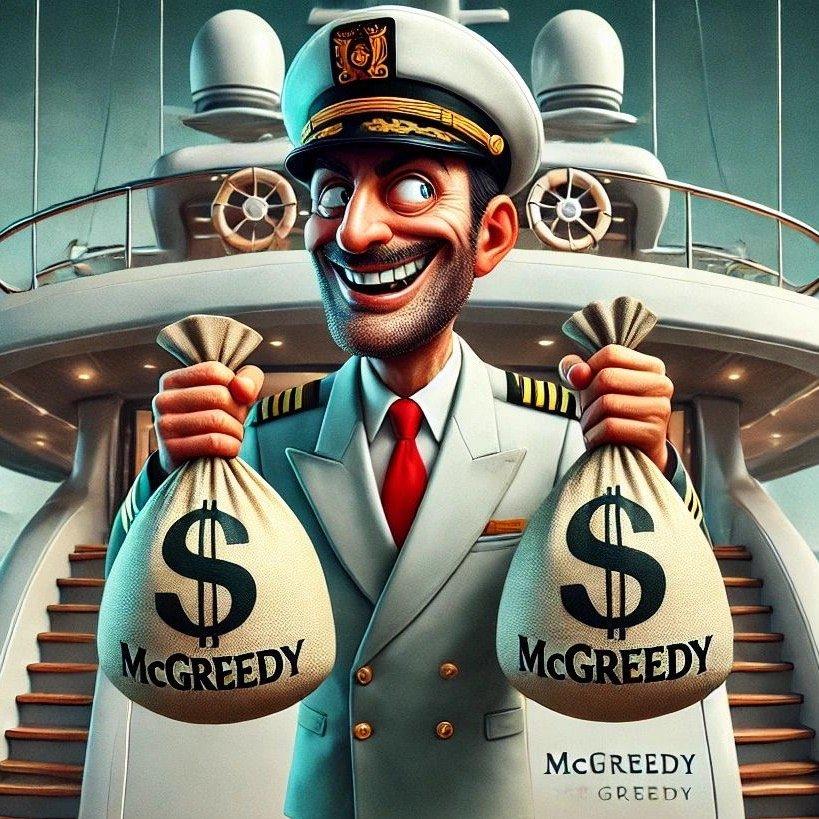
Ah, life on the high seas! Sun, surf, and the promise of fat charter tips—unless, of course, you’re working under Captain McGreedy and his equally ambitious First Lady. You see, Captain McGreedy was a bit of an artist when it came to tips. But not the good kind of artist. More like the kind who sketches little lies and half-truths in the margins of reality, turning your hard-earned tips into his “retirement plan.”

It all started when we wrapped up a fantastic 12-day charter in New England. The guests were practically swimming in delight over my cooking. In fact, the head guest had initially hated rice with a burning passion. By day 12, I had him eating paella and risotto like it was the nectar of the gods. Exceeding expectations? We were crushing them.

So, imagine our surprise when Captain McGreedy called a “tip meeting” in the main saloon. Now, tip meetings are usually a cause for excitement. The crew gathers, hearts racing with the sweet anticipation of well-deserved cash. But this time, Captain McGreedy had a different vibe—his face pulled tight in a look of faux sadness, like a bad actor in a daytime soap opera.

He sighed, dramatically, of course, before dropping the bomb: “The guests… well, they were disappointed. And, uh, they only left $350 each in tips.”

Cue the crew’s stunned silence. $350?! For a 12-day charter? Even if the guests had hated the sunset views, the gourmet food, and the fresh sea breeze, $350 wouldn’t cover the price of their guilt for breathing oxygen on board.

I refused to believe it. After all, the head guest had been practically begging me for my personal information so I could cook for his next event. I mean, who invites the chef to their house if they’re unhappy? So, I did what any logical person would do: I told Captain McGreedy I was going to call the head guest to ask what went wrong. You know, just to clear the air.

And that’s when McGreedy’s face turned the color of a lobster being boiled alive. “Oh no, you can’t call him!” he stammered. “That’s, uh, not allowed!”

Not allowed? Please. I had the guest’s phone number in my pocket. He had practically hand-delivered it, along with rave reviews about my food. So, I calmly informed Captain McGreedy that I would indeed be calling. I mean, what did I have to lose? I wasn’t about to let a $350 tip and a fabricated sob story fly under my radar.

That’s when McGreedy disappeared into his cabin with his wife—who, coincidentally, had been included in both halves of the tip calculation. Talk about double-dipping! About 45 minutes later, Captain McGreedy emerged, looking suspiciously less panicked.

“Oh, uh, I made a mistake,” he muttered. “Turns out, the guests actually left $3,000 each.”

Mistake? Sure, and I’m a world-class ballet dancer. The little weasel had been caught red-handed, and there was no way to wriggle out of this one.

As soon as the tip hit my hand, I did what any self-respecting crew member would do: I gave my resignation, packed my bags, and left the boat faster than Captain McGreedy could say “shared tip pool.” Because if there’s one thing I’ve learned, it’s that you can’t trust a captain who’s more interested in docking your tip than docking the boat.

Hub – Captains, Managers and Owners

Captains, Managers and Owners: Why Should You Use a Crew Agent? With Courtesy of Erica Lay & The Mallorca Bulletin. #24/0159.

October 18, 2024 · 4 min read


Erica Lay owner of EL CREW International Yacht Crew Agency http://www.elcrewco.com/

erica@elcrewco.com

Captains, Managers and Owners: Why Should You Use a Crew Agent?

In today´s yachting industry time is usually of the essence. Busy programmes and tight yard periods keep the pressure on the team; as yachts increase in size and complexity so must the crew. Sometimes a captain simply doesn’t have the time to source individuals with the specialist skills and experience required – that´s ok though, that´s where people like me, the humble crew agent, come in.

Each year that passes sees yachts grow in size and with the rate of developing technology so do the systems on board. As such, new positions have arisen. For example, we now see Interior Managers residing above Pursers and Chief Stews, and ITOs (Information Technology Officers) working alongside the ETOs and Engineering teams. Quite often with these specific roles we need to spread the net a little wider and actively seek people from outside the yachting industry. This takes time and research; quite often the yacht captain or manager simply does not have the time to dedicate to finding these people.

But the same goes for the traditional positions; everyone in yachting knows how hard it is to find suitable crew, most captains will tell you unequivocally it’s the part of their job they simply detest and often, it gets pushed to the bottom of the list of things to do before season starts (you know, that list which mostly consists of putting the boat back together after a lengthy winter of maintenance and projects, and making sure everything is ready for the first boss trip of the season), so that´s probably why crew agents evolved. We have a niche to fill, and we have evolved further to satisfy the different wants and objectives of our clients.

Some captains would still rather do the leg work themselves and search through suitable CVs on a database and check the references to get feedback from industry peers. In this case, a headhunter style agent probably isn´t for you – it´s more expensive and if you are going to be repeating their work anyway it´s a little pointless. For this reason, we are seeing more of the shopping cart approach agents popping up. You can pay an annual fee to search through an online database yourself and contact whoever you like for any position. Works for a lot of people, if you have a good amount of time!

Social media is a great way of gathering CVs. Be warned; you will have to sift through a large number of applicants in order to find those crew who are suitable. Try it – it’s quite an experience; a captain said to me in Antigua earlier this year he had been inundated and it gave him a newfound respect for what I do. Which was nice.

Basically it all comes down to best use of time. Although I hear “management (or owner) is trying to save money!”, this is illogical and should be challenged. Let’s pretend for a moment you own a €50,000,000 superyacht. Don’t you want to make sure you have the best of the best working on board? Minimising risk to your vessel, and ensuring you and your guests and family are receiving not just the best service, and incredible food, you’re safe and well looked after, and you know, you can rest easy knowing your crew are doing the best for you and your yacht?

And, as a captain, don’t you want to be reassured that you have an awesome team working with you to help you achieve these goals, and feel secure you can let them run their own departments successfully and safely?

So ask yourselves – realistically do you have the time, and expertise required to source the top tier of superyacht crew? For the sake of saving a little money in the short term, is it worth it. Plus it’s worth considering that by not outsourcing recruitment to highly experienced specialists like myself and my peers, you’re taking the Captains or Heads of Departments away from their other duties. Once you tot up how many hours they’ve spent sifting through CVs, trying to check references and interview and check certificates and all that good stuff… are you really saving that many euros?

As an owner, would you do this in your land-based operations? Probably not. So I’m not sure why costs are trying to be reduced on what is potentially the most important part of a superyacht’s operation. If you hire a bad engineer who costs you thousands of euros of damage, or a chef with a drinking issue who fails to serve your charter guests and costs your vessel’s reputation and damages future income streams, well, was it worth saving that fee? 

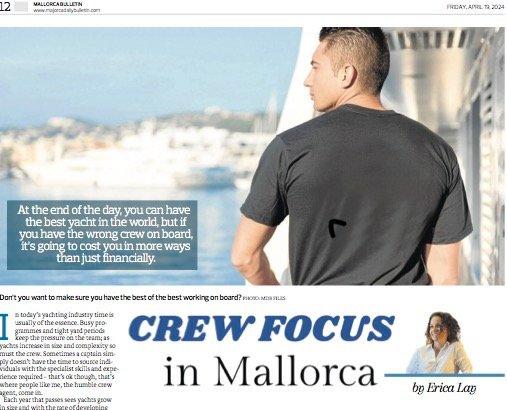
At the end of the day, you can have the best yacht in the world, but if you have the wrong crew on board, it’s going to cost you in more ways than just financially.