Hub – The Allure of the Open Sea

The Allure of the Open Sea: A Prelude to a History of Private Yachting by Gregory C. Y. Piatkowski. #24/0151.

October 12, 2024 · 5 min read


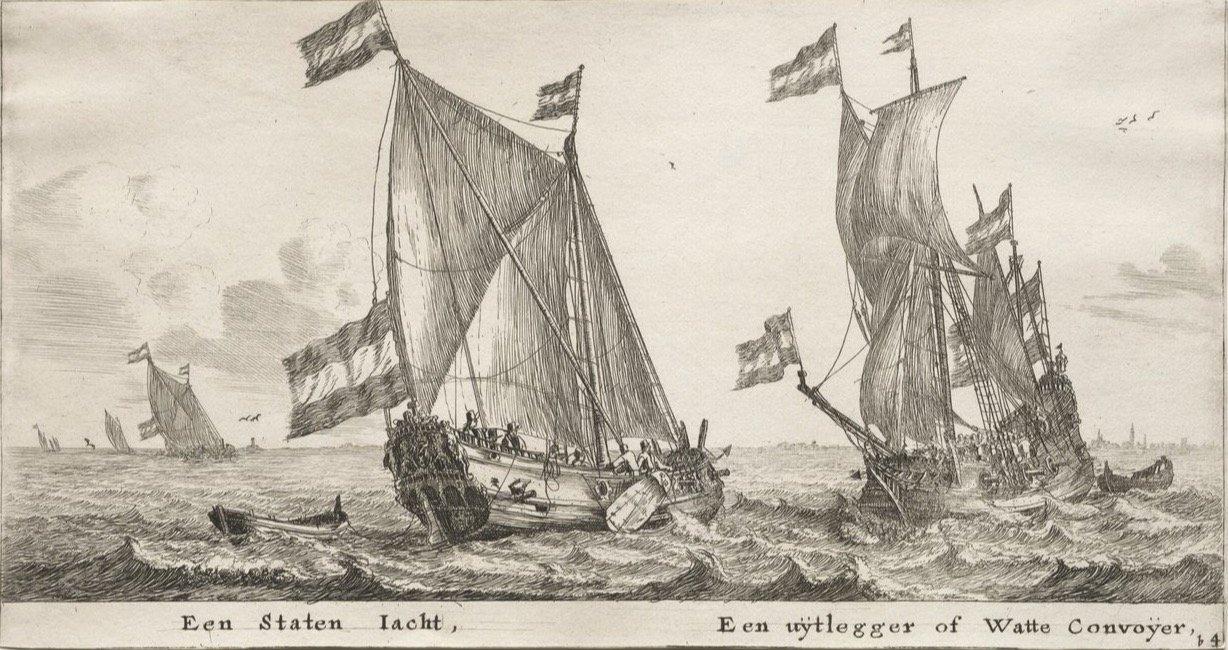
(Picture: Ships of Amsterdam: Dutch Admiralty Yacht. A Guard Ship.)

The Allure of the Open Sea: A Prelude to a History of Private Yachting

Private yachting is more than a pastime; it’s a lifestyle choice, a blend of adventure and exclusivity that offers freedom on the open water. At its heart, private yachting is the ownership or use of a vessel specifically for personal leisure rather than commercial or competitive purposes. It’s a realm where the practical meets the luxurious, where one can cruise at their own pace, far from the bustle of the shore, with a view that’s constantly changing.

Historically, private yachting emerged as a pursuit for the wealthy, those who sought both relaxation and status as they sailed along coastlines or crossed seas. Today, private yachting has expanded to encompass a diverse array of vessels, from compact sailing yachts to sprawling superyachts equipped with every imaginable amenity. While it once symbolized exclusivity and luxury, modern private yachting often reflects an appreciation for the environment, with owners exploring more sustainable ways to navigate the world’s oceans.

In essence, private yachting embodies a desire to escape, to explore, and to experience the world from a unique vantage point, one where the horizon is yours alone and the sea stretches endlessly before you.

In Hemingway’s words, the sea is “the last free place on earth.” Out there, away from the land and the noise, it’s just you and the horizon. That’s the allure that’s driven yachting from the start—a taste of true freedom, untamed and raw. Hemingway captured the soul of it: the sea is both a companion and a challenger, a place that reminds you that freedom isn’t found in comfort. It’s found when you’re willing to face the unknown, stripped down to your core.

This article is a first step—a pilot, if you will—into a series exploring the fascinating journey of private yachting from its origins to the present day. The history of private yachting isn’t just about boats; it’s about the people who embraced the open sea, driven by a sense of adventure, luxury, and freedom. This series will chart the evolution of private yachting across the centuries, beginning here with a broad look at its key milestones.

1600s: Dutch Beginnings and the Birth of the “Jacht”

Private yachting owes its start to the Dutch in the 17th century, who, amidst their Golden Age, crafted small, swift vessels called “jachts” to patrol waterways and transport goods. These boats quickly gained popularity among the Dutch elite, who saw in them the potential for leisure, not just utility. The Dutch merchant class and nobility began using these jachts for personal voyages, and with that, the first spark of private yachting was born.

1660: Charles II and the Spread of Yachting to England

In 1660, the Dutch presented England’s Charles II with a yacht named Mary, and the English king was captivated. This gift marked a pivotal moment, bringing yachting into the English court and spreading its allure to British nobility. Charles soon had more yachts built and started informal races on the Thames, solidifying yachting as a pursuit of leisure, not merely function.

1720: The First Yachting Club and Formalized Yachting

The Royal Cork Yacht Club, founded in 1720 in Ireland, became the world’s first yachting club, formalizing the sport with organized regattas. This institutionalization of yachting encouraged enthusiasts to gather, race, and discuss their passion. Yacht clubs spread throughout Europe, and yacht design began evolving with a focus on speed and maneuverability, laying the groundwork for competitive sailing as we know it.

1851: The America’s Cup and International Competition

The 1851 America’s Cup put yachting on an international stage when the American schooner America bested the British fleet. This historic race ignited a sense of rivalry that pushed yacht designs toward new heights of speed and efficiency. The America’s Cup remains a prestigious event, exemplifying yachting’s shift from leisurely cruising to high-stakes competition.

Late 1800s to Early 1900s: The Golden Age of Yachting

The late 19th century saw a surge in luxury yachting. Industrialists, royals, and socialites commissioned ever more lavish yachts, turning them into floating palaces complete with salons, dining rooms, and more. Steam-powered yachts allowed for extended journeys, further cementing yachting as a status symbol. During this golden era, private yachts became statements of wealth and a testament to the power of their owners. The golden era of classic sailing, with its elegant vessels and leisurely cruises, came to a crashing halt with the outbreak of World War I. Yachts that once glided along peaceful coastlines were suddenly pulled into the war effort, repurposed as patrol boats and hospital ships. Yacht builders traded teak and mahogany for steel and iron, their focus shifting from crafting beauty to building for battle. By the war’s end, the world had changed. That carefree elegance was a relic, and society was no longer in the mood for grandeur. The yachts of pre-war days became silent witnesses to a lost time, as people turned to rebuilding rather than indulging. Yachting would continue, of course, but it would emerge different—a symbol of the new world, shaped by both loss and resilience.

Post-WWII: Motor Yachts and Modern Materials

After World War II, advancements in materials like fiberglass and aluminum changed the game. These materials allowed for lighter, more durable yachts, and motor yachts surged in popularity, bringing unprecedented comfort and convenience. The 1950s and 60s saw the rise of the superyacht, with features like multiple decks, swimming pools, and lavish living spaces. Yachting had truly transformed into a lifestyle of luxury and freedom.

1970s-1980s: The Superyacht Craze

The 1970s and 80s witnessed a boom in superyachts, driven by the wealth of a new class of industrialists and moguls. Yacht builders like Feadship and Lürssen crafted massive vessels with cutting-edge technology, from satellite communications to computerized navigation systems. Superyachts became the ultimate symbol of affluence and the means for a select few to explore the world with unmatched comfort.

1990s-Present: Sustainability and New Trends

Today, yachting balances luxury with environmental consciousness. Innovations in hybrid propulsion systems, solar panels, and sustainable materials have redefined modern yacht design. Meanwhile, the trend toward expedition yachts has allowed owners to journey to remote, untouched places, blending exploration with eco-friendly practices. The spirit of yachting endures, with a new generation of yachts and yacht owners who prioritize sustainability while indulging in the age-old allure of the open sea.

What’s Next in This Series?

This pilot article sets the stage for a deeper dive into each of these eras, exploring the personalities, technological advancements, and cultural shifts that have defined private yachting. In the coming articles, we’ll examine everything from the early days of the Dutch “jacht” to the cutting-edge designs of today’s eco-friendly superyachts, offering a comprehensive look at the rich tapestry of yachting’s past and future. So, join us as we chart a course through time, uncovering the stories that have made private yachting what it is today—a pursuit of freedom, luxury, and the endless possibilities of the open water.

This pilot not only introduces the history of private yachting but also frames the series as an invitation to explore the evolution of yachting across centuries. Each forthcoming article will delve into specific aspects, making the entire series a journey through the fascinating legacy of yachting.

Hub – The Allure of the Open Sea Part I

The Allure of the Open Sea Part I: A History of Private Yachting by Gregory C. Y. Piatkowski. #24/0161.

October 20, 2024 · 4 min read


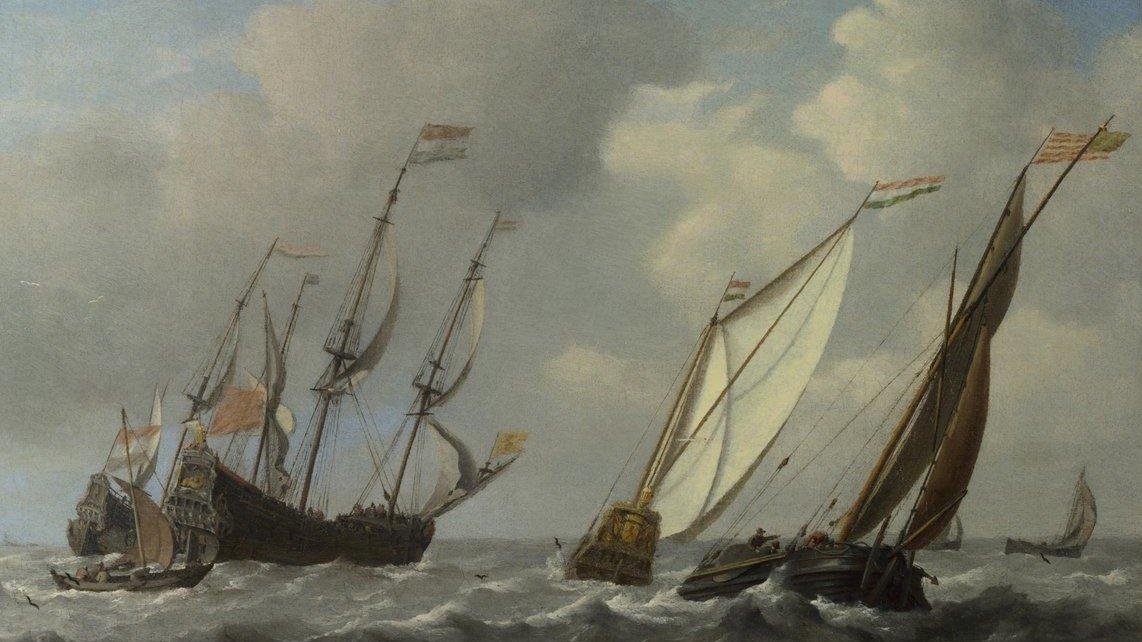
(Picture: A Dutch Ship, a Yacht and Smaller Vessels in a Breeze, c. 1660

Willem van de Velde the Younger)

The Allure of the Open Sea Part I

Private yachting is not merely a pastime; it represents a lifestyle, one that blends adventure with exclusivity and offers unparalleled freedom on the open water. At its core, private yachting revolves around the ownership or use of a vessel solely for personal enjoyment rather than commercial or competitive activities. It’s a world where practicality and luxury meet, offering the chance to explore far from the crowded shores, with ever-changing views and a pace set by the individual.

The term “yacht” wasn’t always synonymous with luxury. In the 17th century, as the Netherlands ascended as a dominant trading power, the Dutch jacht was both a defensive tool and a symbol of status. Originally designed to patrol waters and protect vital trade routes from pirates, these vessels played a critical role in securing Dutch commerce. Their agility and speed allowed captains to chase down threats in areas inaccessible to larger ships. However, as Dutch wealth grew, so did the purpose of the jacht. It evolved from a practical, military vessel into a statement of luxury and personal independence, marking a significant transformation in its identity.

At that time, “yacht” didn’t refer to a specific type of ship but was more of a broad term applied to various vessels with distinct purposes. For instance, the Schleswig-Holstein jacht was a small coastal freighter operating in the Baltic Sea, while the Blockzijlder jacht was a freighter navigating the Zuiderzee. Rather than a strict classification, the word “yacht” was used for ships suited to particular tasks, reflecting a broad spectrum of functionality and design.

Key Characteristics of the Dutch Jacht

1. Speed and Agility:Above all, the jachtwas built for speed. Its narrow beam and shallow draft enabled it to move quickly through coastal and inland waters, making it ideal for chasing down pirates or navigating shallow waters where larger vessels couldn’t venture.

2. Maneuverability:The jachtwas designed for swift, tight maneuvers, essential for the Dutch coastal and riverine environments. This agility allowed it to excel in defense and scouting missions, easily navigating narrow passages and shallow areas.

3. Shallow Draft:One of the jacht‘s defining features was its shallow draft, which allowed it to sail in waters too shallow for larger ships, providing access to tricky harbors and preventing the ship from running aground—crucial in the Netherlands’ coastal waterways.

4. Versatility:The jachtwas a multipurpose vessel, valuable for military tasks like patrolling or intercepting enemy ships, and flexible enough to serve as a dispatch vessel, scout, or even a command ship for fleet commanders.

5. Luxury and Ornamentation:As Dutch wealth increased, the jachttransitioned from a purely functional vessel to a status symbol. Wealthy merchants and naval officers began commissioning yachts with ornate carvings, gilded decorations, and lavish interiors, turning the jachtinto a floating symbol of power and prestige.

6. Durability and Construction:Typically built with sturdy oak for the hull and pine for the masts, the jachtwas crafted to endure the rough conditions of the North Sea, making it suitable for both military operations and extended luxury voyages.

Dutch writers such as Nicolas Witsen and Willem van Winschooten provide insight into the origins of the word “yacht.” The phrase “lagen ofte jacht maken,” meaning “to hunt or pursue another ship,” suggests that early yachts were smaller, fast vessels designed for speed, often tasked with intercepting other ships. Over time, “yacht” became a term of distinction, transcending its original military role.

The late 16th century, during the early stages of the Eighty Years’ War, likely saw the term “yacht” take root. Fast, maneuverable ships were essential for dispatch services and naval command, and by the early 1600s, “yacht” had become synonymous with vessels of both prestige and utility. Even warships commanded by naval officers doubled as symbols of status.

Witsen’s Specifications for the Jacht

Nicolas Witsen’s 1671 work, Aeloude en hedendaegsche Scheepsbouw en Bestier, provides detailed specifications of jachts from the period. He describes their narrow beams and shallow drafts, designed for speed and maneuverability—traits essential for a vessel intended to outrun its enemies. Witsen emphasized the importance of durable materials, such as oak for the hull and pine for the masts, and his designs laid the foundation for yachts used in both military and luxury contexts.

Willem van Winschooten’s Seeman: Zeewaardt op de Zee-vaart (1669) highlights the versatility of these vessels, describing how jachts were used for pirate hunting, message delivery, and fleet scouting. Winschooten’s focus was on their practical applications during the height of Dutch naval power, reinforcing their adaptability.

As Dutch wealth flourished during the Golden Age, so did the jacht’s association with luxury. What began as a swift defensive ship transformed into a vessel of opulence. Witsen noted that jachts became increasingly adorned with ornate carvings, gilded figureheads, and lavish interiors, commissioned by wealthy merchants to showcase their success.

By the time Witsen and Winschooten were writing, the jacht had become a symbol of the Dutch Golden Age itself—a reflection of the Republic’s ingenuity, prosperity, and maritime prowess. The blending of utility and luxury in the design of these vessels symbolized the height of Dutch maritime culture.

The next chapter, focusing on The Mary and Charles II, will explore how the restoration of the English monarchy influenced private yachting. Charles II, having experienced Dutch jacht culture during his exile, received The Mary as a gift from the Dutch after his return to England in 1660. This ship not only represented the maritime ties between England and the Netherlands but also helped introduce yachting as a leisure activity to British royalty, setting the stage for the future of private yachting in England.

Hub – The Allure of the Open Sea Part II
The Allure of the Open Sea Part II: A History of Private Yachting by Gregory C. Y. Piatkowski. #24/0165

October 26, 2024 · 6 min read


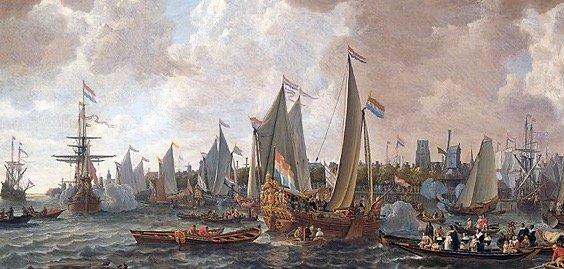
(Arrival of King Charles II of England in Rotterdam on May 24, 1660, painting by Lieve Verschuier | The yacht in the center of the painting might resemble what the yacht HMY Mary looked like.)

The Allure of the Open Sea – Part II: The Mary and the Birth of English Yachting

Private yachting is more than a pastime; it’s a lifestyle choice, a blend of adventure and exclusivity that offers freedom on the open water. At its heart, private yachting is the ownership or use of a vessel specifically for personal leisure rather than commercial or competitive purposes. It’s a realm where the practical meets the luxurious, where one can cruise at their own pace, far from the bustle of the shore, with a view that’s constantly changing.

The early days of English yachting were as much about diplomacy and national pride as they were about leisure and luxury. When Charles II returned to the throne in 1660, after years in exile during the turbulent English Civil War, he brought with him more than the hope of political stability—he brought a new fascination with maritime culture, inspired by his time in the Netherlands. It was there, amidst the bustling ports of a country that dominated global trade, that Charles was introduced to the jacht, a vessel that combined speed, elegance, and prestige. This newfound love for yachting would soon redefine England’s relationship with the sea.

At the heart of this transformation was The Mary, a yacht gifted to Charles II by the Dutch as a symbol of goodwill and diplomacy. But for Charles, the yacht became much more than a diplomatic gesture. It ignited his personal passion for the open sea, turning yachting into a royal pastime and a marker of status within the English court. Racing The Mary on the Thames, Charles not only embraced the excitement of competition but also showcased the power and agility of England’s naval potential in an era when maritime dominance was central to national identity.

Charles II’s Exile and Encounter with the Dutch Jacht

In 1646, sixteen-year-old Charles embarked on a journey into exile as his father fought desperately against Cromwell’s forces. He crossed the Channel under the protection of a Royal Navy frigate, destined first for the island of Jersey and later for France. During his time in The Hague, Charles encountered Cornelis de Graeff, the influential mayor of Amsterdam and president of the Dutch East India Company, a man renowned for both his political acumen and his ties to the powerful VOC. It was under de Graeff’s influence that Charles was first introduced to the jacht, a vessel smaller than the ships he’d known in England, but one perfectly crafted for both speed and grace—a practical and symbolic emblem of Dutch maritime prowess.

Upon his return to England, Charles received The Mary, a sleek, 17-meter-long vessel rigged with a gaff sail and two headsails, her lines drawing inspiration from the Dutch designs he admired. This vessel wasn’t simply a gift; it was a spark, igniting an enthusiasm for yachting that would capture the attention of England’s noble class and instill a newfound reverence for the open sea.

A Royal Race on the Thames: Rivalry and the Birth of Yachting

In October 1661, Charles, now king, and his brother James, Duke of York, decided to put their vessels to the test in what would become one of the earliest documented yacht races. Charles sailed The Catherine, built by Christopher Pett, while James took to the helm of The Anne, crafted by Pett’s brother, Peter. They agreed on a straightforward course, sailing from Greenwich to Gravesend and then back. The wager: £100 to the victor. Against the headwind on the outward leg, James’s Anne surged ahead, but on the return leg, with a favorable tailwind, The Catherine gained the advantage, each brother claiming victory on one leg of the journey.

This race, meticulously recorded by courtier and scholar John Evelyn, marked the beginning of English yachting. Evelyn noted the lively scene, with courtiers on board, and the Thames transformed into an impromptu racecourse. This October day would later be celebrated as the symbolic birth of yachting, setting the stage for competitive sailing in England and popularizing the term “regatta,” borrowed from Venetian gondola racing.

Yachting’s Legacy: Passion, Power, and Prestige

Charles’s enthusiasm for The Mary and her successors drew England’s noble class into his maritime world. But after his death in 1685, many of the yachts he inspired were absorbed into the Royal Navy, and the thrill of yachting began to wane. Yet the impact of that October day remained: the race on the Thames had established yachting as a pastime that carried both the prestige of courtly life and the spirit of maritime ambition.

In the decades that followed, yachting would grow from royal amusement to national sport, a pursuit intertwined with England’s growing naval power and her role as a global maritime leader. Charles II’s passion for The Mary and the thrill of competition at sea would endure, leaving an indelible mark on English maritime culture and paving the way for a tradition that would inspire generations to embrace the allure of the open sea.

As Charles II’s reign approached its final chapter, an unusual anecdote lingers in the archives of his court—a glimpse into the curious, sometimes dark, lengths the king went to in pursuit of vitality. For weeks, Charles had felt wretched, his body fatigued and his mind dulled. But on this particular February 2nd, 1685, he awoke in an especially alarming state. His body burned with fever, his head pounding with a ferocity that seemed fit to burst. The court physicians, always nearby, were ready with various herbal preparations. Yet Charles had a different remedy in mind—a bizarre tonic he’d grown to rely upon over the years.

The remedy, known as “The King’s Drops,” had an exotic, almost sinister origin. Crafted from finely ground human skull bones, dried snake skin, powdered deer antlers, and a hint of ivory, this tincture was the product of Dr. Jonathan Goddard, former physician to Charles’s father. A pioneer in experimental medicine and a member of the Royal Society, Goddard had passed on this peculiar formula to the young king, who used it to stave off the effects of stress and fatigue. The usual dose was modest—just eight drops mixed in wine or stirred into fine chocolate. But on this desperate morning, Charles demanded a more powerful dose: fifty drops, undiluted and on an empty stomach.

The skulls used in this concoction were far from ordinary. Dr. Goddard insisted that the bones of young, vital men who had met violent ends—those hanged or beheaded—contained the “optimal quality.” Such exacting requirements had given rise to a shadowy network of hangmen and gravediggers who discreetly supplied the necessary “materials.” It was a grim irony: these miracle drops hadn’t spared Charles I, beheaded during the English Civil War before he could even reach fifty. Nor had they preserved Oliver Cromwell, the very man responsible for Charles I’s execution, despite Goddard’s continued services after the fall of the monarchy.

And yet, even after the monarchy’s restoration, the allure of these “Cannibal Drops” was unstoppable. Charles II took to the formula with great enthusiasm, experimenting with skull mixtures in his own royal chemistry lab. But as his illness deepened and his doses grew more intense, the tincture could not stave off fate. Four days later, on February 6th, Charles II took his final breath.

In the aftermath, “The King’s Drops” became a sensation. Queens, bishops, and noblemen clamored for the miraculous elixir, and the tincture—once a bizarre private indulgence of Charles II—gained a regal reputation. It became a symbol of the mysterious allure of alchemy and power, forever tied to the legacy of the king who had loved both the open sea and the occult’s dark, unknown depths.

In the next chapter, readers will journey into the spread of yacht clubs throughout Europe, following in the footsteps of the Royal Cork Yacht Club’s pioneering spirit. This expansion marked the beginning of a more structured approach to yachting, with an emphasis on organized regattas, camaraderie, and the sharing of maritime knowledge. As yacht design shifted towards greater speed and maneuverability, competitive sailing evolved from a leisurely pursuit to a more refined and strategic sport. Readers can look forward to exploring how these early developments laid the foundation for modern yachting competitions and established the sport as a symbol of prestige and passion for the open sea.

post scriptum:

Step into the opulent world of Charles II’s court! This exhibition invites you to experience a day in the life of 17th-century royalty, where decadence, diplomacy, and drama come alive. Stroll through magnificent halls adorned with lavish artworks, encounter the elegance of Baroque style, and feel the pulse of courtly intrigue. Engage with immersive displays that reveal how art, fashion, and politics interwove in the life of one of England’s most enigmatic kings. A visit here is more than a journey through history; it’s an invitation to live a day at the court, just as the nobility once did:

https://www.ausstellung-charles2.phil.fau.de/en

Hub – Piracy On The Seas

Piracy on the Seas: A Socioeconomic Struggle Across Centuries. A Prelude to a History of Maritime Piracy by Gregory C. Y. Piatkowski. #24/0168.

October 27, 2024 · 3 min read


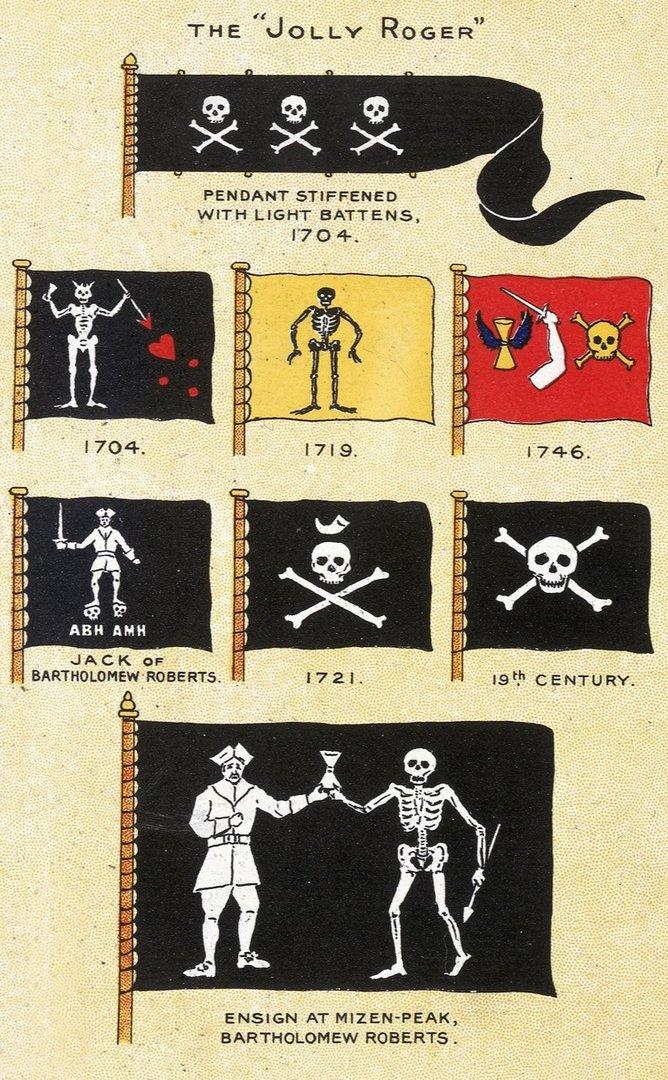
(A selection of 18th century pirate flags,Basil Lubbock)

Piracy on the Seas: A Socioeconomic Struggle Across Eras

Maritime piracy is the act of robbery, violence, or other criminal acts committed on the high seas or in coastal waters, typically involving the unauthorized boarding and seizure of a vessel by individuals or groups with the intent to steal cargo, demand ransom, or harm crew and passengers. Historically, maritime piracy has been a socio-economic phenomenon, often arising from economic hardship and targeting wealth in transit, reflecting a struggle between those excluded from the benefits of trade and those who control it.

For as long as goods have been transported by sea, piracy has followed. Rooted in the margins of society, piracy reveals an enduring struggle between wealth and poverty, authority and rebellion, the powerful and the disenfranchised. While popular culture often casts pirates as romantic adventurers, the reality is that piracy has been an economic and social reaction to inequality across centuries and continents. From ancient raiders on the Mediterranean to the golden-age buccaneers of the Caribbean and modern pirates in Southeast Asia and off the coast of Somalia, piracy is a complex story of survival and resistance.

This series will explore piracy as a socioeconomic phenomenon, born from the struggles of marginalized communities and fueled by the unbalanced distribution of wealth. Each chapter will dive into a distinct era and region, uncovering how piracy has evolved alongside—and often in opposition to—global maritime trade and shifting power dynamics.

Chapter Overview

Chapter 1: The Beginnings of Maritime Piracy

Piracy’s origins trace back to the dawn of maritime trade, with ancient records of raiders such as the Sea Peoples disrupting Egyptian and Aegean trade routes. This chapter explores how piracy first emerged as a response to economic hardship and scarcity, reflecting early forms of rebellion against centralized wealth.

Chapter 2: Medieval Piracy and the Rise of the Coastal Raider

As Europe entered the Middle Ages, piracy took on new forms along the coasts of the Mediterranean and the Baltic Sea. This chapter delves into how local communities turned to piracy to combat poverty, survive shifting political landscapes, and navigate emerging powers like the Hanseatic League.

Chapter 3: The Golden Age of Piracy – Rebellion in the New World

In the 17th and 18th centuries, piracy in the Caribbean reached its height. This chapter highlights famous pirates and their crews, who defied colonial powers and attacked wealthy merchant vessels, revealing how piracy became an alternative life for those marginalized by imperial expansion.

Chapter 4: Privateers and the Blurred Lines of Legitimacy

Piracy and privateering intersected during the age of empire-building, as states granted letters of marque to private vessels, encouraging them to plunder enemy ships. This chapter examines how governments exploited piracy for economic gain and blurred the line between piracy and sanctioned warfare.

Chapter 5: Pirates Beyond the Caribbean – A Global Expansion

While the Caribbean often dominates the narrative of piracy, this chapter explores piracy hotspots worldwide, from the Barbary Coast to the Indian Ocean and Southeast Asia. Each region had its socioeconomic backdrop, with piracy thriving where local communities faced marginalization and economic disadvantage.

Chapter 6: Modern Piracy – Economic Desperation in a Globalized World

Piracy persists in today’s oceans, from the Somali coast to the Straits of Malacca. This chapter reveals how poverty, political instability, and economic exploitation continue to drive piracy, highlighting the socioeconomic parallels with historical piracy and the impact on modern maritime security.

Chapter 7: The Legacy of Piracy – Cultural Influence and the Eternal Struggle for Equality

This final chapter examines the lasting cultural legacy of piracy, from folklore and literature to the influence of pirate ideals on modern social movements. It reflects on how the enduring appeal of pirates speaks to a deeper, unresolved struggle against inequality and concentrated wealth.

In exploring piracy across different periods and regions, this series will reveal how it has continuously served as a mirror to the social and economic realities of its time. Each chapter will invite readers to see beyond the myth and understand piracy as a persistent, complex phenomenon woven into the fabric of maritime history.

Hub – Chi Kung: The Secret to Balance and Energy on Board

Chi Kung: The Secret to Balance and Energy on Board. A Short Introduction Into The Art of Chi Kung by Gregory C. Y. Piatkowski. #24/0148.

March 1, 2025 · 5 min read


Chi Kung: The Secret to Balance and Energy on Board

As a yachtie, you know all too well the pressures of the job: physical exertion, long shifts, and constantly changing environments. Often, there’s little time to unwind and realign your body and mind. This is where Chi Kung, an ancient Chinese practice, can provide a much-needed boost in energy, inner peace, and flexibility.

What is Chi Kung?

Chi Kung (or Qigong) is a holistic practice that combines movement, breathing, and meditation to regulate the body’s energy flow. “Chi” stands for life energy, while “Kung” represents the conscious work with this energy. Gentle yet powerful movements help to release blockages caused by stress, physical strain, and emotional tension.

Why Chi Kung for Yachties?

As a yachtie, achieving the right balance between physical work and mental relaxation is essential. Chi Kung offers you a way to strengthen this balance. The slow, flowing movements increase flexibility and improve posture, which is crucial for long hours on deck or in tight spaces. Meanwhile, the breathing techniques help calm the nervous system and reduce stress.

Practicing Chi Kung regularly can relieve muscle tension and bring you back to your center, even amidst turbulent seas. In stressful situations that often arise on yachts, Chi Kung enables you to stay calm and focused.

The Benefits of Chi Kung

• Flexibility and Mobility: The flowing movements of Chi Kung relieve tension and promote a healthy posture – ideal for long hours on board.

• Stress Relief: Through meditative elements, Chi Kung helps reduce mental tension and enhance clarity.

• Improved Breathing: The breathing techniques boost oxygen intake and endurance, essential for physically demanding jobs.

• More Energy: Regulating your energy flow leaves you feeling vitalized and refreshed, even after long workdays.

My Experience with Chi Kung and My Teacher

My journey with Chi Kung began several years ago when I sought ways to cope with the physical and mental demands of my life. I discovered Eva Caimari Caldes, a Chi Kung master based in Palma de Mallorca. She showed me how, through simple movements and breathing exercises, I could access a new level of energy and calm. Her experience and wisdom helped me understand the profound benefits of this ancient practice, and now I’m eager to share it with you.

Eva Caimari runs a center in Palma that is dedicated to healing and transformation through Chi Kung. There, I learned that Chi Kung is not only a physical exercise but a lifestyle that aligns the body and mind.

Chi Kung Exercises Inspired by Wang Xiangzhai

Here are some fundamental exercises based on Wang Xiangzhai’s teachings. He founded the lineage of masters my Laoshi in Kung Fu training, Ricardo Cussatti, adheres to. Wang focused heavily on Zhan Zhuang, or standing meditation, which emphasizes stillness, alignment, and energy cultivation within a single position. These exercises are particularly suited to yachties seeking stability, both on and off the water.

1. Zhan Zhuang (Standing Meditation)

The foundation of Wang Xiangzhai’s teachings, this exercise involves standing still to cultivate internal energy and mental clarity.

• Stand with feet shoulder-width apart, knees slightly bent, and arms held in front as if embracing a large tree trunk.

• Relax your shoulders and close your eyes. Let go of tension in your body, and focus on feeling rooted through your feet.

• Visualize energy flowing up through your feet and circulating throughout your body. Hold the position for 5-10 minutes, working up to longer durations as you become more comfortable.

• This exercise strengthens both body and mind, making it an ideal daily practice to cultivate resilience and a sense of calm.

2. Hun Yuan Zhuang (Posture of Primordial Unity)

This exercise emphasizes full-body alignment and harmony, grounding you in a powerful but relaxed stance.

• Stand upright, feet shoulder-width apart, with arms by your sides. Let your body naturally relax into a balanced posture.

• Shift your focus to your center of gravity, the area just below your navel, known as the Dantian.

• Allow your breath to deepen, and visualize energy radiating outward from the Dantian to fill your entire body. Feel a sense of unity and stability in this position, staying here for 5-10 minutes.

• Wang emphasized the importance of this position as a way to center oneself, calm the mind, and cultivate inner strength.

3. Yiquan (Mind-Intent Boxing)

A method created by Wang, Yiquan focuses on using mental intention to direct energy through the body, which is ideal for improving focus.

• Stand in Zhan Zhuang stance and begin by visualizing specific movements in your mind, such as pushing or pulling.

• Engage your intent without physically moving—imagine you’re pushing against a solid object or pulling something heavy.

• Keep your muscles relaxed, and focus on the sensations in your body as you mentally execute these actions.

• Yiquan is a valuable practice for yachties to develop mental focus and body awareness, key for the physically demanding tasks on board.

4. Shili (Testing Force)

This exercise combines subtle movements with mental intention to help develop sensitivity and power in the body.

• Stand in a relaxed posture with your arms slightly extended in front of you. Imagine your arms are pressing against a wall of water.

• Slowly shift your weight from one foot to the other, feeling the connection between your feet, legs, and arms as you move.

• Focus on the sensations in your body, allowing the energy to flow with each shift. Practice this for 5-10 minutes, tuning in to the energy and force as it circulates.

• Shili is ideal for improving body coordination and cultivating a sense of control over physical exertion, valuable skills for any yachtie.

5. Fang Song Gong (Relaxation Practice)

A relaxation-focused exercise that Wang Xiangzhai recommended to release tension and refresh the body.

• Sit or stand comfortably, close your eyes, and take several deep breaths.

• Starting from the top of your head, consciously relax each part of your body, working your way down to your feet.

• Imagine any stress or tension melting away with each exhale. When you reach your feet, visualize your body filled with light and ease.

• This practice is ideal for unwinding after a long shift or mentally preparing yourself for the demands of the day.

Take the Next Step: Try It Out!

If you’re curious to explore Chi Kung further, consider visiting Eva’s Oriental Arts Research Center or reaching out to me. You may find that Chi Kung not only strengthens the body but also renews the spirit, allowing you to meet the challenges of life at sea with newfound resilience.

Embrace the quiet power of Chi Kung, and let it transform your time on the water into an opportunity for renewal and connection.

A Day in the Life of a Dockwalker

#26/0156. With Courtesy of Erica Lay. Erica Lay is owner of EL CREW International Yacht Crew Agency http://www.elcrewco.com/ erica@elcrewco.com

A Day in the Life of a Dockwalker: The Reality of Starting Out in Yachting

By Erica Lay, Superyacht Crew Agent and Author of Superyacht Life: How to Start, Succeed, & Stay Sane. Out now on Amazon.

Alarm goes off at 6am. Not because you’re starting work, but because you’re trying to look like someone who already has a job.

Welcome to life as green crew in Palma.

Starting out in yachting has always required a mix of determination, optimism and a decent pair of comfortable shoes. Dockwalking might sound old-school, but in 2026 it’s still one of the fastest ways to get your face seen and your name remembered, especially when you’re new to the industry.

The Morning Routine

A typical day starts early. CV printed, outfit pressed, hair tied back, shoes clean enough to walk onboard without raising eyebrows. Coffee helps. Confidence helps more.

Most green crew begin around the marinas where yachts are active. The goal isn’t to storm down the dock like you own the place, it’s to be respectful, observant and professional. Look for signs of activity, crew working on deck, or someone already mid-washdown who might need an extra pair of hands.

And yes, you will feel awkward at first. Everyone does.

Knock, Smile, Repeat

Dockwalking is essentially a professional version of door-knocking. You ring the bell, introduce yourself politely, and ask if they’re looking for dayworkers. Sometimes you’ll be greeted warmly. Sometimes you’ll get a polite no. Occasionally you’ll get no answer at all.

That’s normal.

The trick is consistency. Ten boats in a morning might lead to nothing. The eleventh could be the one that remembers you when they need help that afternoon. First impressions stick, so keep it short, friendly and professional.

The Waiting Game

Between dockwalking rounds, most green crew gravitate towards crew cafés or training centres. This isn’t wasted time, it’s where the networking happens. Conversations start over coffee, someone mentions a last-minute vacancy, and suddenly you’re handing over your CV again.

Yachting runs heavily on word of mouth, especially at entry level. Showing up in person signals commitment in a way that online applications rarely can.

The Reality Check

What social media doesn’t always show is the uncertainty. Some days you’ll walk miles and hear nothing back. Some days you’ll get three calls at once and have to choose which opportunity to chase.

It can be frustrating. It can also be incredibly rewarding when that first daywork turns into a week, and that week becomes your first contract.

Green crew quickly learn that reliability matters more than perfection. Turning up early, listening carefully, and being willing to learn goes further than trying to look like you already know everything.

The Afternoon Reset

By mid-afternoon, many dockwalkers shift gears. Updating CVs, checking in with agents, or attending a short training session. The goal is to stay visible and proactive without burning out.

It’s easy to compare yourself to others, especially when someone lands a job quickly. Try not to. Everyone’s path into the industry looks slightly different, and persistence often matters more than timing.

The Unwritten Rules

There’s a rhythm to dockwalking that you pick up quickly. Don’t interrupt crew who are clearly busy with guests onboard. Don’t overshare your life story at the passerelle. And don’t forget that every interaction, even a quick hello, contributes to your reputation.

Yachting is smaller than it looks from the outside.

Why It Still Works

Despite the rise of online recruitment and social media, dockwalking remains part of the culture because it shows initiative. Captains and heads of department see dozens of CVs every week, but they remember the person who introduced themselves professionally and made a genuine effort. Daily. For weeks. 

It’s not about chasing yachts blindly. It’s about showing you’re ready to be part of the industry, not just watching it from afar.

Starting out isn’t always glamorous. There will be long days, sore feet and moments where you wonder if it’s worth it. But for many crew, that first morning on the dock is the beginning of a career that takes them further than they ever imagined.

And one day, you might be the one answering the bell.

#YachtingLife
#SuperyachtLife
#Dockwalking
#GreenCrew
#YachtCrew
#SuperyachtCrew
#CrewLife
#Daywork
#YachtJobs
#YachtingIndustry
#CrewRecruitment
#StewardessLife
#DeckhandLife
#PalmaDeMallorca
#PalmaYachting
#MarinaLife
#CrewNetwork
#EntryLevelYachting
#YachtCareer
#WorkOnYachts
#LuxuryYachting
#CrewAgent
#LifeAtSea
#YachtTraining
#YachtCrewLife
#FutureCrew
#Yachties
#YachtingCommunity
#SuperyachtJobs
#TheFlyingFish

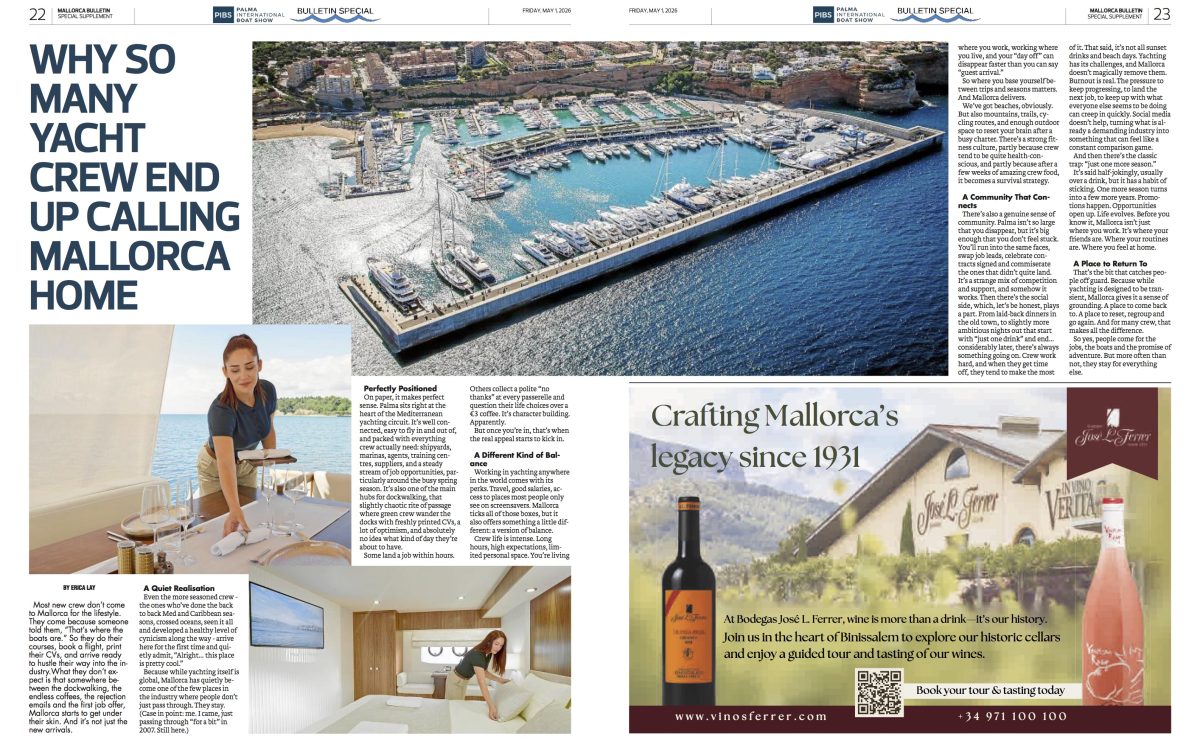
Why So Many Yacht Crew End Up Calling Mallorca Home

#26/0111. With Courtesy of Erica Lay. Erica Lay is owner of EL CREW International Yacht Crew Agency http://www.elcrewco.com/ erica@elcrewco.com

By Erica Lay, owner of EL CREW CO International Yacht Crew Agency and author of Superyacht Life: How to Start, Succeed, & Stay Sane.

Most new crew don’t come to Mallorca for the lifestyle. They come because someone told them, “That’s where the boats are.” So they do their courses, book a flight, print their CVs, and arrive ready to hustle their way into the industry.

What they don’t expect is that somewhere between the dockwalking, the endless coffees, the rejection emails and the first job offer, Mallorca starts to get under their skin.

And it’s not just the new arrivals.

Even the more seasoned crew – the ones who’ve done the back to back Med and Caribbean seasons, crossed oceans, seen it all and developed a healthy level of cynicism along the way – arrive here for the first time and quietly admit, “Alright… this place is pretty cool.”

Because while yachting itself is global, Mallorca has quietly become one of the few places in the industry where people don’t just pass through. They stay. (Case in point: me. I came,just passing through “for a bit” in 2007. Still here.) 

On paper, it makes perfect sense. Palma sits right at the heart of the Mediterranean yachting circuit. It’s well connected, easy to fly in and out of, and packed with everything crew actually need: shipyards, marinas, agents, training centres, suppliers, and a steady stream of job opportunities, particularly around the busy spring season.

It’s also one of the main hubs for dockwalking, that slightly chaotic rite of passage where green crew wander the docks with freshly printed CVs, a lot of optimism, and absolutely no idea what kind of day they’re about to have.

Some land a job within hours. Others collect a polite “no thanks” at every passerelle and question their life choices over a €3 coffee. It’s character building. Apparently.

But once you’re in, that’s when the real appeal starts to kick in.

Working in yachting anywhere in the world comes with its perks. Travel, good salaries, access to places most people only see on screensavers. Mallorca ticks all of those boxes, but it also offers something a little different: a version of balance.

Crew life is intense. Long hours, high expectations, limited personal space. You’re living where you work, working where you live, and your “day off” can disappear faster than you can say “guest arrival.”

So where you base yourself between trips and seasonsmatters. And Mallorca delivers.

We’ve got beaches, obviously. But also mountains, trails, cycling routes, and enough outdoor space to reset your brain after a busy charter. There’s a strong fitness culture, partly because crew tend to be quite health-conscious, and partly because after a few weeks of amazing crew food, it becomes a survival strategy.

There’s also a genuine sense of community. Palma isn’t so large that you disappear, but it’s big enough that you don’t feel stuck. You’ll run into the same faces, swap job leads, celebrate contracts signed and commiserate the ones that didn’t quite land. It’s a strange mix of competition and support, and somehow it works.

Then there’s the social side, which, let’s be honest, plays a part. From laid-back dinners in the old town, to slightly more ambitious nights out that start with “just one drink” and end… considerably later, there’s always something going on. Crew work hard, and when they get time off, they tend to make the most of it.

That said, it’s not all sunset drinks and beach days. Yachting has its challenges, and Mallorca doesn’t magically remove them. Burnout is real. The pressure to keep progressing, to land the next job, to keep up with what everyone else seems to be doing can creep in quickly. Social media doesn’t help, turning what is already a demanding industry into something that can feel like a constant comparison game.

And then there’s the classic trap: “just one more season.”

It’s said half-jokingly, usually over a drink, but it has a habit of sticking. One more season turns into a few more years. Promotions happen. Opportunities open up. Life evolves.Before you know it, Mallorca isn’t just where you work. It’s where your friends are. Where your routines are. Where you feel at home.

That’s the bit that catches people off guard. Because while yachting is designed to be transient, Mallorca gives it a sense of grounding. A place to come back to. A place to reset, regroup and go again. And for many crew, that makes all the difference.

So yes, people come for the jobs, the boats and the promise of adventure. But more often than not, they stay for everything else.

Mallorca #Palma #PalmaDeMallorca #Yachting #Superyacht #YachtCrew #YachtLife #CrewLife #YachtingLifestyle #Dockwalking #GreenCrew #YachtingCommunity #TheFlyingFish #YachtingCulture #MediterraneanYachting #MedSeason #Balearics #IslasBaleares #YachtingMallorca #PalmaLife #SuperyachtCrew #SuperyachtLife #ELCREWCO #YachtingCareers #CrewLifeMallorca #YachtJobs #SantaCatalina #YachtingIndustry

Breathing Techniques for Stress


#26/0101. Michael Lowman writes about working under pressure in yachting environments and the practical application of breathwork and awareness in day-to-day operations.
You can find him www.breathofchang.com

Breathing Techniques for Stress: Staying Calm Under Pressure on Deck

Stand By — The Moment Before It Kicks Off

You’ve heard it before:
“Stand by the anchor.”
“Stand by to stand by.”

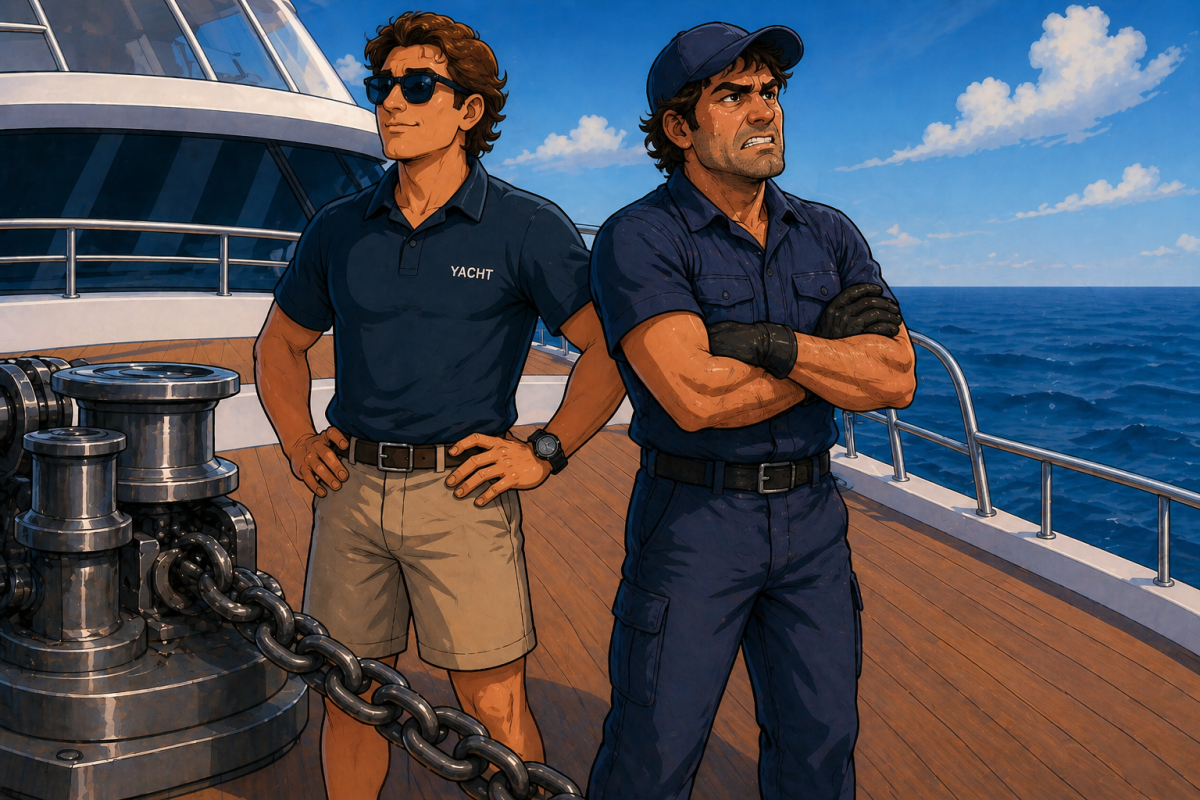
Glasses on, cutting through the glare, I stared out at my office. For all the challenges, it had its perks.

I was on deck as the engineer came up, huffing, already irritated he’d been pulled off what he saw as more important work than hauling anchor.

We stood waiting for the command.

Tick tock. Tick tock.
Time, always on the boss’s terms.

You Can Feel It Before Anything Happens

I glanced over at him. You could feel it building.

Tight shoulders.
Short breath.
That low-level frustration that can flip quickly if something goes wrong.

Anyone who’s worked on deck knows this feeling. The job hasn’t even started yet, but the pressure is already there.

What’s Actually Happening in Your Body

In those moments, your body is already switching gears.

  • Breathing gets shorter and higher in the chest
  • Heart rate increases
  • You move closer to a fight-or-flight state

It’s automatic. No one teaches you this, but it drives how you react.

And on a yacht, reactions matter.

A Small Adjustment That Changes Everything

I didn’t say much. Just a small gesture:

Slow it down.
Breathe into the belly.

It’s simple, but it works:

  • Inhale through the nose
  • Let the breath drop into your stomach
  • Slow the exhale

Within a minute or two, things settle.

Not because the situation changed, but because your state did.

Why This Matters on Deck

Pressure isn’t going anywhere in this industry.

Tight turnarounds.
Demanding owners.
Long hours.
High expectations.

You can’t remove that.

But you can create a bit of space between what happensand how you respond.

And that space is often the difference between:

  • staying composed
  • or escalating a situation that doesn’t need it

The Tough Crowd

If I’m honest, he was the last person I expected to take anything from it.

Proper tough crowd.

Skeptical.
Not interested in anything that sounded like “breathing techniques” or anything remotely close to yoga.

Fair enough.

Most people in this industry aren’t looking for that. 

The Quiet Win

At the end of the season, he came up to me and said:

“Thank you… that breathing thing you showed me, it helped me a lot.”

No big moment. No speech.

Just that.

And that was enough.

Because it wasn’t about convincing him.

It was about giving him something he could use, when he needed it.

Final Thought

You don’t need to buy into anything.

But if you can catch yourself in those moments, when your breath shortens, when tension rises, and slow it down, even slightly…

You give yourself a chance.

And at SEA, that can make all the difference.

Tropical Christmas vs European Christmas at Sea

With Courtesy of Erica Lay & The Mallorca Bulletin. #25/1131. Erica Lay is owner of EL CREW International Yacht Crew Agency http://www.elcrewco.com/ erica@elcrewco.com

Two very different worlds. Both involve fairy lights held up by cable ties.

Christmas on land is predictable. You know what you’re getting: James Bond films, questionable jumpers, and arguments over the gravy. Christmas at sea? Completely different beast. And depending on where the yacht is parked, you’re either sweltering in the Caribbean or dodging icy winds in Europe wondering why anyone thought alfresco lunch was a good idea.

Let’s break it down.

A Tropical Christmas: Sand, Sea, and Suspiciously Sweaty Santa Hats

A Caribbean Christmas is basically the universe saying, “Here, have warmth, sun, and rum. Lots of rum.”

The Vibe:

It’s hot. It’s bright. Everything smells like sunscreen, coconuts, and the faint panic of the chef trying to stop the chocolate truffles melting.

Crew are in festive outfits that make no sense in 30 degrees. Guests are in swimwear accessorised with designer Santa hats. Someone is always asking, “Do you think the beach bar will play carols?” (Unfortunately the answer is yes.)

The Traditions:

• Champagne breakfast on the aft deck

• Snorkelling with turtles instead of watching The Snowman

• Guests insisting on actual snow (deck crew quietly Googling “how to clean foam stains off teak”)

• Santa arriving on a jet ski, because why not

• Beach BBQs where the hardest job is keeping the wind from blowing away the mince pies

The Challenges:

Everything melts.

Everything overheats.

Everything needs chilling.

Including the crew.

Also, the Caribbean is where turkeys go to disappear. A tropical Christmas menu often becomes “creative poultry-based improvisation”.

But the sunsets? Unreal. The water? Like a postcard. The mood? Unbeatable.

A tropical Christmas is chaotic, glamorous, and slightly ridiculous in all the best ways.

A European (Mediterranean) Christmas: Quiet Marinas, Cold Breezes, and Crew Making Their Own Festive Fun

Now, let’s be honest – most owners do not flock to the Med for Christmas. The Med in December is for hardy locals, shipyard teams, and yacht crew layered up like they’re preparing for a polar expedition.

The Vibe:

Quiet. Peaceful. Bit chilly.

Marinas lit up with Christmas lights. Cafés full of crew trying to warm up after morning washdown. Half the yachts are in refit mode, half are napping until spring.

It’s the calmest the Med ever gets, which is why crew secretly love it.

What Actually Happens:

• Crew Christmas dinners in Palma, Barcelona, Antibes, or La Spezia

• A frantic 24-hour owner pop-in where everyone pretends it’s summer

• The captain politely declining the owner’s suggestion of “a little cruise” in 35 knots

• Shore leave spent Christmas-shopping in cities instead of provisioning in remote islands

• Uniforms that never fully dry because the €!&% humidity won’t quit

And the Scenery?

Incredible. Snowy mountains in the distance. Empty bays. Wintry sunrises. Cities decorated to the nines. It’s peaceful in a way the high season never is.

The Challenges:

• Cold hands

• Icy decks

• The engineer spending 40% of their day defrosting something

But crew get the rare gift of… breathing. And that alone makes a Med Christmas feel special in its own quiet way.

The Pacific Christmas: Remote, Quiet, and Drop-Dead Gorgeous

For the yachts lucky enough to be out in the Pacific? This is the “spiritual retreat” version of Christmas.

The Vibe:

Silence.

Space.

Turquoise water as far as the eye can see.

Christmas Eve with only reef sharks for neighbours.

It’s peaceful in a way no Caribbean anchorage in December will ever be.

The Traditions:

• Island picnics that feel like you’re on your own private planet

• Starry Christmas nights that actually look photoshopped

• Guests who wanted to escape everything – and actually did

The Challenges:

Provisioning? Forget it. You either have it onboard or you don’t eat it. (Shoutout to chefs who have made Christmas dinner out of three tins of something and a prayer.)

Connectivity also tends to evaporate, which means crew get to say the sweetest sentence in yachting: “I’m sorry, there’s no signal to stream that right now.”

Peace on Earth indeed.

So Which Christmas Wins?

Tropical Christmas is fun, flashy, and full of sunshine.

European Christmas is cosy, classy, and full of mulled wine.

Pacific Christmas is serene, remote, and full of “wow”.

Each one comes with chaos.

Each one comes with magic.

Each one gives guests (and crew) something completely unforgettable.

But whichever version you pick, one thing stays the same: the crew working their socks off to make it all happen while trying not to sweat, freeze, or cry into the gravy.

Crew Focus: Christmas for Yacht Crew

Christmas for Yacht Crew: The Ones Making the Magic. With Courtesy of Erica Lay & The Mallorca Bulletin. #25/1130. Erica Lay is owner of EL CREW International Yacht Crew Agency http://www.elcrewco.com/ erica@elcrewco.com

For most people, Christmas means cosy jumpers, lazy days, and a kitchen full of food. For yacht crew, it means the complete opposite: long days, tight schedules, last-minute surprises, and serving a full Christmas dinner at anchor while sweating under a Santa hat that keeps blowing off in the wind.

And yet – somehow – crew still manage to pull off the most magical Christmases imaginable. Not for themselves, of course. For the guests. Always the guests.

When Christmas Looks Like Work (Because It Is)

Crew will tell you Christmas “is just another day”, but that’s a lie they tell themselves at 06:15 while steaming milk for eight gingerbread cappuccinos.

Christmas onboard is a production. Lights, decorations, themed cocktails, personalised stockings, elaborate menus, playlists for every mood… all pulled together while the yacht is moving, the weather is misbehaving, and the guests keep changing their minds.

Some stews start planning Christmas décor in October. Some chefs start planning menus before they’ve packed away the Halloween sweets. Provisioning becomes an extreme sport, especially in the Caribbean, where turkeys regularly vanish from the face of the earth the minute you actually need one.

Meanwhile, the deck crew are outside wrestling with garlands and fairy lights, pretending they’re having a great time while secretly praying no one asks them to build “a winter wonderland on the sundeck” again.

Missing Home, Making Do

Let’s be honest – Christmas can sting at sea.

You’re somewhere stunning, doing a job you’re proud of, but your family is thousands of miles away, sending selfies from the sofa. You’re surrounded by people, but it can feel strangely lonely.

Crew deal with it in different ways. Some call home between service runs. Some do Secret Santa with a strict “no buying, only scavenging from the boat” rule. Some pull little traditions from home – a movie, a song, a Christmas Eve hot chocolate in the crew mess – and it helps.

And then there are the ridiculous, heart-warming moments that only happen on yachts. The sous chef who bakes gingerbread at midnight because a homesick decky says “it smells like home”. The captain who orders gifts so the crew have something to unwrap. The engineer who reluctantly wears reindeer antlers because the stews think it’s funny. The spontaneous, slightly feral Christmas karaoke session in the galley that absolutely never happened. No evidence please. Or the engineer will unplug the wifi.

The 2 a.m. Crew Christmas Dinner

This is a universal yacht-crew phenomenon.

Guests go to bed full of roast turkey, champagne, and joy.

Stews go to the pantry to polish cutlery. Chefs are tackling the war zone of a galley. Deck crew stage their chamois fight against the glitter all over the aft deck and, finally, hours later… they sit down together to their own Christmas meal.

And it becomes one of those memories you look back on years later with a strange mix of exhaustion and warmth.

The Magic They Make (That No One Sees)

Guests see the tree, the lights, the gorgeous table settings, the food that looks too pretty to eat.

They don’t see the ten frantic minutes spent searching for a missing ornament.

They don’t see the stew crying with laughter because Santa tripped on the passerelle.

They don’t see the chef stress-prepping three menu versions because the guests “aren’t sure what they’ll feel like on the day”.

They don’t see the deckies hiding behind the mast trying to wrangle a tangled string of lights for the fourth time.

Crew turn Christmas into something extraordinary under conditions most people wouldn’t last an hour in. And they do it with good humour, surprising resilience, and enough caffeine to power a small city.

Why Crew Christmases Matter

It might not be the Christmas they grew up with.

It might not be restful.

It might not be peaceful.

But it is special.

It’s a shared experience. A weird, wonderful version of Christmas that only yacht crew really understand. And there’s something beautiful about knowing that you helped a family create memories they’ll carry for the rest of their lives.

So here’s to every stew hanging decorations in a rolling swell.

To every captain sweating in a Santa costume.

To every engineer fixing the oven five minutes before service.

To every chef performing culinary miracles at anchor.

And to every crew member spending Christmas far away from home so someone else can have the holiday of their dreams.

You’re the ones who make the magic.