All You Need to Know About Working as a Yacht Chef

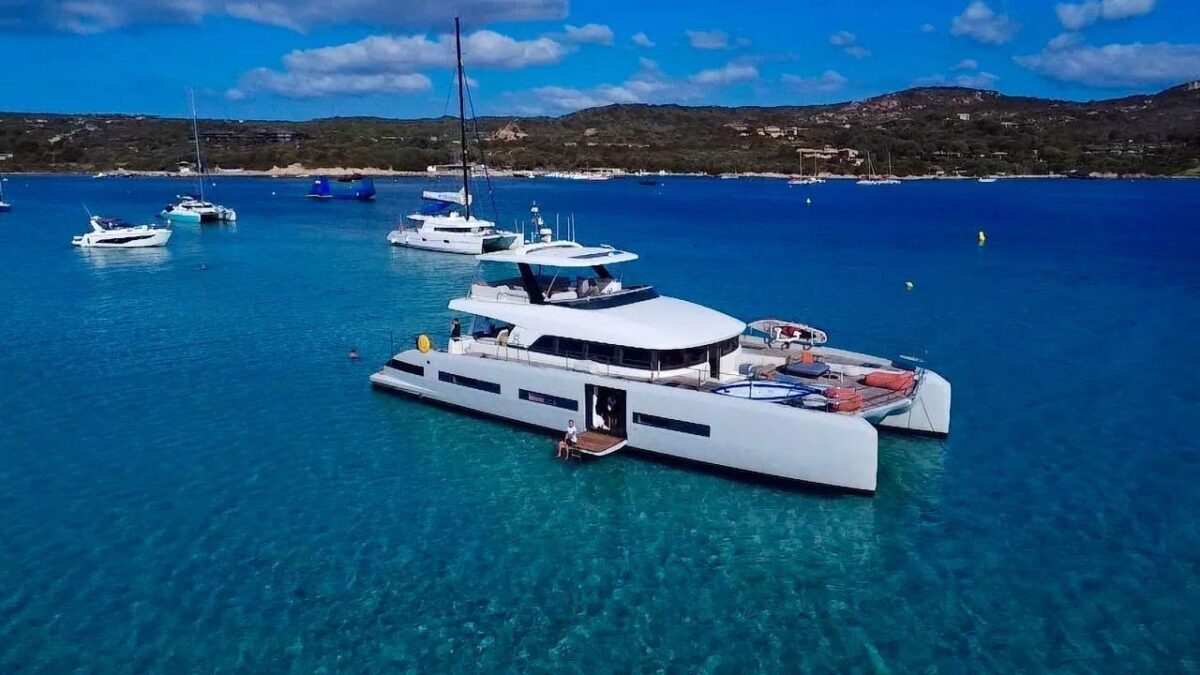
#26/0350. With courtesy of Chef Emanuele Pittalis.
Working as a yacht chef: everything you need to know
Qualifications, salaries, crew roles and real life on board, told by someone who started as a Sous Chef on a yacht of about 60 metres in Cannes.
By Chef Emanuele Pittalis
With courtesy of Chef Emanuele Pittalis. Originally published on chefemanuelepittalis.com: https://chefemanuelepittalis.com/en/yacht-chef-qualifications-salary-and-life-on-board/
Working as a yacht chef is an experience that can offer great professional and personal opportunities. It lets you travel, meet people from all over the world and work in exclusive settings, often in places you would not normally have the chance to visit.
In short
To work as a yacht chef you need a solid grounding in professional cooking, the certificates required by the yacht’s flag and the role, and a great deal of adaptability. The most common are the STCW Basic Safety Training, a medical certificate such as the ENG1 and a Food Hygiene course; the Ship’s Cook Certificate is only required in certain cases. Pay varies widely, days with guests on board can stretch to 16 hours, and a first job on board often comes through a contact, an agency or a professional group.
Certificates: STCW Basic Safety Training, ENG1 medical certificate or equivalent, Food Hygiene. Ship’s Cook Certificate only in certain cases.
Salary: Roughly €4,000 to €10,000 a month. Up to €20,000 only for top roles on major yachts.
Hours: Up to 16 hours a day with guests on board. Fewer than four when the yacht has no guests.
First job on board: A CV suited to the sector, agencies, professional groups and word of mouth. Antibes and Palma de Mallorca are among the main reference points.
Working as a yacht chef does not mean being on holiday
Today more than ever, the world of yachting is open to both men and women. Although some roles have traditionally been associated with one gender, professional opportunities should not be limited by these stereotypes.
The same goes for the kitchen: becoming a yacht chef is a possibility for both men and women, as long as you have the skills, the training and the determination it takes.
With this article I want to speak to anyone interested in taking this path, including women who would like to enter the industry but perhaps do not know where to start.
Because, gender aside, what really matters on board is professionalism, adaptability, respect for the crew and passion for your work.
But be warned: working on board is not a holiday.
The days can be very long, space is limited and living alongside the rest of the crew calls for adaptability, organisation and respect. In the galley, you also need to be able to work independently, manage provisions and guarantee a quality service even when conditions are not ideal.
In this article I want to tell you what it really means to work as a chef on a yacht, what requirements you need to meet, how the roles on board are organised and what difficulties you might face at first.
I will also do this through my own experience, because some things can only really be understood once you step on board.
Which certificates do you need to work as a yacht chef?
Before applying for a position on a yacht, it is important to know the main requirements.
The documentation can vary depending on the vessel’s flag, its characteristics and the position you are applying for. For this reason, you should always check the specific requirements of the job offer.
STCW Basic Safety Training
The STCW is one of the essential certificates for working professionally on board. The basic safety course covers several areas, including sea survival, fire prevention and firefighting, first aid and personal safety.
It is not a certificate specific to chefs: it covers the safety training of maritime personnel under the applicable requirements.
ENG1: Medical Certificate
The ENG1 is a maritime medical certificate used mainly in the international yachting sector. It confirms that a person is medically fit to work at sea.
Depending on the yacht’s flag and the applicable rules, an equivalent medical certificate may be accepted.
Food Hygiene
Food safety is essential for anyone who works in a kitchen.
Food Hygiene courses can be split into several levels, depending on training and responsibilities. Knowing how to store food correctly, manage temperatures, prevent contamination and follow hygiene procedures is essential for a yacht chef.
Ship’s Cook Certificate
The professional Ship’s Cook certificate may be required in certain circumstances, depending on the vessel’s characteristics, its flag and the applicable regulations.
It is not correct to treat it as automatically compulsory for every chef on every yacht: it is important to check the specific requirements of the vessel and the role.
Visas and documents
To work internationally, additional documents or visas may also be needed, depending on your nationality, your destination and the terms of the job.
The advice is simple
Before spending money on courses or certificates, check which ones are really necessary for the type of yacht and position you want to reach.
How much does a yacht chef earn?
One of the first questions asked by anyone who wants to enter the world of yachting is about salary.
Pay can vary greatly depending on the length of the yacht, the type of employment, the chef’s experience, responsibilities, the season and the type of contract.
In the industry you can find offers ranging from a few thousand euros a month to much higher figures for top-level roles. As a rough guide, pay ranges between €4,000 and €10,000 a month. In exceptional cases, for very senior roles on major yachts, it can reach €20,000 a month, but these are exceptions, not a common or guaranteed salary.
A chef working on a private yacht with a small crew will have different responsibilities from a Head Chef coordinating a more structured kitchen on a large vessel.
Your CV also makes a difference. Experience in high-end restaurants, the ability to cook different cuisines, professional references and the ability to work independently can all influence the opportunities available to you.
However, you should not choose this job on salary alone. You also need to consider the hours worked, the time spent away from home, living with the crew and the level of responsibility.
Can you become a yacht chef without being a professional?
The world of yachting can also attract people who love cooking and would like to turn that passion into a job.
But you have to distinguish between cooking for yourself or for friends and working professionally as a chef.
On board, it is not enough to make good dishes. You need to know how to organise a kitchen, manage a budget, plan menus, check stock, follow hygiene rules and serve several people with different needs.
On top of this comes the need to work in tight spaces, keep to service times and maintain quality even when tiredness sets in.
If you have no professional experience, the best route is to build solid foundations in the kitchen first, learn the fundamental techniques and gain experience working as part of a professional kitchen brigade.
Passion is important, but it is not enough on its own. On board you need concrete skills, reliability and the ability to work under pressure.
From restaurant to yacht: what changes for a chef?
Those coming from the restaurant world already have valuable skills, but they must adapt to a very different working environment.
In a restaurant there is generally a brigade, a division of tasks and dedicated staff for cleaning and running the dining room.
On a yacht, especially when you work as a Sole Chef, many of these tasks fall directly on the chef.
You may have to take care of:
- Planning menus for the guests and for the crew.
- Making the shopping list and organising the provisioning.
- Checking stock and expiry dates.
- Managing the food budget.
- Preparing and serving meals.
- Cleaning and tidying the galley during and after service.
- Coordinating with the rest of the crew.
The ability to cook well remains fundamental, but organisation becomes just as important.
Another essential aspect is communication. You need to understand the guests’ requests, liaise with the Chief Stew and work with the Captain and the other crew members when necessary.
English is particularly important, especially on international yachts.
Finally, you need to be ready to take on tasks that, in a traditional restaurant, might be handled by other people. On board, what counts is the final result, not just your role on paper.
Crew food: a responsibility of the yacht chef
The chef does not cook only for the guests. In most onboard arrangements, the chef must also look after the crew’s meals, according to the responsibilities of the position.
This means managing two different needs: on the one hand the service for the guests, on the other adequate nutrition for the people working on board.
Crew food has to be good, nutritious and efficiently organised. You need to take food preferences, any allergies and the specific needs of the crew members into account.
The budget also plays an important role. Provisions must be planned carefully, avoiding waste and making proper use of the ingredients available.
Another element not to be underestimated is space. The pantry, fridges and freezers can be limited, especially on smaller yachts. Doing a big shop without a precise plan can quickly become a problem.
And then there is something every yacht chef learns early on: the crew has to eat every day, even when there are no guests.
How is the crew organised on board a yacht?
To understand how things work on board, it helps to know the hierarchy and the responsibilities of the different roles.
The size of the yacht and the structure of the crew can vary a great deal. On a small vessel one person may cover several functions; on a large yacht, by contrast, there are clearly distinct departments.
Ownership and command
Shipowner
The shipowner is the person or entity that owns the vessel. They are not necessarily the person who is on board while the vessel is under way.
When people speak of the owner, on the other hand, they mean the person who owns the yacht, although in practice the two terms can be used in a similar way.
Captain
The Captain is responsible for the running of the vessel and the safety of navigation. The role carries the authority provided for by maritime law and by the procedures that apply on board.
The Captain coordinates the crew, supervises operations and ensures that navigation and life on board comply with the rules.
In practical terms, the Captain is the main point of reference for the overall management of the yacht.
First Officer
The First Officer supports the Captain in the operational management of the vessel and in navigation and safety activities.
The role’s responsibilities may include supervising deck activities, planning operations and coordinating the Deckhands.
How duties are divided depends on the size of the yacht and on the organisation on board.
Engineering department
Chief Engineer
The Chief Engineer is in charge of the technical department and the onboard systems.
The Chief Engineer coordinates the maintenance and operation of the engines, generators and technical systems of the yacht. It is a key role in ensuring the reliability and safety of the vessel.
Second Engineer
The Second Engineer works alongside the Chief Engineer in the technical management and maintenance of the onboard systems.
On larger yachts there may be a more developed engineering department, with additional technical staff.
Deck
Bosun
The Bosun is operationally in charge of the deck crew, working under the coordination of the relevant officers.
The Bosun organises and supervises the daily exterior maintenance, the care of equipment and deck operations.
Deckhand
Deckhands look after deck activities and the exterior maintenance of the yacht.
Their duties may include cleaning the outdoor areas, looking after equipment, helping during manoeuvres and supporting activities involving the tender and water toys, where this is covered by their training and the organisation on board.
Interior
Steward and Stewardess
Stewards and Stewardesses work in the yacht’s interior department, taking care of guest reception and service, the upkeep of the interior spaces and housekeeping.
Responsibilities vary depending on the size of the vessel and how the work is divided.
Chief Stew
The Chief Stew is in charge of the interior department.
The Chief Stew coordinates the Stewards and Stewardesses, organises the service, manages guest reception and supervises the care of the interior spaces.
For the chef, this is someone to communicate with every day. Together you agree meal times, the guests’ preferences, any allergies and special requests.
Good collaboration between the chef and the Chief Stew is essential to ensure an organised, high-quality service.
The title, Chief Stew, is the same for men and women. In my experience, this role is held by a woman.
The galley: chef roles on a yacht
Chef
The Chef is in charge of the galley. The Chef plans the menus, manages provisions, prepares the meals and maintains the required standards of quality and hygiene.
Depending on the position, a Chef may work alone or coordinate other kitchen professionals.
Sous Chef
The Sous Chef is second in command in the kitchen and supports the Head Chef in organising the work, preparing dishes and coordinating the team.
Crew Chef
The Crew Chef is mainly responsible for the meals for the crew. A Crew Chef may work in a separate galley or share the space with the guest galley, depending on how the yacht is organised.
Head Chef
The Head Chef is in charge of the kitchen on vessels with a more structured team. The Head Chef coordinates the other chefs, organises the service and oversees the quality of the dishes.
Sole Chef
The Sole Chef is a chef who works alone, with no kitchen team under them.
It is a position that demands great independence: besides cooking, the Sole Chef must plan menus, manage provisions, control the budget and organise everything to do with the galley.
On a smaller yacht, the Sole Chef may be responsible for both the guests’ meals and the crew’s.
Ranks on the shoulders: epaulettes
On maritime uniforms you may find epaulettes with stripes or bars, used to identify certain ranks or roles.
The number and arrangement of the stripes depend on the system adopted by the company, the flag and the organisation of the yacht. There is therefore no single universal rule that applies to every vessel.
Knowing these details helps you understand the hierarchy on board better, but it is just as important to remember that every crew member has precise responsibilities and that daily work requires collaboration between all the departments.
My experience on board: from Sous Chef to Sole Chef
My experience in the world of yachting began in Cannes, at Port Canto, on a yacht of about 60 metres.
I started as a Sous Chef, working with Nicolas Petit, an experience that made me understand how important organisation is in an onboard galley.
In that setting I learned a great deal: not only from a culinary point of view, but above all in managing the work, in discipline and in the importance of collaboration among the crew members.
On board, every detail counts. The galley must be organised, the spaces must stay clean and every task must be planned so as not to waste time unnecessarily.
What I learned as a Sous Chef on board
One of the simplest lessons, but also one of the most important, was this: cleaning as you go always takes less time.
If you keep things tidy during service, you avoid finding yourself at the end with a mountain of work to catch up on.
I also learned that you cannot always rely entirely on equipment. For example, a set of scales may stop working or may not be available when you need it. That is why it is important to develop a feel for things, experience and the ability to work by eye too, without losing control of your preparations.
As a Sole Chef on 34-metre and 40.8-metre yachts
After this experience I worked as a Sole Chef on a 34-metre Sanlorenzo yacht and later on a 40.8-metre vessel.
These steps allowed me to take on different responsibilities and to grow professionally, learning to run the galley independently.
Afterwards I continued my career as a freelance chef, working in private villas and at events.
Every experience taught me something different, but one thing has remained constant: in this job you never stop learning.
How to find your first job as a yacht chef
One of the biggest difficulties, when you want to enter the world of yachting, is knowing where to start.
In my case, at the beginning I did not have a completely clear idea. The main difficulty was building a CV suited to the industry and working out which kind of position I really wanted to take.
My first opportunity came through a WhatsApp group, where Nicolas was looking for a second Italian chef.
Before getting that chance I had also been turned down, including for a position that involved an Atlantic crossing.
I had not prepared any particular strategy to land that specific job: I simply replied to the offers that interested me.
If I could go back, I would do the same things again. I would apply, look for contacts and keep trying.
Sometimes people think they have to have everything perfectly planned before they start. In reality, you also have to get moving, apply and learn as you go.
This does not mean sending out applications at random. It means understanding that your first job on board can come through a contact, a professional group or someone who needs a person with your skills.
Your CV is essential
Your CV needs to be clear, professional and suited to the maritime sector.
It should highlight your most relevant experience, culinary skills, certificates held, languages spoken and roles held.
A good professional photograph can help you present yourself better, especially when one is requested with applications.
However, you should not think that a nice photo can replace experience: the CV must be credible and let a recruiter or a Captain quickly understand what you can do.
Where to look for work as a yacht chef
Opportunities can be found through several channels:
- Specialist yacht recruitment agencies.
- Platforms dedicated to the maritime sector.
- Professional groups on WhatsApp and Telegram.
- Direct contact with Captains, chefs and other crew members.
- Word of mouth among colleagues.
Among the places known for the yachting industry are Antibes, in the south of France, and Palma de Mallorca, in the Balearic Islands.
These are useful reference points for getting in touch with the industry, but opportunities can also be spread across other locations and depend on the season and the type of vessel.
Word of mouth carries real weight. A good professional reputation can help you win new opportunities, while unprofessional behaviour can damage your relationships with people who work in the same environment.
For this reason, it is important to be reliable, keep your commitments and maintain good professional relationships.
The challenges of your first job as a yacht chef
Your first job on board is an important moment, but it can also be demanding.
You do not only have to prove you can cook. You have to learn to work in a new environment, understand the onboard procedures, respect the hierarchy and adapt to the habits of the other crew members.
At the beginning you may not know the rhythms, the ways of communicating or how the spaces are organised.
It is normal to have to learn.
The important thing is to observe, ask questions when necessary and show that you are willing to improve.
You should not arrive on board thinking you already know everything. Even people with experience in high-end restaurants have to learn the particularities of working at sea.
Another aspect not to be underestimated is managing expectations. Working on a yacht can look glamorous from the outside, but daily reality also means tiredness, responsibility, cleaning, long hours and the unexpected.
If you start with a realistic idea of the job, it is easier to face the difficulties without getting discouraged.
Life on board: the reality of being a yacht chef
Life on board is one of the most distinctive parts of this job. It can be extraordinary, but it is not always easy.
A yacht chef’s day with guests on board
When guests are on board, the day can start very early.
If the yacht is in port, you may need to go out to buy fresh fish, bread and viennoiserie, so that you have fresh produce for the service.
After the shopping you need to organise the galley, prepare the different courses and coordinate with the rest of the crew to keep to meal times.
Requests can change, guests may have particular preferences and the unexpected is part of everyday life.
Free time: mostly sleep
One of the hardest aspects is the amount of time devoted to work.
Some days you can end up working as many as 16 hours. In these cases free time becomes truly limited, and often the only priority, once service is over, is to rest.
For this reason you should not imagine yachting as a paid holiday. Visiting wonderful places is an advantage, but it does not mean you always have the time to enjoy them.
When there are no guests
When the yacht has no guests on board, the workload can change considerably.
The chef still has to take care of the crew’s meals, but, depending on the organisation and the menu, can manage to finish the work in under four hours a day.
These periods can offer a chance to recover your energy, organise the galley and prepare for the next service.
Naturally, everything depends on the situation of the yacht and on the activities to be carried out at that moment.
Shared spaces
On board you live in limited space, often sharing cabins and common areas with other people.
For this reason, organisation and respect are fundamental. Your personal space borders on other people’s, and every behaviour can affect life together.
You need to learn to respect your colleagues’ rhythms, habits and privacy.
The lack of privacy is one of the biggest difficulties, especially during periods of intense work.
Cooking in rough seas
Cooking when the sea is rough is another of the most demanding challenges.
You cannot always count on a stable surface and every movement requires greater care. Pots, utensils and ingredients must be handled with caution, adapting the work to the sea conditions and to the safety procedures.
In these situations, organisation is not just a matter of efficiency: it is also a matter of safety.
The best part
Despite the difficulties, working on a yacht lets you reach places you would not normally have the chance to visit.
This is one of the best parts of the job: seeing new places and having experiences that would be hard to come by on a traditional career path.
But there is one thing to remember: the boat can take you to incredible places, but you go there to work, not to be a tourist.
My advice to anyone who wants to become a yacht chef
If you want to work as a yacht chef, prepare a good CV with a nice professional photograph and present your experience clearly.
Work on your adaptability, try to improve your English and learn to communicate effectively with people from different cultures.
Do not underestimate the importance of organisation, and do not assume that being good in the kitchen is the only quality you need.
Being a yacht chef also means being a reliable, respectful person, able to cope with different situations.
Conclusion
Working as a chef on a yacht can be a career path full of opportunities, but it requires preparation, discipline and a good dose of adaptability.
It is not enough to cook well: you have to learn to run a galley in limited space, organise provisions, work for the guests and for the crew, respect the hierarchy and face days that can be very long.
Your first job on board may be hard to get, but you should not be discouraged by rejections. A well-made CV, the right skills, targeted applications and professional contacts can help open the first doors.
My experience has taught me that every vessel is different and that every new job can become an opportunity to learn something.
If you want to follow this path, try to arrive prepared, keep a professional attitude and never stop improving.
Because, in the end, being a yacht chef is not just about cooking in the middle of the sea. It means knowing how to work, live and collaborate with others in an environment where every detail counts.
Frequently asked questions about working as a yacht chef
Which certificates do you need to work as a yacht chef?
The most commonly required qualifications include STCW Basic Safety Training, a maritime medical certificate such as the ENG1 or an equivalent accepted under the applicable flag requirements, and Food Hygiene training. The documentation changes depending on the yacht’s flag, its characteristics and the position: it is always worth checking the requirements of the individual job offer.
Is the Ship’s Cook Certificate compulsory?
Not always. It may be required in certain circumstances, depending on the vessel’s characteristics, its flag and the applicable regulations. Before enrolling on a course, it is better to check the requirements for the type of yacht and position you are targeting.
How much does a yacht chef earn?
It depends on the length of the yacht, the type of employment, experience, responsibilities, the season and the contract. As a rough guide, between €4,000 and €10,000 a month. In exceptional cases, for very senior roles on major yachts, it can reach €20,000, but these are exceptions, not a common or guaranteed salary.
Can you become a yacht chef without professional experience?
Passion alone is not enough. On board you have to manage a galley, budgets and provisions, follow hygiene rules and serve people with different needs. The best route is to build solid foundations in the kitchen first and gain experience working as part of a professional kitchen brigade.
What is the difference between a Sole Chef, a Head Chef and a Crew Chef?
A Sole Chef works alone, without a team, and manages menus, provisions and the budget. A Head Chef leads a more structured kitchen and coordinates the other chefs. A Crew Chef mainly looks after the crew’s meals.
Does a yacht chef also cook for the crew?
In most onboard arrangements, yes, according to the responsibilities of the position. The crew eats every day, even when there are no guests. On larger yachts there may be a dedicated Crew Chef.
How many hours does a yacht chef work?
With guests on board the days start very early and in some cases you can end up working 16 hours. When there are no guests on board, the chef still needs to prepare crew meals, but depending on the yacht’s operations and menu, this work may take less than four hours a day.
How do you find your first job as a yacht chef?
With a clear CV suited to the maritime sector, targeted applications and contacts: specialist agencies, maritime-sector platforms, professional groups on WhatsApp and Telegram, word of mouth among colleagues. Antibes and Palma de Mallorca are key yachting hubs.
Do you need English to work as a yacht chef?
Yes, especially on international yachts: on board the chef has to understand the guests’ requests, liaise every day with the Chief Stew and work with the Captain and the rest of the crew.
Sources
Official references on certificates, checked on 15 October 2026.
- IMO, STCW Convention on the training of seafarers
- GOV.UK, seafarer medical certificates (ENG1)
- GOV.UK, MSN 1846: Ship’s Cooks and Catering Staff
About the author
Emanuele Pittalis is an Italian private chef from Ottana, in the heart of Sardinia, with over 15 years of experience in restaurants and private dining. He started in yachting as a Sous Chef on a yacht of about 60 metres in Cannes, then worked as Sole Chef on a 34-metre Sanlorenzo and a 40.8-metre Oceanco. Today he works freelance on private and charter yachts, in private villas, at events and in mountain chalets.
- Website: chefemanuelepittalis.com
- Instagram: @privatechef_emanuelepittalis
#YachtChef #YachtingCulture #TheFlyingFish #SuperyachtChef #YachtCrew #SuperyachtCrew #GalleyLife #ChefLife #PrivateChef #YachtLife #CrewLife #STCW #ENG1 #YachtJobs #CrewJobs #SoleChef #YachtingCareers #WorkingOnBoard #PalmaDeMallorca #Antibes #Yachting #Superyacht #ChefOnBoard #ChefEmanuelePittalis